Subscribe
Live

Into the Void: Mixing Monitors for Phish at Sphere

In the last issue of Headliner, we learned how FOH engineer Garry Brown used Lawo mc² 56 mixing consoles on Phish’s four-night, 68-song run at Sphere in Las Vegas – delivering an enhanced concert experience that left audiences captivated. Here, monitor engineer Robert ‘Void’ Caprio discusses his workflow using Lawo desks, and reveals some of the challenges associated with mixing a band that refuses to do things the conventional way…

Tell us who you are and what you do.

I’m Robert ‘Void’ Caprio, and I'm the monitor engineer for Trey Anastasio of Phish. I mix monitors for him during the Phish shows and for his solo acts as well.

What does your day-to-day look like, and what are some of the challenges that you face?

Mixing monitors for Phish and Trey is a moving target. There's no setlist with the band; everything is always just, ‘who knows what’! Trey will call an audible for something and a five minute song can turn into a 30 to 40 minute jam. So there's no snapshots, there's nothing preset on the console, and everything is always live. My fingers are always moving around changing things and there's a lot of effects used, so there’s lots of changes dynamically throughout the set and within each song.
The challenges are relatively few in the sense that there's nothing really drastic that changes. It's all very, very subtle, but frequent. So it's not a lot of things - just a lot of little things.

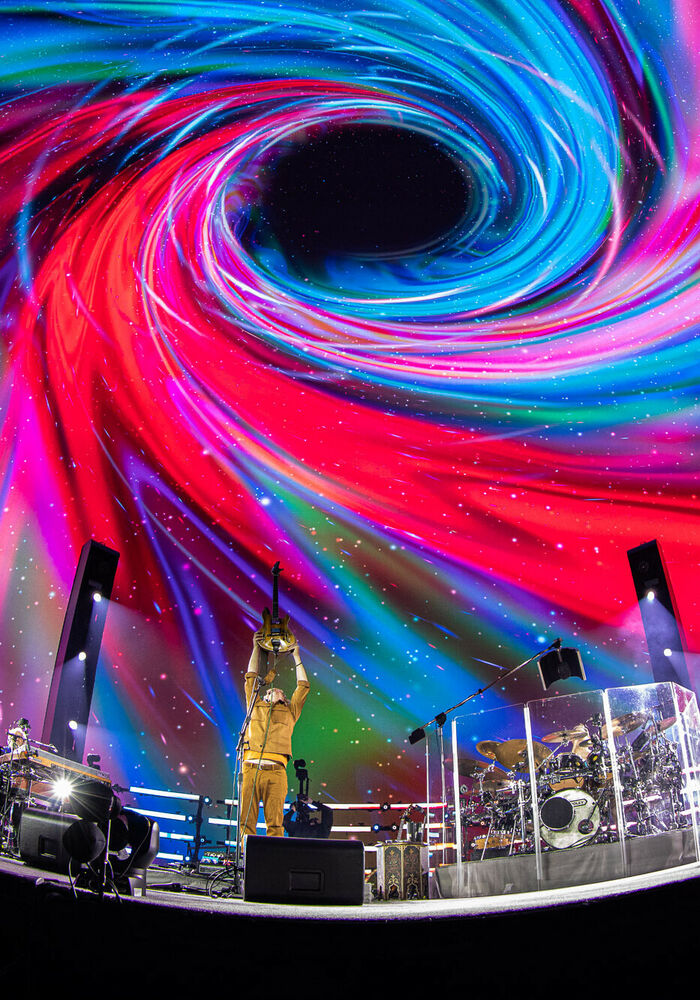
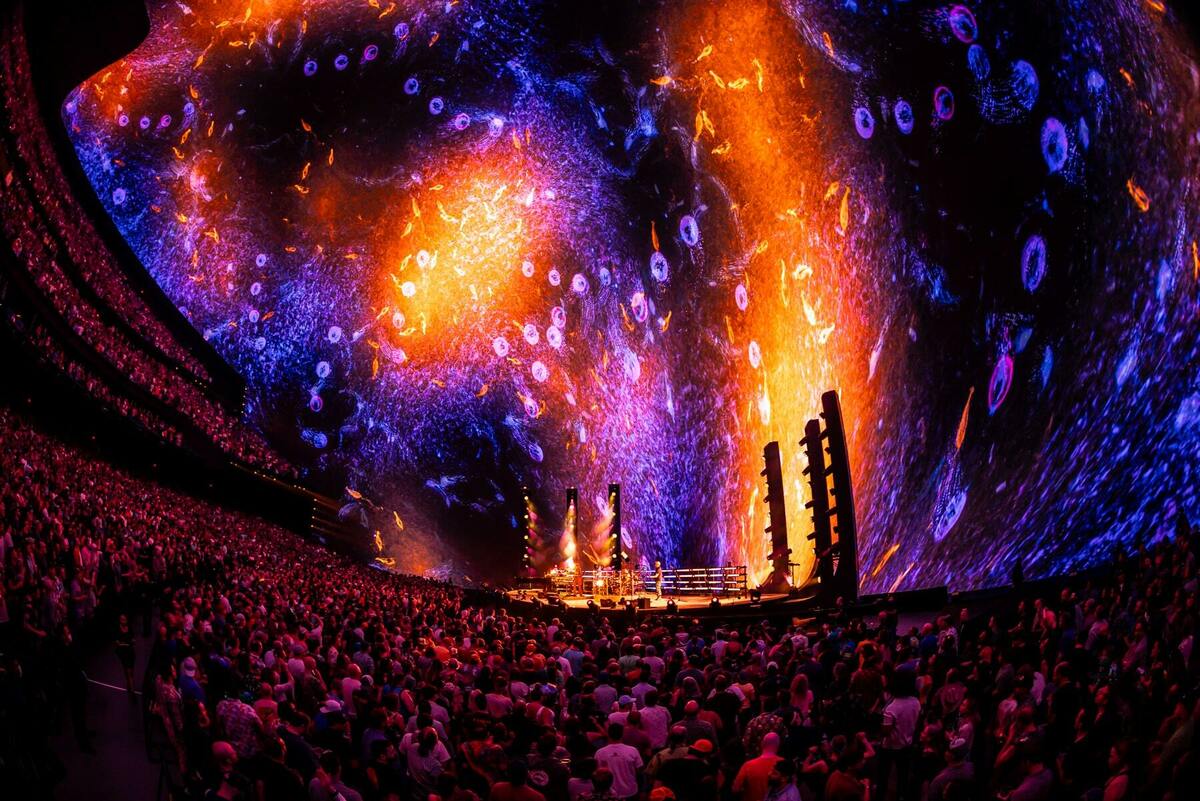
Being at Sphere, we have some challenges acoustically, because the stage is 80 milliseconds ahead of the Holoplot speaker system. But with the band all being on in-ears, we've been able to basically isolate them away from that, and also use some of the Holoplot beam steerage to focus away from the stage. So even though the PA is technically behind the band, we've been able to compensate for that. We've been having some fun trying to figure out ways to minimise the effects of that kind of thing, and like any other situation, we have to rise above it and find a way to solve any problems that might pop up.

For me, giving my artists that depth of the mix within their ears is paramount. Robert 'Void' Caprio

Can you tell us about your workflow on the Lawo mc² 56 console, and which tools or features you find really useful?

The fidelity of the console itself is the main attraction, and being able to really focus on each individual instrument to build a mix as a whole, really makes a big difference. We’ve been able to use the flexibility of the Lawo mc² 56 console – the dynamics, the EQ, and everything else that's built in – to really accentuate and focus on all the different elements of the band. They're so dynamic that the mix is always changing, and there's always a movement going on.

The Lawo mc² 56 consoles allow us to get that fidelity to really make all the individual parts speak, and poke out of the mix where they need to. As a monitor engineer, width is very easy to achieve; that left-right balance is relatively easy to get going. But for me, giving my artists that depth of the mix within their ears is paramount. And so the Lawo console in particular, mainly due to its dynamics, enables me to bring that depth to the mix and really layer things up; I can put that vocal way out front and get everything else sitting in the back, with some stuff in the middle. That's the key.

Credit: Alive Coverage

Credit: Alive Coverage

What are the main differences between mixing FOH and monitors? Is there greater pressure involved when mixing monitors?

I actually do quite a bit of both front of house and monitor mixing. When it comes to Phish, my job is simplified slightly in that I'm only mixing for Trey. I do supplemented mixes for some tech guys as well, but my main artist focus is only on Trey. My esteemed colleague, Mark ‘Bruno’ Bradley is mixing for the rest of the band, and so my challenge is just to always have the ideal mix happening for Trey. I need to be laser-focused on him throughout the set, and just watch what he's doing. I watch how he's playing and see if I can feel his movements dynamically as he's playing guitar and everything else. And again, with the band being so dynamic, with drums, bass, keys etc., it's always a moving target, and so that's the challenge.

When mixing front of house, it's a very different thing; you're kind of just trying to give a blend of everything. The audience doesn't necessarily know that something may or may not need to be louder or softer. However, the Phish fans are very particular, and they do catch a lot of things that some audiences don't. In general, front of house mixing is a little less focused on any one thing in particular, whereas with monitor mixing and Trey, I need to focus on each individual thing at certain times. But I was actually very surprised coming into this camp as to how much fun that is, and how different it is. I don't use any snapshots. Every show is different and they've never played the same show twice, so with it being so different and dynamic, it's actually a lot of fun.

Main image credit: Rene Huemer