
Subscribe
Broadcast

Inside Stranger Things 5’s production sound: Capturing tears, whispers and final scenes on set

Does Eleven die? Even worse, do Steve or Dustin? Will Max wake up from her coma? What exactly is the deal with the Upside Down? What will this season’s big needle drop moment be? Is there a secret ninth episode? With the last ever episode of Stranger Things airing on New Year’s Eve 2025, these are secrets that production sound mixer Michael P. Clark no longer has to keep.

*Spoilers are coming…

“It’s a relief that I can finally talk about it,” says a relieved-sounding Clark a few days after the final episode hits Netflix. It’s been a long road for him, too, having joined the Stranger Things team for season 2 in 2017, and then again for parts four and five – winning an Emmy along the way for his work on the show.

In 2015, identical twins Matt Duffer and Ross Duffer (now known collectively as the Duffer Brothers) began writing an original script about a missing child, blending the supernatural with ‘80s nostalgia. Netflix, which had just started to push its original content with series like House of Cards and Orange is the New Black, took a punt on the new writers – and the rest is history.

Originally pitched as a standalone miniseries, and despite the lack of initial marketing push, the show immediately resonated with audiences and received critical acclaim, cutting through the huge deluge of glossy TV dramas with a perfect blend of ‘80s nostalgia, sci-fi horror, good vs evil, a synthy soundtrack, and coming-of-age adventure.

A millennial love letter to ‘80s sci fi, (the Duffer Brothers were inspired by Steven Spielberg, Stephen King, and John Carpenter – notably E.T., Stand by Me, The Thing, Firestarter, Alien and A Nightmare on Elm Street – which explains why Vecna looks like Freddy Krueger on steroids, and more recently, perhaps Ozempic), Stranger Things centres around the disappearance of a young boy in Hawkins after a girl with psychokinetic abilities opens up the town’s very own Hellmouth, aka, a hostile alternate dimension known as the Upside Down.
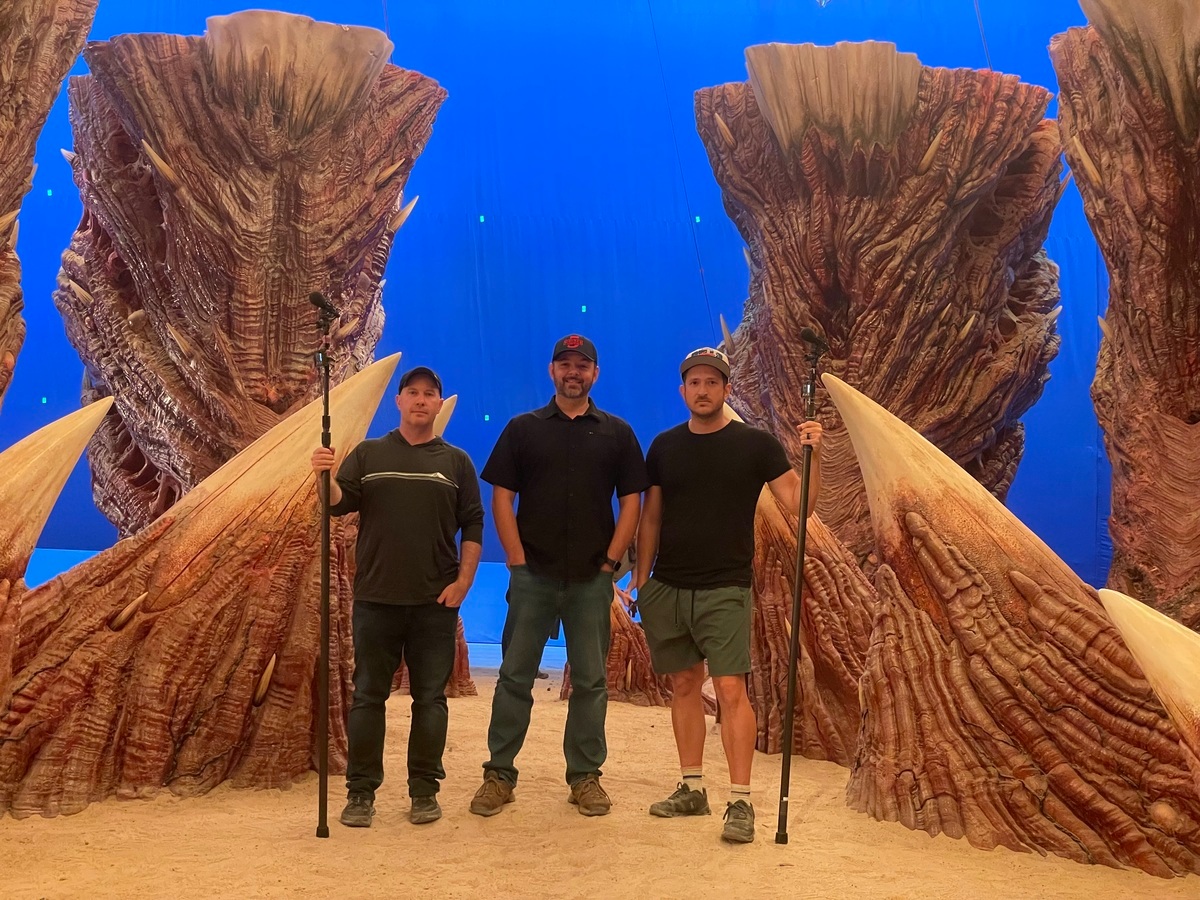
The MAC-Z set didn’t shut down for several weeks, day and night, 24 hours a day. It was crazy.

The brothers were told a show for adults starring kids could never work, yet season one’s charming blend of childlike wonder and darker, supernatural elements shot through a Spielbergian lens proved the opposite, transporting its audience back to a time when children rode bikes until it got dark and played Dungeons & Dragons in the basement. 

Meanwhile, in the real world, season 1 resulted in an increased demand for Eggo waffles and spawned a viral social media movement, #JusticeForBarb (and Bob, while we’re at it). And such was its power over popular culture that as the series progressed, its iconic ‘80s needle drops didn’t just soundtrack the Upside Down – they sent decades-old hits surging back onto the charts.

Four further seasons were commissioned, and the show’s tentacles inevitably sprawled out to a production of gargantuan set pieces, Marvel-esque budgets (season 1’s total budget was $48 million compared to season 5’s rumoured $400-480 million), bigger showdowns packed into Blockbuster-length episodes, and enough parallel dimensions and cast and crew to keep track of to give you a discreet one-nostril nosebleed.

Yet at its heart, even almost 10 years down the line, it's a show about a group of lovable nerds. And a hit show at that. Going out with an apocalyptic bang, Stranger Things 5 is Netflix’s sixth most-watched TV show of all time – crashing the streaming platform twice despite a 30% increase in bandwidth – with series four riding high at number three.

Where to start when discussing a series where the audience has watched the young cast go from kids to adults (the flashbacks in the final episode hit harder than a Mrs Wheeler throwdown) in front of our eyes? The beginning is as good a place as any, with season 5 ending the same way season 1 began: with the party playing D&D in the Wheelers' basement. 

The final scene was the last one filmed for the series, and sees the core group (the actors who have by now spent half their lives playing these characters) saying goodbye to their childhood by finishing one last game and passing the torch as younger kids start their own game. When the last ever “cut” was called, the cast and crew wiped their eyes as a poignant, respectful silence fell over the set.

That was the last thing we shot – period. It was emotional when you realise how far these kids have come.

“That was the last thing we shot – period,” Clark confirms. “It was emotional. I was teary just watching it. The biggest moment was them putting their books down. That all felt real for every single one of them, and watching them shoot that part, that’s where I really got choked up. Finishing it off like that was a nice bookend. It’s an awesome handoff, but it was sad. 

"A lot of these kids – this has been their childhood – much of it was just sitting back and watching them revel in what they’ve helped create. And when you see those flashback scenes, you really realise how far these kids have come on this journey with the show. It was never intended to be a 10-year journey,” he points out, alluding to the fans’ disappointment about the gap between seasons. Starting off playing 11-year-olds, by season 5, the core young cast are now in their early 20s.

“Unfortunately, with the way the industry is, it ended up being that way,” he shrugs. “But seeing those moments was really great. There’s just so much innocence in those early scenes. It was really special being there for each one of those actors’ final days [on set] too.”

Season 5 took 12 months to film, and Clark was on set every day of filming to lead the on-set sound department through this gargantuan project. Clark gives particular praise to boom operator Brenton Stumpf, second boom and utility, Jerrid Jones, and from his second unit crew, sound mixer Troy Johnson, boom operator Nick Brower, and utility Caleb Carlin.

Amid all the CGI and soundstages, it’s sometimes easy to forget it’s filmed in real-world locations that actually exist. Series 5 was primarily filmed in and around Atlanta, Georgia, which serves as the fictional Hawkins, along with various soundstages in Atlanta for complex sets like the Upside Down.

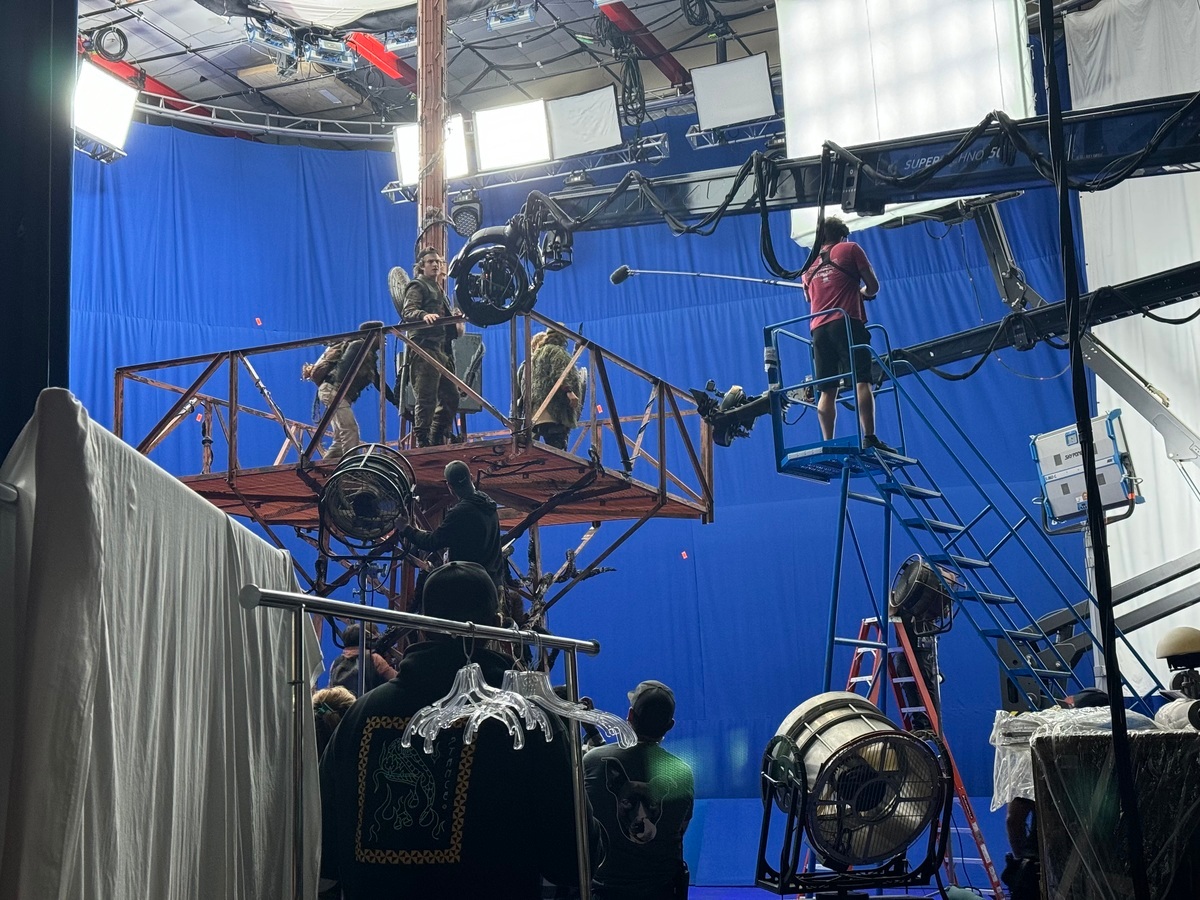
The Military Access Control Zone, or MAC-Z, emerges as a pivotal setting in the final season – a heavily fortified stronghold built over Hawkins’s ruined town square, sealing the Upside Down’s gates and becoming the front line in the battle against Vecna’s forces. The production followed a split schedule, with half days on stage followed by night work on the MAC-Z, then a unit swap to complete the overnight work in tandem.

“That set didn’t shut down for several weeks, day and night, 24 hours a day. It was crazy,” Clark reflects. “We had a big tandem unit because it was getting overwhelming. I chose [the second unit crew] because they had a full Zaxcom rig, and it matched my rig. If we ever needed to cross over for any reason, it was an easy transition. 

"There was a period during Episode Four where we had both units on set at the same time, and we were literally swapping actors and crews. We’d start the day shift, then they’d finish it off at night, and we’d come back the next day. It was a first shift, second shift swing for about a month, and we were tag-teaming back and forth. With that in mind, I made sure I had the flexibility for an actor to move between units while we were rolling at the same time.”

By then, Clark had seamlessly settled into the Duffer brothers’ on-set rhythm. “One good thing about working with them for so long is that I already know how they’re going to edit things, how things are going to get cut, and what their intent is,” he confirms, adding that the cast and crew inevitably grew close over the years. “With these kinds of shows, it’s quite special. You really do become a family.”

I built it like a tank; it holds everything needed.

The Rig

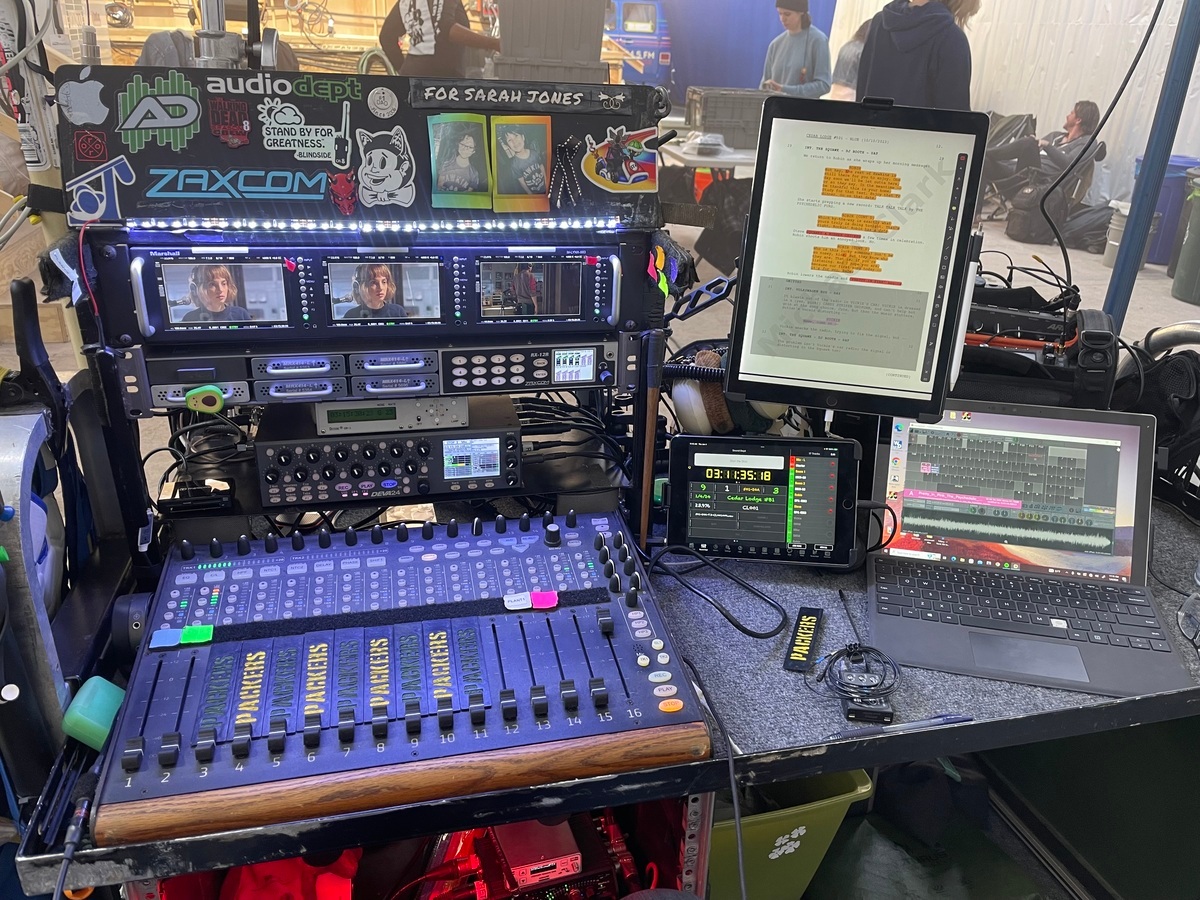
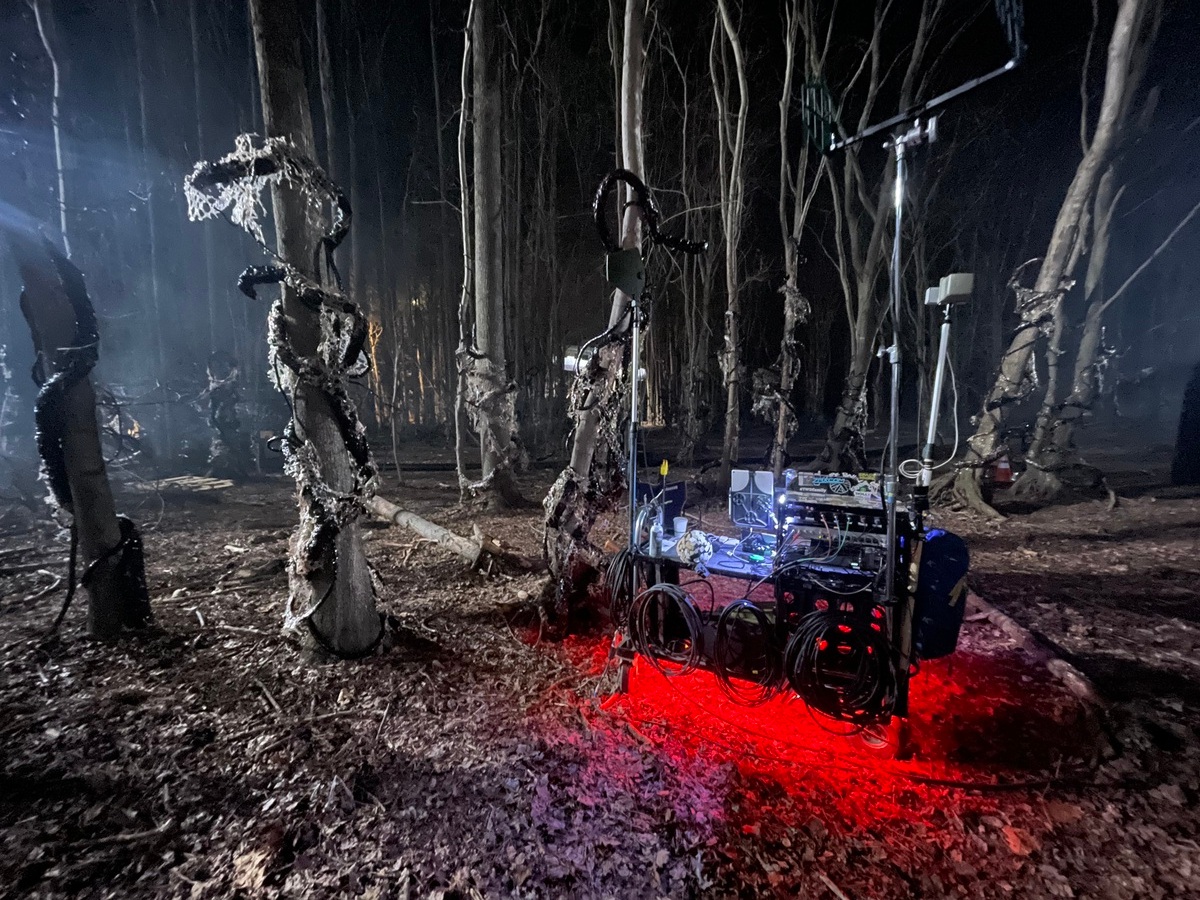
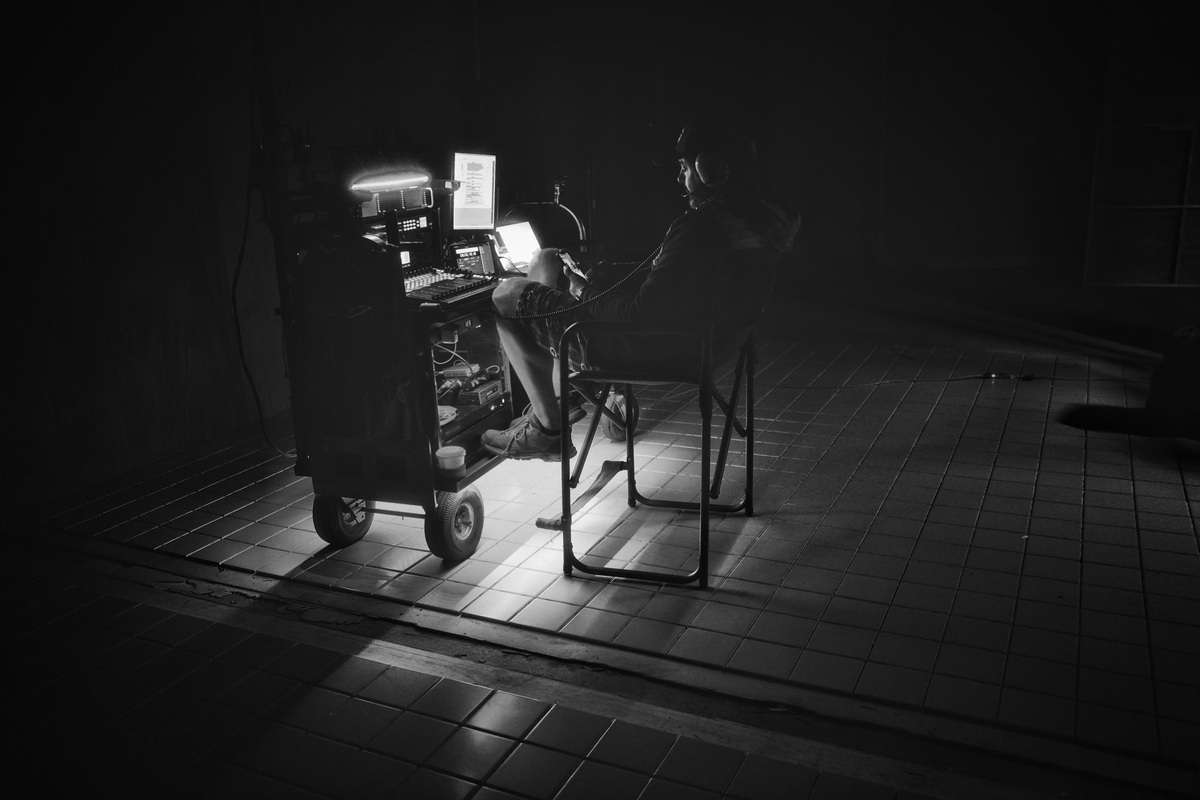
Circling back to the all-important Zaxcom rig, Clark explains that after working on The Walking Dead, he devised a setup robust enough to batter a demogorgon – should the need arise. “I built it like a tank; it holds everything needed,” he smiles. “Without that, headaches would occur.”

For Stranger Things, Clark relied on an all-Zaxcom recorder and wireless system comprising a Deva24 audio mixer and 24-track digital recorder, Nova (which serves as a mixer, recorder, and ZaxNet remote control), ZMT3 and ZMT4 ultra small bodypack transmitters, Schoeps CMIT 5U shotgun mics, Sennheiser MKH 50 P48 super-cardioid RF condenser mics, and DPA4018 supercardioid and 4099 CORE mic for plants to capture pristine dialogue on set.

Private (communication between the production sound mixer and their immediate sound crew) and public lines (used for general announcements) were taken care of with another all-Zaxcom system comprised of URX100 multipurpose UHF receivers, URX50 UHF IFB audio receivers, VRX1 analogue VHF IFB audio receivers, with the transmitted audio split by a Zaxcom CL-5 and a Comtek BST-25 wireless base station transmitter.

He breaks down his workflow for Stranger Things: "When I hit record, it records every transmitter at the same time. When I hit stop, everything stops. I’ve built a workflow so post-production can easily go through my sound report and pull any of those tracks if needed. 

"For example, if there’s a wireless hit on a transmitter I didn’t know about, or they need to fix something, they can pull it from the transmitter recording. It’s a perfect phase match to what’s on the track,” he enthuses, adding that post-production loves it."

I’m 100% Zaxcom – from wireless to recorder to mixer.

“They don’t have to use it often,” he clarifies, “but when they do, it’s a lifesaver. They don’t have to deal with cleaning up wireless issues anymore. That’s the main reason I’m 100% Zaxcom – from wireless to recorder to mixer. Even our IFBs go through Zaxcom. 

"The Zaxcom CL-5 transmitter that splits into a private line and a public line: the public line goes to the talent, the private line is just me and my guys, so we can talk without interrupting them. There’s also push-to-talk built into the transmitters, so all they have to do is press a button to talk back to me. Everything Zaxcom does supports my workflow.”

The Deva 24 was the core of Clark’s recording setup, with the Nova serving as both a backup unit and a compact bag rig for tight spaces. “The Deva 24 is the 24-track recorder for the main cart, and the Nova is for a mobile rig for situations like going into a moving vehicle,” he explains. 

“Thankfully, this season I barely had to pull that out. I also used a Zaxcom MRX414 hot swappable module receiver housed in a Zaxcom RX-12R rack unit, which delivers up to 24 wireless channels to the Deva 24 via AES. For me, that’s a big deal. It gives me a lot of wireless power in a very small space. My cart is big, but that’s more for comfort than gear.”

we could play Demogorgon sounds exactly when the actors are meant to react.

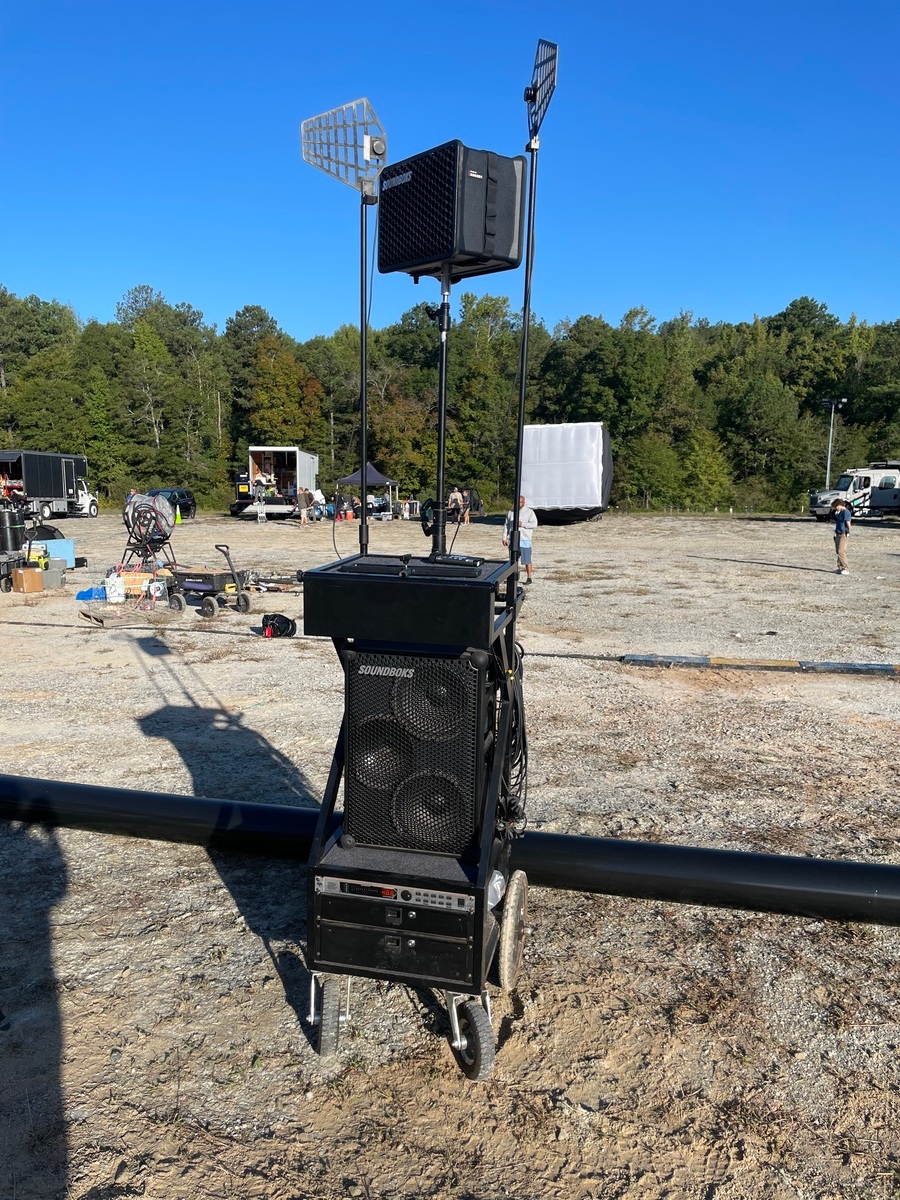
Clark’s VOG (Voice-of-God)/playback setup was built with the final season in mind after dealing with so much playback for Season 4, which comprised a four-channel Zaxcom Wireless VOG playback setup with a SoundBoks V3 Bluetooth speaker, known for being able to push up to 126dB (perfect for on-set direction over the din), a SoundBoks Go Bluetooth speaker, and a four-channel SoundDevices 442 field production mixer. “It’s built to take a beating,” he grins.

To allow the brothers to trigger sound effects on set to set the tone or give actors a cue, Clark used a Surface Pro laptop running SoundPlant – a software that transforms a computer's standard QWERTY keyboard into a low-latency sound trigger and playable instrument – allowing users to drag and drop sound effects, music, or speech onto keys to play them instantly. The setup also allows for two VOG (or four if needed) playback via phone, tablet, computer or via multiple sources.

“This was also built for this show, and is a beast! The reason I went with Zaxcom is that it has recording transmitters, so I can record any transmitter in the ecosystem at the transmitter level,” Clark explains. “What this allows me to do is have a clean recording that matches what I receive wirelessly as a backup. 

"When we were all forced into a digital wireless world, that was a major hiccup. Zaxcom was the first wireless maker to do digital recording, and they’ve been at it for over 20 years. They developed a recording system that allows you to record directly at the transmitter to solve those range issues.”

He expands on his use of the SoundPlant app: “It lets me assign any sound effect to a keyboard key. That way, we could play Demogorgon sounds exactly when the actors are meant to react. I’ve done lines of dialogue like that before,” he volunteers, using an early scene in the series where Maya Hawke’s character, Rockin' Robin, is hosting a radio show on ‘The Squawk’ whilst surreptitiously providing crucial, coded information to the characters. 

When it came time to shoot the scene where the other characters needed to react to her broadcast, Clark had Hawke’s audio ready to go:

“The kids are listening in the cafeteria, and Hopper is listening in the junkyard. Usually, the script supervisor would read the off-camera dialogue for the actors to respond to. But because of how our setup was, I thought, ‘I already shot Rockin 'Robin on day one, so I’ll just pull that up.’ I told Maya, ‘Save your voice, I’ve got this,’ and played it back. 

"They could then act naturally off the actual performance. We ended up using that method on other scenes, too. From that point on, it set a precedent for occasionally playing back any dialogue for actors to respond to.”

I played back Will’s dialogue into his ear so their pacing would stay in sync, because Will’s lines were drawn-out.

This also came in handy for scenes when Will (Noah Schnapp) and Vecna (Jamie Campbell Bower), now equipped with a Harry Potter-Voldemort-type connection, possess one another.

“When Will and Vecna were talking through each other, I played back Jamie’s dialogue for Noah and broke it up so that Noah could play off Jamie even though Jamie wasn’t physically there. I also did that for the scene where Will takes possession of Vecna when he’s about to kill Max. 

"We shot Will’s scene first, and I knew we should probably have a playback setup for this. So we put an earwig in for Jamie when he did his side of the scene, which happens much later in the timeline. I played back Will’s dialogue into his ear so their pacing would stay in sync, because Will’s lines were long, drawn-out, like, “Max, if you can hear me, you–need–to–run” – and I knew it would be tricky for Jamie to match that naturally. So rather than hope he gets it right, we just gave him an earwig, and it worked perfectly.”

We'd play these huge, dramatic tracks anytime Millie needed to throw her arm out and go full-on.

On-set needle drops

At other moments, his rig became an on-set mood weapon – dropping a sound effect to lock the actors into a scene, or blasting one of the show’s iconic needle drops to pull the cast into exactly the right emotional headspace.

“It always adds something to the performance,” Clark enthuses. “The brothers always used music as a trigger to get the actors to perform. We'd play these huge, dramatic tracks anytime Millie [Bobby Brown] needed to throw her arm out and go full-on [with Eleven’s powers]. 

"I really believe in this system of using music to invoke the character energy the actors need. For season four, the big moment was when she threw Brenner up against the wall. I can’t remember what music they were playing, but when they yelled cut, Millie screamed so loud with joy, like, ‘How awesome was that?’ 

"This is all thanks to that SoundBox speaker. That thing is loud. Really loud. When Millie was in the underwater tanks in season five, we’d put the speaker up against the tank so they could talk to her, and it worked brilliantly. I was just trying to be creative.”

I remember Matt playing Purple Rain, and I just thought - That’s a choice - without even thinking it would end up in the show.

With echoes of season four’s biggest needle drop moment (Kate Bush’s Running Up That Hill), still rippling through season five, this season’s soundtrack had a lot to live up to, unleashing Prince’s When Doves Cry and Purple Rain, Upside Down by Diana Ross, Landslide by Fleetwood Mac, and finally, David Bowie’s Heroes for the series’ most impactful moments. Clark shares that these tracks were played on set through his system to put the actors in the right headspace.

“I remember Matt playing Purple Rain, and I just thought, ‘That’s a choice,’ without even thinking it would end up in the show,” he reveals. 

“One of my personal favourite moments was Robin finishing her Rockin' Robin final scene with Landslide. That was a lovely choice. On that day, I played it in her headphones, so she was hearing the track while doing her dialogue. It really helped with the pacing and getting her through it.”

That reminds Clark of a song the brothers would return to when a scene called for something especially heavy and emotional: “They used Moby’s When It's Cold I'd Like to Die to bring in sadness, and they use it in the show a lot too. That’s a pretty solid needle drop.”

Mics

Clark worked with a range of microphones on Stranger Things. He explains how he decided to rely on wireless lavaliers or boom microphones for specific scenes.

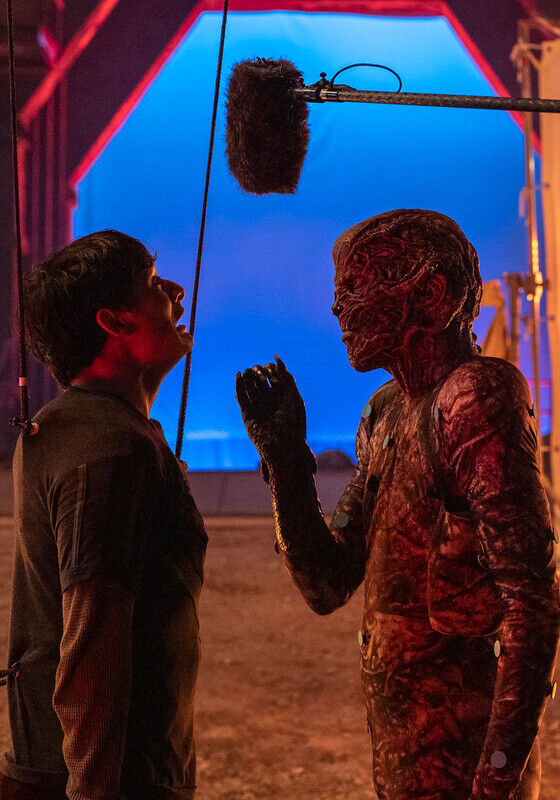
“It depends on the camera setups,” he explains. “For the wide shots, I’ll use booms and lavs. I mix booms in with lavaliers to help thin them out. I’m not a fan of a direct lav-only sound; I like a bit of life in it,” he shares. 

“I tell people the set is a character, the environment is a character, and the dialogue should sit within that space – it’s part of the performance. For plant mics, I use DPA 4018s and Sennheiser MKH 50s for inside vehicles and pretty much anywhere else. I prefer the MKH 50 for overheads indoors; it just sounds really good in that environment. 

"On set indoors, I use the MKH 50s because I like the sound they give. Not to say you can’t use Schoeps in those situations, but I reserve the longer mics for when camera setups require them to match tighter frame sizes. Outdoors, I stick with the Schoeps; my guys like them too because of their weight, and they both perform really well.”

Whenever you have multiple actors in a car, I spray the car with microphones

Not that he doesn’t appreciate the DPA 4018s just as much. “They are small plant mics that I love to use, but only in the right environment,” he stresses. 

“They don’t have the reach of an MKH 50, but they’re tiny, so you can get them into really small spots, and they sound amazing when used properly. I also use the DPA 4099s. DPAs are the best small-capsule microphones in the industry. They sound more open and natural. Smaller mics tend to sound thinner, so I usually only use them for troubleshooting – poking them through holes, dealing with tricky costume contact, that kind of thing.

“For the main work, I prefer slightly larger diaphragms, which give a richer tone and reduce noise, letting post-production handle any brightening if needed. 

"I choose DPAs for the best sound in small lavaliers, Schoeps for their low-end quality, which shines on TV, and the MKH 50 for indoor plant work and as my main go-to for interiors. That’s my standard go-to setup. It’s about clean audio. It's just about getting a clean, consistent sound – that’s the key.”

She’s whispering to her, barely pushing any air out; That was one of the hardest dialogue scenes to capture.

Clark experienced some of his most challenging moments on set for series 5. In a scene that nods to an iconic Jurassic Park kitchen sequence, Hawke decided at the last minute to whisper her lines to her co-star, Amybeth McNulty.

“That was one of the hardest dialogue scenes to capture,” he nods. “They’re coming through the laundry room before Karen comes in and blows everything up. She’s whispering to her, barely pushing any air out. 

"I actually had to ask our dialogue editor whether that was her production performance or ADR, because we both looked at it. Sean Levy [director] and I had talked about it several times, wondering, ‘Are we actually going to get this?’”

As Hawke’s mic audio was muffled due to it being squashed up against McNulty, Clark placed an additional mic in McNulty’s collar. “But her mic was completely swallowed up because Maya is hugging her, so I even had a microphone literally right outside of the frame, and it barely picked her up. 

"The shot is really tight, and we also tried a wider shot at one point, but it didn’t make a difference – having a mic in there still wouldn’t have worked well. We shot a couple of takes, and the only one that stood out was using her dialogue off Vicki’s mic. We ended up putting another mic in Maya’s collar – two inches from her mouth, and even then, it was still difficult. 

"Consonants don’t really come out properly because you’re trying to be quiet. So Ryan Cole [dialogue editor] brought her in for ADR to accentuate those moments. That was one of those moments I honestly thought we might not get – but we did.”

We ended up putting another mic in Maya’s collar – two inches from her mouth.

For any car scenes, trucks, the Squawk Van or Steve’s Beamer (RIP!), it was a case of the more mics, the better. 

“Whenever you have multiple actors in a car, I spray the car with microphones. Over the years, I’ve learned that when actors get in a car, the blocking changes because they’re sitting down. They can’t move like they would on a stage or set, so sometimes actions change a lot as the actors feel it out. 

"We have to protect ourselves to cover whatever might happen. I tend to put three microphones on each person if I can: a lavalier, an overhead mic, and a mic underneath, so no matter which way they turn or speak, we’re covered. 

"Two people in a car? Six microphones. Four people? Twelve microphones. The action in those scenes was pretty chaotic, so it was a real feat of equipment and technical skill. There’s a lot to consider and a lot to manage to capture it all.

I tend to put three microphones on each person if I can: a lavalier, an overhead mic, and a mic underneath.

“We also use a ton of plant mics,” he adds. “Take the Bradley's Big Buy truck, for example – it’s a huge metal container. The challenge on that set was making it not sound like a big ice box or hollow metal box. 

"My team padded as much of the lower and backside of the truck as we could. That way, when we placed the plant mics, they didn’t sound boxy or hollow. We wrapped and padded around the mics to reduce slapback and resonance. It took a lot of work.”

I take those scenes as moments of beauty. That’s what I strive for. I don’t want them to do any ADR if we can avoid it.

Saying Goodbye

Many of the scenes in the final episode carried five seasons of emotional weight, and knowing they were saying goodbye to these characters and this chapter of their lives, no acting was required to simulate tears for the young cast. 

For these scenes in particular, it was imperative that the audio from their raw performances was captured first time, as bringing actors back for ADR would not pack the same emotional punch. Clark uses the scene where Eleven says a tearful goodbye to Mike (Finn Wolfhard) before sacrificing herself, and the final D&D scene, as examples.

“That’s what makes my palms sweaty, you know? It’s one of the most nerve-wracking things for me to do. A lot of the time, it’s just one microphone. This season was chock full of highly emotional scenes, and something that really sat in my mind while I was watching it was how challenging it is for us on set to capture those performances without any mistakes. 

"When you get into these really heavy, emotional scenes where the actors are giving everything they have, pouring it all out and crying, it gets very dynamic. It’s intense. If you’re not prepared for it, gain-wise, you can get distortion and clipping, and you ruin that person’s performance. But we got it. I take those scenes now as moments of beauty. 

"That’s our job, that’s what I strive for. I don’t want them to do any ADR if we can avoid it. One of the things I’m really proud of with Stranger Things is that we captured the majority of the performances.”

He sets the scene: “I’ve got one finger on the fader, one finger on my input gain, and I’m riding that thing like crazy, trying to follow the breath work and capture it without messing up their performance. And at the end of it, both faders have a little drip of sweat on them from my fingertips,” he laughs.

I’m glad to be part of a show that finished it off the way I feel it should be finished. There are a lot of shows that don’t.

The show’s ending struck a poignant and bittersweet note as the gang bid an emotional farewell to this chapter of their lives, having defeated the Big Bad and lost Eleven in the process. 

The main cast return to the Wheelers’ basement for one last game of D&D, and in his closing words in the role of storyteller, Mike shares his predictions for their future, including his theory that rather than dying, Eleven has made a peaceful life for herself elsewhere.

If anyone’s mind was feeling decidedly flayed trying to keep up with the final season’s various storylines, dimensions, and characters’ tendency to concoct elaborate plans on the fly, one thing the brothers unquestionably did nail was the ending.

“It's hard to wrap things up,” Clark acknowledges. “I’m glad to be part of a show that finished it off the way I feel it should be finished. There are a lot of shows that don’t, but they nailed this. “I kept telling anyone who asked, ‘You’re gonna love it!’”

As to his take on Eleven’s fate: wishful thinking, or was her death real? “Personally, I feel she’s gone, but I like the story he told. That’s Mike’s way of coping with grief. He wants this to be the truth, but he knows deep down it’s not. But he’s the storyteller, and he has to finish it off on a positive note. That's why I think there’s brilliance in it. It’s so well crafted and such a great twist that nobody really saw coming,” he smiles.

Images courtesy of Netflix