
Subscribe
Music News

What Sinatra's Team Knew About Building Systems That Don't Need You

Frank Sinatra never asked a sound engineer to fix a problem that belonged to someone else. The night it happened, Lucas "Rico" Corrubia was mixing front of house. Sinatra was working through a number, and the dynamic wasn't right. The trumpets were off. The balance between the orchestra and the voice – the thing that makes a Sinatra performance feel inevitable rather than assembled – was missing. In his latest Headliner column, pro audio executive Mike Dias profiles Rico, who learns that the best systems are built long before showtime – where every player owns the standard and the mix takes care of itself.

Most performers would turn to the sound engineer. Fix it. That's your job. Get the mix right. Instead, Sinatra turned to the orchestra. "This whole orchestra, I'm going to tell you something. It's not the kid's job to do the dynamic. It's all of your jobs. When I make this hand gesture, the trumpets are going to play that high note at this volume. Or you're out of here."

When Rico told me this story while recapping his 45-year career, he ended by saying, “You mix Sinatra at unity.” The fader sits at zero. Not because the engineer isn't present – but because every person in that system has internalised the standard so completely, has been held to an expectation so clearly communicated, that there is nothing left for the engineer to correct.

Sinatra didn’t want the sound engineer to fix the dynamic. He expected his orchestra to do their job. The engineer's job, when the system is working, is not to interfere. And yet, most executives spend their careers riding faders. 

Compensating in real time for a system that was never properly calibrated. Working harder and harder to correct in the moment for problems that should have been solved upstream. Wondering why the mix never quite sounds right.

What Sinatra understood, and what Rico absorbed working inside that system, is that the console has a limit. The best engineer in the world can only do so much to compensate for an orchestra that doesn't own its dynamics. The fix doesn't happen at the board. It happens in the room, before the show, with the people who are going to play it. Hold everyone to the standard. 

Communicate it with enough clarity and enough consequence that no one needs to be reminded during the performance. Then let the engineer hold steady. That's not a principle about sound. That's a principle about every system that has to perform under pressure in front of people who are paying attention.
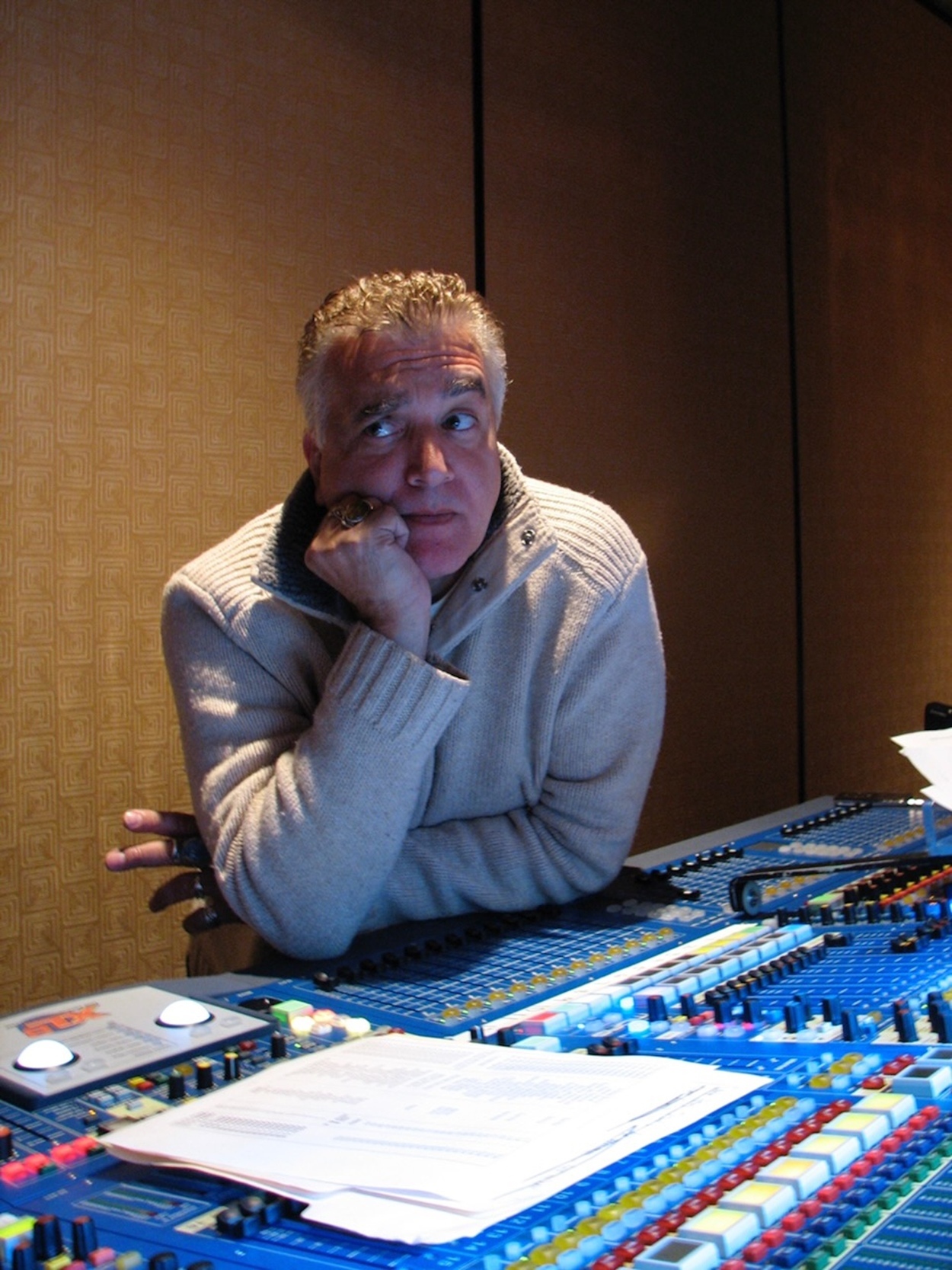
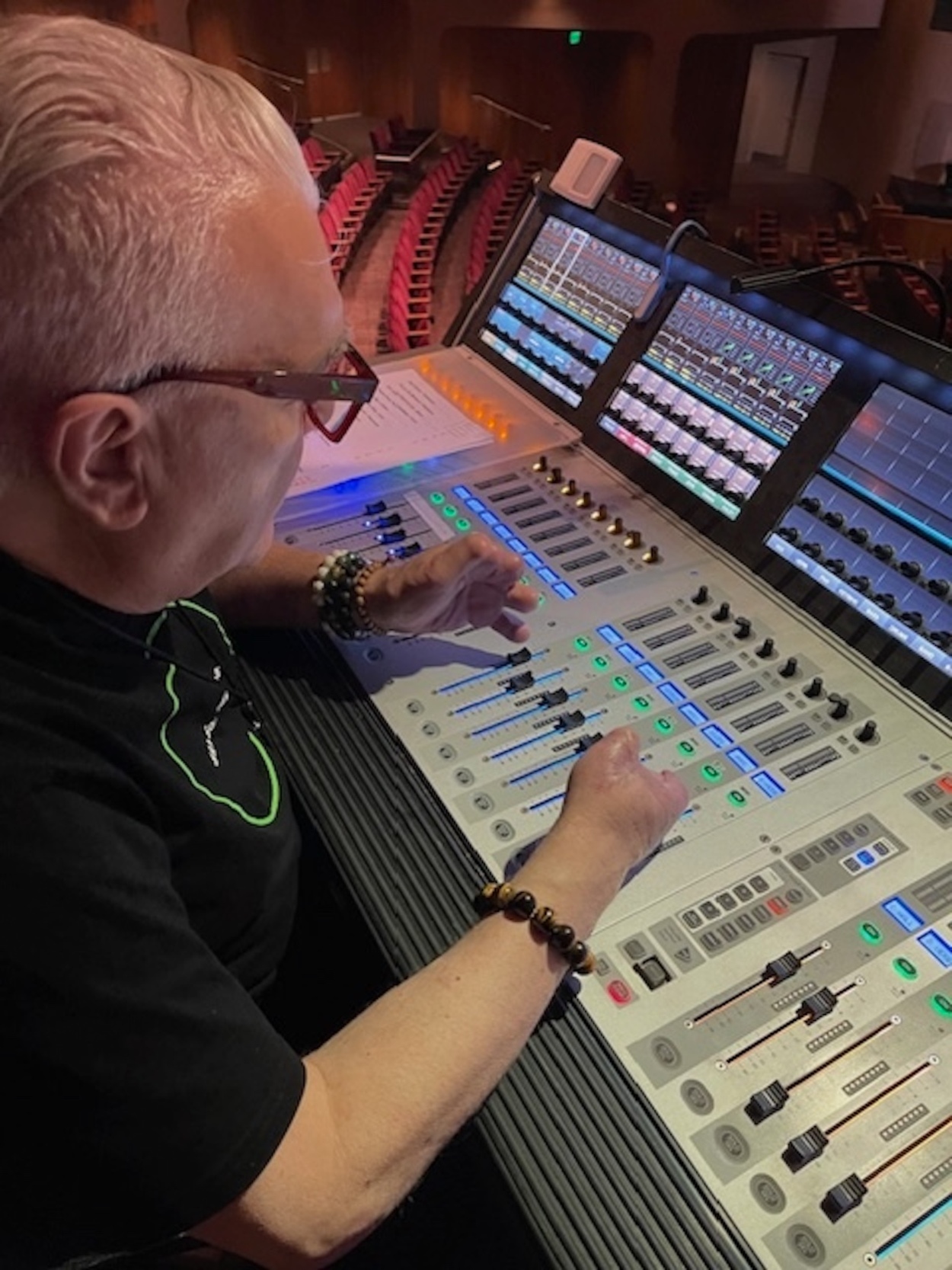
The people who worked with him call it the Rico Button. He sat down at the board, he did whatever he does, pressed the magic Rico Button, and it just sounded different.

It Started as a Summer Job

Rico didn't plan any of this. He was 26, heading toward a master's programme in art therapy, when his friends in Atlantic City called. The casinos were building showrooms. The money was good. The only job left was sound engineer – a field he knew nothing about. He went for the summer. A veteran named Tom Young became his first mentor, taking him under his wing in the late-night lounge at Bally's, teaching him reverb on a PM 2000 from 10 pm until four in the morning. 

The mentorship moved fast. Within months, Rico was the house sound engineer at the Golden Nugget – a nervous wreck with four months of experience and enough ears to know when something was wrong, even if he couldn't always explain why.

Then Steve Wynn signed Sinatra. And the summer job became a laboratory. What Rico learned in those casino rooms, mixing the Chairman of the Board for audiences who had come specifically to hear the space between the notes, was a doctrine that would travel with him for the next four decades. Not technique. Something prior to the technique. The understanding that sound is not what comes out of the speakers. It's what happens inside the listener. He never went back to school. And 45 years later, he doesn't have a single regret about it.

Most executives spend their careers riding faders. Compensating in real time for a system that was never properly calibrated.

Broadway Taught Him That Coordination Is an Art Form

The concert world found Rico first, but Broadway claimed him. Pete Townshend came backstage after hearing him mix The Music of Andrew Lloyd Webber on tour and told him he had to do Tommy. That was Rico's first Broadway show. 

He walked into the load-in thinking like a touring engineer – moving fast, pushing hard, expecting to have it done – and was pulled aside by his Local One brothers who explained, with varying degrees of patience, that he had six weeks. For a touring engineer, that's not a timeline. That’s a lifetime. And it turned into an education.

Because what Broadway teaches, if you're willing to learn it, is that precision is not the same as speed. You have time to move a cluster of speakers 10 feet and listen to what changes. Time to find the frequency that's reflecting off a wall, impacting just a few seats. Time to discover what a great snare sound actually means in this room, for this show, for this audience. Time to get it right in a way that touring never allows. 

But the deeper lesson, the one that separates Broadway from everything else Rico had done, wasn't about sound at all. It was about what happens when an entire production reaches the level of coordination where every element is listening to every other element simultaneously.

A Broadway show at full flight is not a sound system with a show wrapped around it. It's a living coordination of lighting, performance, sound design, automation, and staging – all of them hitting their marks together, every night, in the same room, with the same stakes. 

The boom through the speakers that ends a scene and begins the next one. The moment when the lighting state shifts and the sound shifts with it, and the actor's body changes, and the audience, without knowing why, collectively holds its breath.

That coordination doesn't happen by accident. It doesn't happen because the people involved are talented. It happens because every department has internalised not just their own cue but the shape of the whole. The sound engineer knows what the lighting designer is doing. 

The lighting designer knows what the sound is doing. The actor feels both. The audience experiences something that feels inevitable and seamless.

This is what corporations call alignment. What they rarely achieve is what Broadway produces nightly: not departments that tangentially agree on a strategy, but people who have rehearsed together until the timing is shared, until the response is reflexive, until the system holds under pressure without anyone having to call an audible. And Broadway teaches one more thing that the concert world almost never does. Bring it down.

Not everything deserves full gain. Not every moment should be mixed at the ceiling. The most powerful moments in a Broadway house are often the quietest: the solo that's barely amplified, coming from one precise point on stage, in a room of a thousand people who have leaned forward without knowing they did it. 

The engineer's job in those moments is not to fill the space. It's to protect the silence around the thing that matters. Most executives present at 10 all the time. They never bring it down. They don't understand that the lean-in – the moment when an audience closes the distance voluntarily – is only possible when you've made room for it.

The fix doesn't happen at the board. It happens in the room, before the show, with the people who are going to play it.

Touring Taught Him That the System Will Never Survive Contact With Reality

Broadway builds the perfect system. Touring teaches you that it won't last. Different city. Different room. Different acoustic nightmare. You walk in at eight in the morning, and you have until lunch to get it right. There is no moving the cluster. There are no six weeks. There is your ear, your system engineer, and a series of decisions that have to be made quickly and correctly because the show is tonight, regardless. Decisions have to happen faster. 

The ear has to get sharper. The pattern recognition that took weeks to build in a Broadway house needs to happen in minutes because it has to. And then you load out, drive to the next city, and do it again. What touring builds is judgment under pressure. The ability to read a room not as it should be but as it is, and to know the difference between what can be fixed in the time available and what has to be accepted and worked around.

There was a night at Royal Albert Hall that illustrates what happens when Broadway patience meets a touring timeline: Rico was mixing a large orchestral concert. The sound company had put up 80 speaker boxes per side. Standard thinking for a room that size. More coverage. More confidence. More everything. Rico walked in, listened, and heard the slapback – the half-second ghost of the vocal bouncing off the back wall, the echo that makes everything feel slightly wrong in a way audiences sense but can't name. He couldn't leave it. 

So he and his system engineer stayed in the hall through the night. Ten in the evening until morning. Unplug boxes one at a time. Walking the room after each one. Not from the mix position, walking the seats, finding the problem at its source, tracing it back. By morning, they had gone from eighty boxes per side to roughly twenty. And the coverage was perfect.

That's a Broadway instinct, the patience to keep listening until the room tells you what it needs, applied inside a window that touring created. The touring world trained him to work fast. Broadway trained him to work deep. 

Royal Albert Hall required both simultaneously. Most executives know how to do one of these. The ones who only work fast leave 80 boxes up and call it good enough. The ones who only work deep are still unplugging boxes when the doors open.

The Rico Button isn't a technique. It's what happens at the intersection of two kinds of mastery that almost no one is asked to develop simultaneously.

The Rico Button

Here is what the young engineers sent to learn from Rico came home with: something they couldn't name. He hung speakers in ways that were unorthodox. Sometimes strange. Often counterintuitive to anyone who had learned the rules before learning the rooms. 

And when the system came up and the space filled, they'd look at each other and reach for the technical language and find it wasn't quite there. It sounded right. It felt right. They just couldn't fully explain why.

He tried to teach it. He'd walk them through his thinking, trace his logic, explain what he was hearing. Some of it transferred. Some of it couldn't be, because the knowledge had stopped living in his head a long time ago. It lived in his hands. In his ears. 

In 45 years of eight-in-the-morning decisions and six-week calibrations. The people who worked with him called it the Rico Button. As in: he sat down at the board, he did whatever he does, pressed the magic Rico Button, and it just sounded different.

He is genuinely humble about it. Not performatively, but in the way of someone who still finds it remarkable that the summer job became this. The casino lounge became Sinatra. That Sinatra became Broadway. That Broadway became 45 years of knowing things he can't fully explain in rooms that required him to know them anyway.

Every organisation is searching for this. They're building processes, frameworks, playbooks, and measurement systems, trying to capture the thing their best people do, and finding that the process never quite produces the feeling. That's because the Rico Button isn't a technique. 

It's what happens at the intersection of two kinds of mastery that almost no one is asked to develop simultaneously: the patience to build something perfect, and the judgment to know when perfect isn't available and act anyway. That's the career nobody writes about. The one where no one knows your name, and everyone knows what you helped make great.

Lucas "Rico" Corrubia spent 45 years doing something he couldn't fully explain. Broadway. Touring. Sinatra. Van Halen. Bernadette Peters. Liza Minnelli. Michael Crawford. He built perfect systems and then watched them collide with reality every single day. His credits include The Who's Tommy on Broadway and international tours with some of the most demanding performers in history. What he learned in those collisions is the thing no MBA programme teaches, and the thing every executive desperately needs.

Mike Dias writes and speaks about pressure, performance, and the Relationship Economy – translating the hidden operating systems of world-class entertainers into leadership frameworks that actually work. His lens makes one thing clear: trust is the condition, the framework is the practice, and experience is the outcome.