
Subscribe
Aspiring

Salarymen: Inside the Aussie duo’s UK move and debut album, Take It Or Leave It

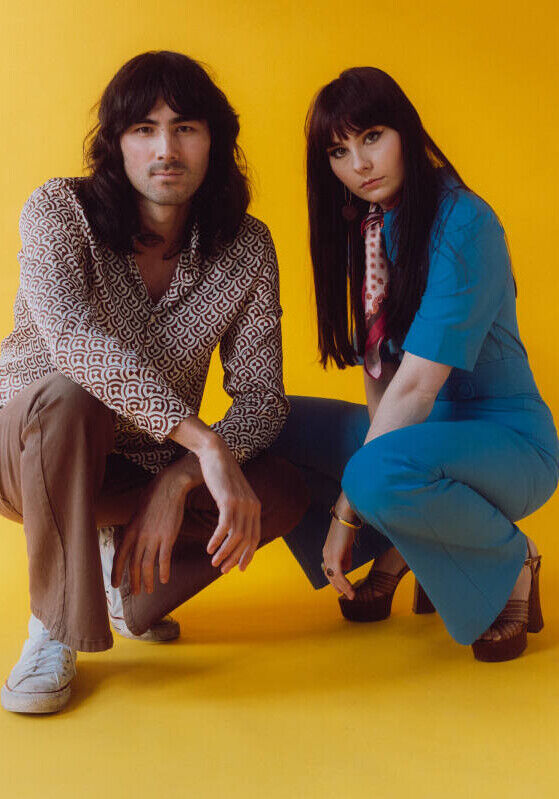
Renee de la Motte and Thomas Eagleton are the Aussie duo behind Salarymen, a band named after burned-out white-collar Japanese workers, with songs combining an array of rock, psych, and dream pop influences. Since releasing their debut single in 2019, they have supported the likes of Royal Otis and have toured the United States, Japan, and their native Australia. The London-based duo speak to Headliner about honouring the album format, not rushing out music in the TikTok world we’re living in, and the process behind their debut album, Take It Or Leave It.

One of the trademark qualities of Salarymen is Eagleton and De la Motte’s call-and-response vocals, with songs that are nostalgia-inducing by design. Besides supporting Royal Otis and their globetrotting performances, they have also notched up SXSW Austin and Sydney appearances, as well as an array of festivals that includes Lost Paradise, Mountain Goat Valley Crawl and The Gum Ball. They are no strangers to radio, with their songs in rotation on BBC 6 Music, Radio X, KEXP, and more. With the new deluxe version of Take It Or Leave It having just been released, the pair are a little tired after performing in Brighton the night before and having a hard time getting home.

Hello, Salarymen! How was the show in Brighton?

De la Motte: We got home at 2am last night after our train from Brighton was cancelled. The show was a success, though, so we’re looking forward to doing some more shows there.

What’s the origin story of Salarymen?

Eagleton: We were dating — and we still are! — I was in another band which fell apart, and I was going to start my own thing. I realised how much work that was going to be, so I recruited Renee and taught her how to play bass.

I don’t know how solo artists do it. They either have to be rich or miserable.

It’s pretty clear from your sound that you’re influenced by ‘60s and ‘70s music. Did you grow up hearing bands from that era?

De la Motte: When we first started, we were much more ‘60s and ‘70s-sounding. At the time, we were listening to a lot of David Bowie and The Beatles. We have diversified it a little bit now, but that is a common thread in every song we write. It always has to have loads of harmonies and classic ‘60s chord progressions and melodies.

How did you make the decision to leave Australia for the UK?

Eagleton: In Australia, you’re limited by the fact that it’s a small population and a huge country. We were explaining to some British bands last night that you can fly for five hours and still be in the same country. On that Royal Otis tour, we went to Perth for the first time. That’s a five or six-hour flight and very expensive.

De la Motte: Being a musician is hard; it’s harder in Australia. There are more barriers to getting anywhere, physically and figuratively.

How did you settle on the band name, which refers to overworked white-collar Japanese workers who work exhausting hours and then get wasted in karaoke bars?

Eagleton: We are slightly obsessed with Japan, we’ve been there six times. It’s a surprisingly easy flight from Australia. We threw the name out as a bit of a joke, but then we thought about it and it has serious parallels with the way we operate. Until last year, we didn’t have a manager, and we were working our butts off just like actual salaryman, slaves to the music. We come home from work, send emails, and do band admin. Then we go out and get drunk in the karaoke bar. In Japan, you literally see grown men passed out on the sidewalk in suits, fiercely loyal to their company.

Musicians these days have to be their own marketing, PR, and social media team, often while working full-time jobs. How’s your experience been?

De la Motte: This year has been wild. This is our debut album, and we’ve tried to squeeze in a million different videos. The social media element is arguably more important than the music these days, which is very bad. Management is always saying "content, content, content." It sucks the life out of you, but you have to promote. We have fans in Japan, Ecuador, Chile, Mexico, and Brazil who would never have heard our music years ago. It can feel like a drag, but it’s a good way to reach fans you otherwise wouldn't. You have to adapt.

Being a musician is hard; it’s harder in Australia. There are more barriers to getting anywhere, physically and figuratively.

Huge congrats on releasing Take It Or Leave It, your debut album. What was the writing process like for the record, as a duo?

Eagleton: We split up and write; Renee will write her own songs and I write mine, then we come together.

De la Motte: Having two singers is an unusual format these days, we both consider ourselves the lead. We want to make the most of both of us, and it opens up new opportunities and challenges to feature both our voices. We love the dual vocals, it’s our unique selling point.

A great case study on the album is If You Want Me; the song goes from the drum machine intro into a huge rock band sound.

Eagleton: I wrote that a few years ago, inspired by standard ‘50s and ‘60s ballads like Roy Orbison. Then we slapped a bunch of heavy synths and distorted guitars on it.

De la Motte: Originally Tom wrote and sang it, but we reimagined it for the album as a back-and-forth duet. It added a different meaning to the lyrics; now it’s two people lamenting how they wronged each other. It’s kind of surprising when Tom starts the song and the next line is my voice, which is a lot higher.

I also love the Rhodes piano and trippy flourishes and production on Let Me Go.

Eagleton: I have a Roland Space Echo which I love and sneak into songs as much as I can. I love little things at the start of songs, sometimes I spend five hours on a tiny five-second thing. It kind of feels like a movie intro. That was your song, Renee!

De la Motte: I was really into bongos at that point. I said I was going to write a song around a bongo riff. I got my toy keyboard and came up with that piano riff, and I sat on my bed cross-legged and came up with the melody, and recorded it on my phone. It just felt like a cool way to start a song instead of some boring drum beat.

What could be more Salarymen than the two of us in a ramen shop at 2am in manga form?

Being in a duo, is that helpful for dealing with the critical internal dialogue around your songs?

Eagleton: We can definitely bounce off each other, but we criticise each other quite heavily too!

De la Motte: If I give something to Tom and he says it’s shit, then it’s just shit. I’m okay with that; we trust each other completely. I don’t know how solo artists do it. They either have to be rich or miserable.

Eagleton: We can share in our frustrations and revel in the good times when we have them. It seems like the game is rigged these days; people with the most money and the most paid social media marketing get all the opportunities. We just try to keep each other’s chins up.

De la Motte: Something we were really excited about for this album is that we got a Tokyo-based designer to hand-draw us in an anime scene. It’s Tom and I eating late-night ramen. What could be more Salarymen than the two of us in a ramen shop at 2am in manga form? It’s important that musicians support other creative artists because AI is coming for us all.

Going back to your gig in Brighton, that was the start of your tour for this album. How did it go in terms of setting the tone?

Eagleton: It was freezing. I have never been so cold inside a venue. It was a place called the Green Door Store beneath the Brighton station archways. Very cool spot, great sound, and a good crowd.

De la Motte: It was our first headline show in Brighton. You would not dare host a gig on a Tuesday night in Australia because we’re not cool enough to come out and support live music mid-week. It was really, really nice to see all these new faces support an Aussie band on a Tuesday night. Quite inspiring.

Take It Or Leave It (Extended) is out now. 

Images by Tom Wilkinson