Subscribe
Headliners

From One Direction to indie pop: Producer Nicolas Rebscher on tackling imposter syndrome on Louis Tomlinson’s How Did I Get Here?

Louis Tomlinson was a member of one of the best-selling boy bands of all time, boasts the most writing credits in One Direction out of all the band members (selling over 70 million records with the group), and with the release of his third album, How Did I Get Here?, he has just secured his second UK No.1 album. So why the imposter syndrome? German producer Nicolas Rebscher, aka Tomlinson’s very own “mad professor behind the desk,” reveals how heading off to the jungle helped the 1D star confront those doubts and create his most honest record yet.

“It’s so surreal for me,” says Rebscher on securing a UK no.1 with the new album, which he wrote half of and produced in its entirety. “The UK is always seen as an incredible music market that produces amazing artists and has really shaped pop history – I always dreamed of contributing to that in some small way, but I never, ever imagined having a number one in the UK. I’ve been so heavily involved in this project, and I love it, so then actually seeing it at number one was unbelievable.”

Having already established his post-1D sound as more Britpop-esque and finding success as an indie rock artist, Tomlinson’s third album sees the singer continue to lean into that. The new record is one shaped by an artist confident enough to sit with the album’s emotional layers, blending his indie guitar influences with a brighter, more buoyant pop sound laced with synthy textures. 

Tomlinson clearly pushes himself as a lyricist, songwriter, and performer in his latest body of work, while making a decidedly less gloomy record than his previous efforts, calling it a more accurate reflection of his decidedly un-gloomy personality.

“I sum it up as ‘the record I always deserved to make,” Tomlinson stated when releasing the album. “My bread and butter is my honesty. I genuinely wear my heart on my sleeve, and I hope it comes through in the music. I’m still learning and getting better as a singer and a songwriter. I find it impossible to be complacent; it’s not in my vocabulary. For the first time now, I’m allowing myself to be the artist I’d always hoped to be.”

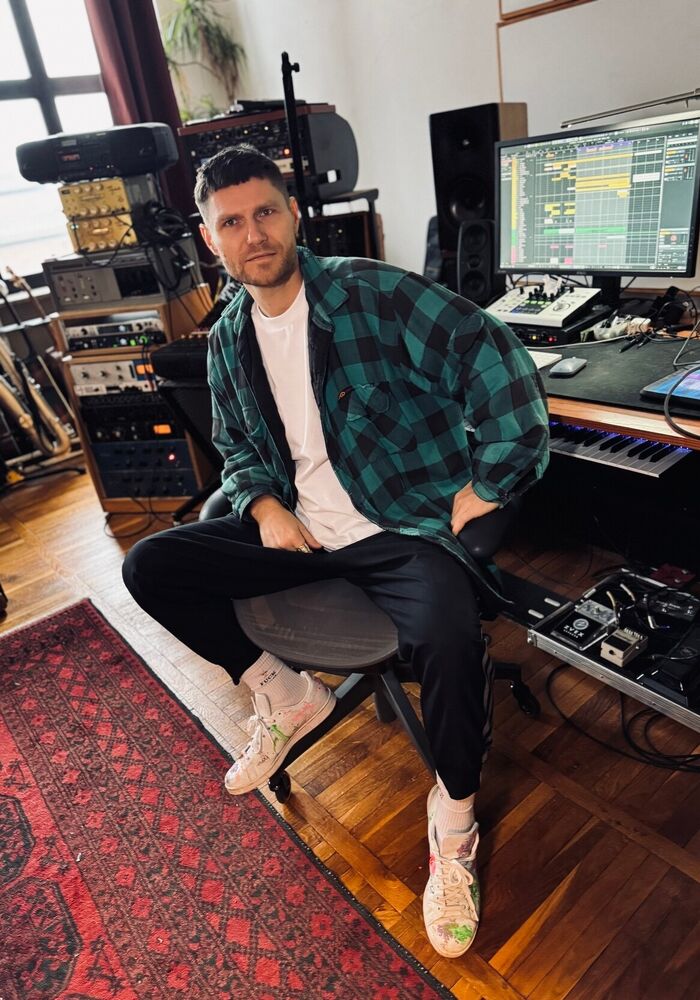
It wasn’t Rebscher’s first rodeo with Tomlinson, who was a producer on 2022’s Faith in the Future, and who also brought his experience of working with artists like AURORA, Macklemore, Ella Henderson, and Alice Merton to the table. And by table, he means Costa Rica. 

Tomlinson assembled a handful of initial ideas in the English countryside before decamping to Santa Teresa for three weeks in early 2025. Rebscher jokes that the singer-songwriter kidnapped him on a plane to get the creative gears turning for the album.

It was a wild journey for me,” he recalls, admitting he is not a fan of small planes. “Louis always had this vision of going away somewhere warm and far away. I took a big plane to Costa Rica, but then they told me we’d need to take a smaller one if we didn’t want to spend the whole day travelling by bus or boat. It was just a 10-person plane, and I was really scared because we flew straight into massive thunderclouds and rain, and I was like, ‘Okay, I’m sending my wife my last goodbye,’” he laughs. 

“He took us there, right in the middle of the jungle. We stayed in a villa that you could only reach by quad, climbing really steep hills. One night, I walked back alone from the studio through the jungle, and it was incredible; it was so mind‑opening.”

The time in paradise paid off. Ultimately, Tomlinson is unabashedly himself on How Did I Get Here?, finding the confidence to become the artist he has always wanted to be. 

“It was about finding a new direction for Louis,” agrees Rebscher. “When I was first asked to do a session with him, they said they wanted to explore a new path for his sound,” he says of working on his second record – their very first session together produced his 2022 single, Out Of My System.

“At that time, I didn’t really know what kind of music Louis was making,” Rebscher admits. “He was working in that alternative rock-pop space, and I assumed we’d continue in that direction in the next sessions. But then he said he wanted to try something completely different – something that felt more contemporary pop.”

I never, ever imagined having a number one in the UK.

The duo used the sound they created on Faith in the Future as a starting point, but only in order to deliberately move away from it to find something new. “Louis really drove the direction of everything,” Rebscher elaborates. “How he is as a person should be in the music too. 

"We discovered so many interesting sides of Louis’ character, and the album reflects him really well in that sense. We took the dreaminess, the self-awareness, the emotional side – all of those elements – and tried to piece them together to create something new.”

Thematically, the new album is lighter and more optimistic than Tomlinson’s earlier work. Rebscher explains how this shift affected his songwriting and production decisions: “It changed it completely. I mean, he took us to Costa Rica and put us in one of the most beautiful places in the world, with the best smoothies, the warm sea, and a beautiful studio overlooking the jungle and the ocean,” he points out wistfully. ‘That changes everything about how you write and make music. It’s really interesting how much an environment like that affects the process.

“And right now, it can be hard to find things that feel light and positive in the world,” he adds. “So I was really happy to go in that direction and to bring some lightness into the music. I wouldn’t say it’s simply light, though,” he corrects himself, “because the lyrics are still quite deep, and it’s been a great success. It's on the A-list on BBC Radio 1 at the moment, which has never happened to me before!”

Indie and alternative music are his bread and butter; that’s where his heart is. But he also opened himself up to a new direction.

Like George Michael, Justin Timberlake, Beyoncé, Robbie Williams, JADE and yes, Harry Styles before him, Tomlison, free from the confines and pop expectations of an established and successful group, was able to investigate what his musical identity was as a solo artist.

“He has always been evolving,” shares Rebscher. “I don’t think he would ever say, ‘This is my identity forever.’ It's always in motion. Through the first and second albums, he had already started that process, and he’s really proud of this album. I think it’s more about moments in time, because identities shift and change,” he considers.

“He always says that indie and alternative music are his bread and butter; that’s where his heart is. But he also opened himself up to a new direction, and you can hear that on the album. There are indie and alternative tracks, but there are also songs with more of a pop tempo influence. 

"We tried to combine the old and new styles a little bit too, and steering away from the old style but still having his DNA in there was a big risk, because it could have gone wrong. We experimented a lot, which is why at times it leans more one way and then another. Listening to the album is a bit of a journey, which I find really interesting and fun. If everything sounded the same, why would you listen to the whole album?”

The record was recorded with a full band to capture a live feel. “We knew the album would showcase so many sides of him and different kinds of music,” says Rebscher. “He loves live gigs – the energy, the instruments, the honesty they bring to the music. 

"Also, it made the album more coherent – having the same instrumentalists throughout helps everything melt together, making it more heartfelt and powerful. That was our goal: to capture his energy, because seeing him live is just a wall of power, a massive celebration, and I wanted that on the album too.”

Lemonade

Louis was the first to sing when the chords rang out, coming up with the whole chorus on the spot.

Radio-friendly Lemonade, although recorded toward the end of their studio time, was chosen as the first single from the album, capturing the spontaneity and fun of the Costa Rica sessions. 

A mix of tight funkified guitars, shimmering keys, and organic percussion lead to a merry, sing-along chorus, which saw the song chosen as BBC Radio 1’s Hottest Record. Rebscher co-wrote the track and served as producer, sound engineer, bassist, keyboard player, guitarist, and singer on background vocals.

“We tried out loads of ideas and had plenty of songs lying around with different sounds,” Rebscher reflects. “This track really pulls all those elements together; the synth melody at the end, combined with the riff, blends Louis’ classic sound with his newer style. It felt like the perfect song to introduce his new direction while keeping the riff-driven energy he loves. In a way, it brought all the threads of the album together.”

Steering away from the old style but still having his DNA in there was a big risk, because it could have gone wrong.

He reveals that on the vinyl version, there’s a longer intro they couldn’t add to Spotify – “for charting reasons,” he shrugs. “You hear a ‘gong, gong, gong’ – that’s me hitting some iron scaffolding. In the background, you can hear crickets and even someone coughing. We did the same in the outro, recording the ocean in Costa Rica as it fades out. And Theo Hutchcraft, who co-wrote the song with us, found a funny little flute in the studio. You’ll never actually hear it – it only plays two notes,” he smiles knowingly. 

“I used that flute on Lemonade; it’s completely out of tune and so strange, but I loved it. I put it into the intro, and nobody knows – but I do, and I find that hilarious. We added all these little sounds to make it feel real, even if it’s just for us; it’s such a lovely memory.”

The chorus hinges on the word Lemonade – a classic entry in the long tradition of soda-inspired song titles. Were any other fizzy contenders considered? Rebscher chuckles at the notion of Orangeade as an alternative title. “Louis writes down countless concepts and ideas, and he’s brilliant at it. For this one, he was the first to sing when the chords rang out – someone played them on the piano, and he just went for it, coming up with the whole chorus on the spot. 

"He was in the living room area where you’d have a drink and hang out, while I was inside the studio producing the tracks. It's an easy, sing-along chorus that everyone can join in with. It’s very stadium-ready, and the verses have a hooky guitar and bass riff that makes it really compelling.”

The progression sidesteps the familiar four-chord pop formula, giving the track a more distinctive sound. “It felt effortless in a way, even after going through such a long process to get to where we wanted to be,” Rebscher notes. 

“This was just the conclusion of that journey. As a producer, you try to think from the listener’s perspective and how they experience it, but that’s not always possible.”

Imposter

Louis has always been fascinated by the imposter syndrome phenomenon and how it all connects.

The album’s third single, Imposter was released in January 2026 and is still going strong on Radio 1’s A list into late March. The raw and lo-fi indie pop song features a pulsing bassline and dirty guitars, with production, instrumentation, and songwriting from Rebscher. The lyrics explore the singer’s struggles with imposter syndrome and not feeling worthy.

“Louis has always been fascinated by the imposter syndrome phenomenon and how it all connects,” says Rebscher. 

"He's really interested in psychology, so he had it on his songwriting ideas list. The song came together effortlessly in two or three hours. We just sat down and went for it. It sounds effortless, but songs like this are the result of years of work, of writing songs that may not even make it,” he points out. 

“It’s amazing when you finally get it right; you leave your head behind and just follow your heart. We had a simple bass idea for Imposter, then I detuned the guitar really low, giving the sound a growly, compelling edge.”

While the writing may have happened in a few hours, it was a different story when it came to the production. “The others took a break to get some food and called me over, but I said, ‘No, I’m in this flow now,’” Rebscher recalls. “I stayed there and kept working on it for another 10 hours, building the production. 

"For Imposter, I didn’t want to lose the magic of the first demo, that first moment. You want to make it better and eventually release a finished product. Often, the last 30% of the work can take 90% of the time. Writing itself might be quick, but reaching the point where writing comes easily takes a lot of time and effort.”

He has always been evolving. I don’t think he would ever say, ‘This is my identity forever.’ It's always in motion.

Given that Tomlinson is the 1D member with the most writing credits across the band’s discography, it’s not surprising to hear that the singer-songwriter played an active part in shaping all arrangements, lyrics and sounds on the new record.

“He’s very inspiring to sit with,” nods Rebscher. “Every song has a concept that Louis brings into the room. Sometimes he just leaves it to me, and I think it’s great that he does, because I can do my shit, and then at some point he comes back and listens and gives me feedback, and we talk about things. 

"We’ll work on guitar riffs or vocal lines together – that’s the kind of stuff he loves doing. He gives great feedback and arrangement ideas. He also takes a little bit of time off while I’m completely in the zone; it’s great to have somebody not listening the whole time, because you somehow lose the overview in a way.”

I love how technically great Cubase is, and at the same time, it gives you creative tools and freedom to experiment.

Helping Rebscher stay focused for the long studio sessions was his DAW of 20 years: Cubase. He’s stayed loyal to Steinberg’s music production software since then and is currently enjoying the updates in the most recent iteration, Cubase 15.

“I’m always the first to want the new version because I get so excited about new stuff coming in,” he enthuses. “It's my playground, that’s what I call it. Some of the greats use it too, like Cirkut, so I’m like, ‘Yeah, I get why you use it! I love it too.’ I know all the features really well, and I don’t have to learn anything to get my sounds where I want them to be. 

"It’s all very intuitive, and I love how technically great it is, and at the same time, it gives you creative tools and freedom to play with and experiment. It’s such a great combination of the two.”

He points out that he’s a big fan of Cubase’s modulators, allowing him to add variation and tension curves to static sound images. 

“You can put them on basically every knob you can find in Cubase,” he elaborates. “You can put a modulator on something, and it moves the knob by itself – that was a game changer for me. I can just modulate from Cubase, make it move, do weird stuff, and it’s so much fun. That was a big thing for me, and I use it all the time. I’ve got a template of tools I use for Louis that I use in every song, again and again.”

Tomlinson refers to Rebscher as his ‘mad professor’ behind the desk due to his ability to turn the vaguest concept into a polished hit. “It feels like a real compliment, even though I can’t see myself from the outside,” he laughs. 

“But I think I get what he means. When I get excited about something, I go all in, I’m putting plugins, distortion, and changing sounds. I just love doing that, so I think that’s why he came up with this funny compliment.”

If everything sounded the same, why would you listen to the whole album?

Thrilled with the album’s No.1 status and positive reception from critics, and proud of it as a cohesive body of work that reflects Tomlinson’s personality, stage of life and indie leanings, Rebscher struggles to pick a firm favourite from the new record. 

“I do love Imposter, Dark To Light, Lucid…and I do love Sunflowers as well,” he adds, laughing at his multiple answers. "Sunflowers brought this new sound and added a whole new vibe to the production. I hear that from a lot of people that they can't settle on just one track. That's a good sign for an album, because it means different songs speak to different people. It shows it’s not just one great song and the rest is like, ‘Let’s forget about that’.

For Rebscher, the real triumph lies in the album as a complete statement: Tomlinson confronting his doubts, embracing his identity, and finally recording the music that feels truly his. "Louis’ project was so heartfelt, and I loved working on it so much. Hopefully, he does another one and asks me again,” he grins. “Until then, I want to find projects that excite me just as much as this one did.”

Photos by Susann Bosslau