Subscribe
Gear Reviews

Prism Sound Dream ADA-128 review: “Simplicity personified”

Prism Sound’s Dream ADA-128 is the latest generation of the company’s modular multichannel converter system, offering up to 128 channels of analogue I/O alongside multiple digital host options. ​​We put the flagship converter at the heart of Headliner’s hybrid Atmos studio to see if it truly delivers across tracking, mixing and immersive workflows.

This time last year, Headliner bought its Atmos and digital studios together in a new, larger location, all centred around the beautiful SSL Origin analogue desk. We had several different interfaces at our disposal from the likes of Ferrofish, Universal Audio, RME, Audient, Antelope, Merging Technologies, Neve and Lectrosonics. 

This is mainly because visiting engineers may well be proficient with, or prefer to use, a particular interface. From our point of view, we wanted a permanent 32in 32out interface to complement the impressive sound of the SSL desk and push the dream of a true hybrid studio with an analogue front end forward.
I Dreamed a Dream

In an ideal world where budget is not an issue and compromise is not an option, then the choice is obvious. This is even more obvious if you’re not just running Pro Tools but also have Logic, Studio One, and Reaper installed – then it doesn’t pay to be tied down to one programme’s ecosystem. 

Taking all that into consideration, without doubt, the name that springs to mind is Prism Sound, more specifically, the Prism Sound Dream ADA-128.

For over 30 years now, Prism Sound has been at the forefront with the Dream range of converters. Starting with the two-channel converters AD2 and DA2, which set the bar even higher in the mid ‘90s, to the familiar Dream ADA8XR, which has graced racks in multiples and become a familiar sight in high-end professional recording studios over the last 20 years.

Post-COVID, the Dream ADA-128 was launched. Essentially, Prism had expanded the motherboard to fill the entire case floor, condensed the ADA8XR converter’s capacity onto separate cards no bigger than a PCIe card, allowing configurations of up to 64 analogue in and/or out. 

Host modules handle your digital interface options to your DAW, and currently, three options are available: Pro Tools HDX, Dante and AES. I believe further host modules are in the pipeline in the form of Madi, which awaits imminent release, Thunderbolt, and USB!

Dante supports up to 192kHz sample rates and 32bit word length.

First Impressions

The day the ADA-128 arrived in the very capable hands of Mark Evans from Prism, we also had Andy Bensley from Genelec doing a reset and tweak using GLM with the 7.1.4 Atmos system.

It turns out that four heads were better than one, or should I say, eight ears are better than two, as everyone was super excited to hear the difference between its various predecessors and the new unit.

Everything was immediately clearer within the stereo image. Highs were crystal clear, the lows were tight and punchy, and the low-mids were warm without muddying the sound. Every instrument and voice seemed to come alive. 

The sound was so transparent on more recent source material that it was even possible to hear which plugins were being used! The response was unanimous, with cheesy grins all round as the sound opened up.

In the Box


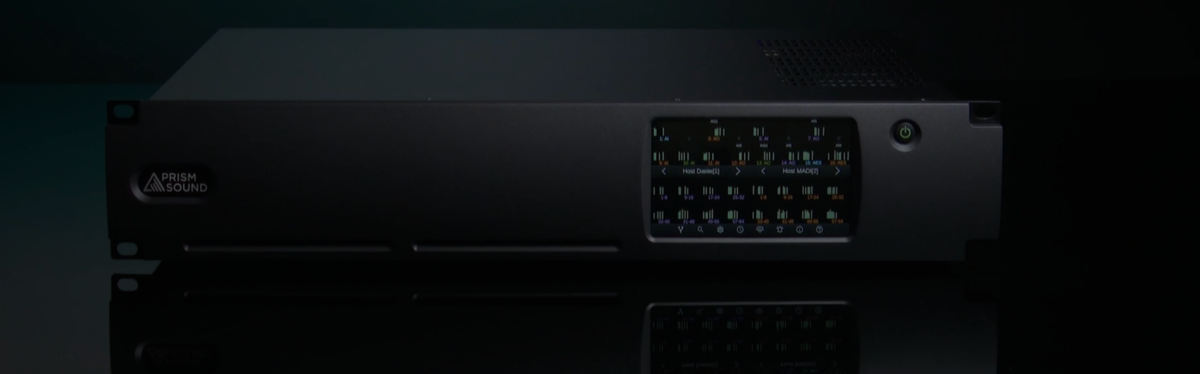
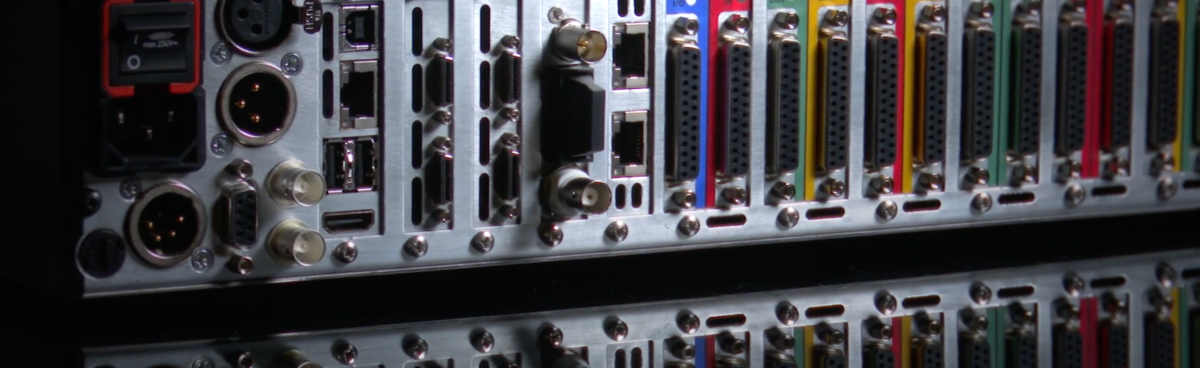
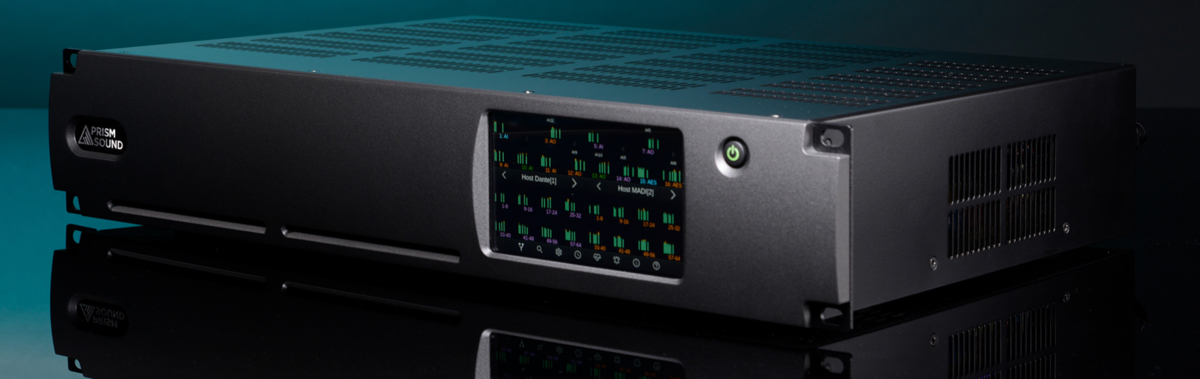
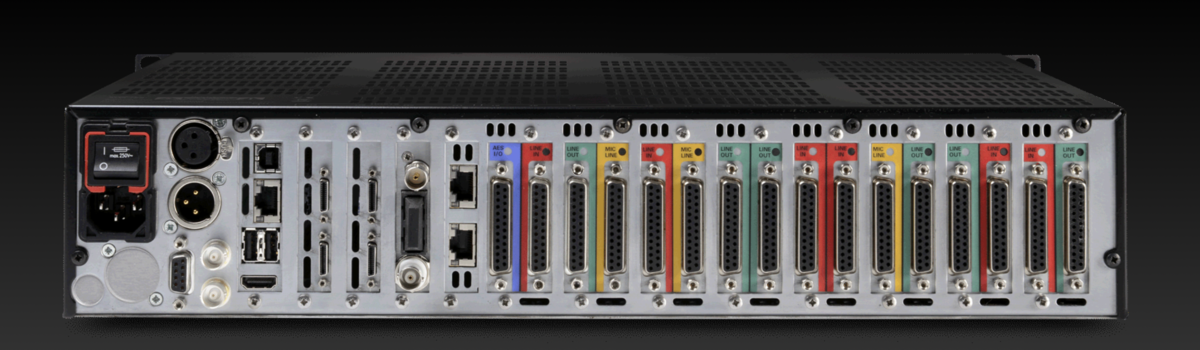
The ADA-128 is a 2U chassis with 20 available slots, 16 for I/O modules and four for host modules. In Headliner’s case, the studio’s digital streams are controlled via Dante, but we also have a PTHDX Module for Pro Tools projects. 

I/O-wise, there’s support for up to 8 AD x 8 line in modules, or alternatively 8 x mic/line input cards. DA 8 x line out modules and an AES3 8 x I/O. On board DSP controls the routing, and it’s possible to route analogue to AES without a host module and of course any I/O module to any host module, plus there’s full support for 64 x 64 host bridging.

A feature we're not aware of anywhere else is QClock. There are also four independent domain clocks on board the ADA-128, so any particular module could be assigned to any clock, whether via the internet or from an external source, facilitating multiple workflows at different sample rates, for example, a mastering suite, sample conversion or archive facility. 

All modules feature their own onboard DSP, which looks after routing, clocking and additional features like Verifile generation and checking (more about this later), MS processing and high pass filters, etc. But according to Evans, there’s plenty of unused DSP, which would hint at further control features becoming available in the near future.

Control is available from a simple-to-use front panel display, but for more complex setups, access via a web browser provides a more comprehensive means of control. At the moment, there are several control ports which are earmarked for future use as and when new firmware becomes available. 

Another noticeable bonus is that during the ten months this unit has been installed, and bearing in mind the front panel discreetly hides three fans, these have never once come on, or if they have, it’s never been noticed.

Living with the ADA-128 is simplicity personified.

Set Up

Our unit is currently fitted with four AD line in and four DA line out modules, giving us 32 channels of I/O that complement the SSL Desk, but that could be expanded to 64 out to give us 64 channels of analogue mix down at the console using both monitor and line-in to the second fader bank, should we want it. 

In hybrid studio terms, that’s almost like having the capacity of nearly three 24-channel Studer tape machines running in sync – only cleaner and better and all in a 2U rack unit!

All analogue line-in and out modules feature multiple sample rates and 32bit encoding. Dante supports up to 192kHz sample rates and 32bit word length at 64 x 64, as do the AD and DA line cards, thus future-proofing potential advances in DAW and computing power.

Setting up the ADA-128 is simplicity itself. All the initial routing was available via the front touchscreen, and although we’ve connected to the user interface via a browser and the ADA-128 Ethernet port just to check out the additional functionality, it’s not actually been used in anger. 

This would definitely come into its own if you were configuring more than one clock domain, where the ability to assign resources to a particular job or multiple jobs quickly and accurately is of great benefit!

So far, there’s been a limited need to utilise the PTHDX host interface, as few projects have yet breached Avid’s stringent channel count for a single take. However, if you were recording a film score, for example, then you would need it. However, at the reduced 24bit word count, a superior sound is evident using a Dante virtual sound card or a Dante PCIE interface card!

This unit carries a hefty price tag, but then what price do you put on perfection?

Verifile

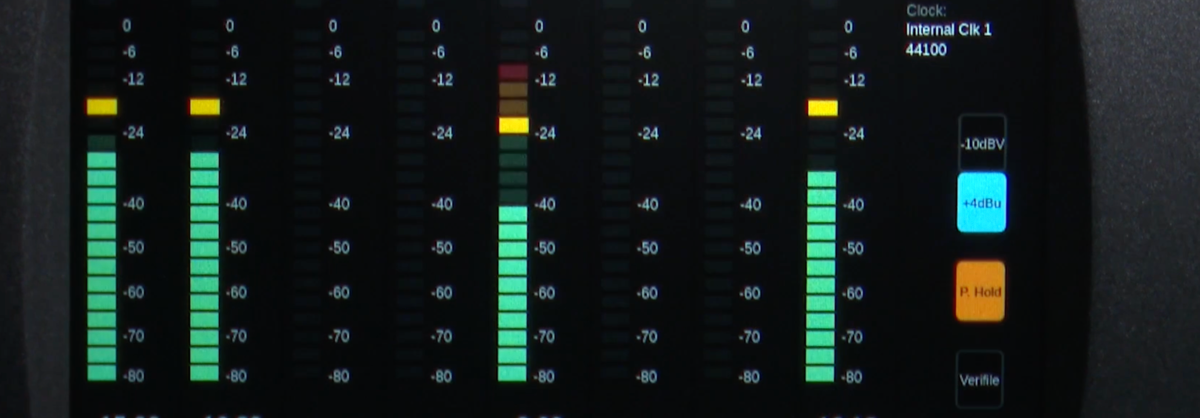
Verifile is a new feature from Prism Sound that aims to check and monitor corruption that may occur during audio streaming and recording. It embeds metadata within the audio file. 

This can then be used to check and locate even the smallest of data corruption, which is often caused by today's multitasking computer systems. Computers are often configured for multiple tasks and are rarely set up or dedicated to the task of studio recording.

Other factors, like substandard cabling and disk storage, can also contribute to potential data corruption. So identifying and recording this information as hidden data allows it to be either read by the system in real-time or retrieved via the Verifile App. I’m not yet sure there is a means of repairing such data corruption, but the fact that it is recordable and retrievable means it’s only a matter of time.

Conclusion

Living with the ADA-128 is simplicity personified. It sits in the rack and just does its thing, and unlike other interfaces, requires no additional settings or manipulation. Whether you're approaching your studio design or upgrading for hybrid, in-the-box Atmos mixing, mastering or archiving, or like us, all of the above, this really is an exceptional piece of equipment.

It’s been a joy rediscovering the warmth and beauty of analogue processing with real toys and a great-sounding desk; all this is only possible with a truly exceptional multitrack converter. Of course, this unit carries a hefty price tag, but then what price do you put on perfection?