Subscribe
Headliners

Matt Simons on Identity Crisis: "I always wrote pop, singer-songwriter songs, but in secret"

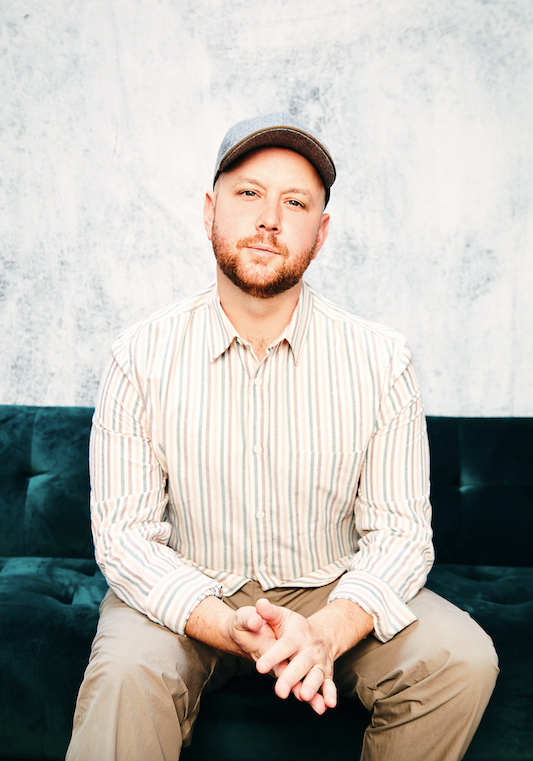
‘An identity crisis’ are the words singer-songwriter and pop artist Matt Simons gives when he’s (endlessly) asked to describe his music in three words or less. And, as it happens, it’s also the title of his latest album, a body of work that toys with the idea of combining the medium of pop music with existential themes. Headliner talks to Los Angeles-based Simons about his initial breakthrough in the Netherlands, his new music, and why he’s become so open about his mental health in both his music and his interviews.

Listening to Simons’ infectious pop grooves that he is now known so well for, it might not be obvious he is the grandson of two opera singers, which naturally saw his upbringing involve lots of classical music and learning the clarinet and piano. 

At around 11, after a lot of complaining, he switched to playing jazz. And while many music theorists and historians will tell you that the gulf between modern pop, jazz and classical isn’t as wide as you might think, he’s certainly now a very unique offering in 2022’s pop landscape after his music caught on in a big way in the Netherlands initially.

But it was something he felt he had to keep secret while taking jazz seriously through college and as a semi-professional saxophone player, gigging in New York.

“I always wrote pop, singer-songwriter songs, but in secret,” he says. “When I was studying a lot of jazz, pop music was seen as a lesser form of music. But when I was 20 or so, I made the decision that I was not going to be a full-time jazz musician. I was going to pursue original music and songwriting.”
Getting good numbers on Spotify isn’t the answer! It turns out that it’s therapy, and sometimes medicine.

You’ll very rarely hear any romanticised stories of musicians making it big off the back of a Facebook advert, however, Simons was an early adopter and it curiously led to him having a big fanbase in The Netherlands. 

He found himself in a curious time where he’d be playing to near-empty rooms in The States while selling out shows when he travelled to Europe to perform for his Dutch listeners.

“When I played in the US, there’d usually be fewer than 20 people,” Simons recalls. 

“Sometimes zero! But after one of my songs hit a Dutch TV show, it really took off, and I started a label deal. My first tour that I played in the Netherlands was something like 11 shows and nine different cities. And every show sold out in these 300 to 500-person clubs, which I had never experienced before. 

"The first show that I played in The Hague, there was this moment I played my song With You, and I can remember that the audience were singing the whole song back to me. I'd never had that happen. I'll never forget that.”

I played 'With You' and the audience were singing the whole song back to me. I'd never had that happen.

Simons’ latest album, Identity Crisis, may have a lovely singer-songwriter pop sheen to it, but don’t let that mistake you into thinking he wasn’t willing to delve into deeper topics for its subject matter. How many pop songs can boast to have been inspired by the book Sapiens by Yuval Noah Harari?

“After reading Sapiens, I really wanted to use the idea of the lizard brain in a song. So we did that in my song Too Much. I often think artists are more likely to have a chemical imbalance in their brains. 

"Leading to situations where your amygdala is firing adrenaline for no reason, and you're having a panic attack. That book really helped me in learning how to calm myself down in those moments.”

The discussion then turns to the common misunderstanding that, because Simons is ‘living his dream’ and things seem so lovely from the outside in, he should be permanently happy and not suffer from anxiety and panic attacks.

“Unfortunately, getting good numbers on Spotify isn’t the answer! It turns out that it’s therapy, and sometimes medicine. And meditation and all the things they say to do. I know some artists think, ‘Well, maybe if I just drink a bunch, that’ll help!’”

If you look at the classic pop songs of the ‘90s and 2000s, which so many of us love, I wouldn’t really call it high-minded music.

Simons concludes by talking about the very interesting place pop music finds itself in today, with Identity Crisis being a very interesting example of that. He believes that “pop music got smarter in the last few years, and so there’s more room for it now. 

"If you look at the classic pop songs of the ‘90s and 2000s, which so many of us love, I wouldn’t really call it high-minded music. But if you look at what people like Arianna Grande or Charli XCX are doing, the music is so rich, with so many interesting harmonies and they’re working with some of the most talented producers and writers out there.” 

If you ever feel like you are having an identity crisis, let Simons’ music be your existential soundtrack. Especially in a time now where his fanbase has spread around the world and not just in The Netherlands.