
Subscribe
Broadcast

How Lawo mc²56 consoles delivered broadcast-grade sound to millions on Bastille Day

France’s National Day on July 14 is a celebration of unity, pride, and spectacular performances, and at the heart of it all, sound plays a starring role. For the 13th edition of the renowned Concert de Paris, held beneath the iconic Eiffel Tower, audio excellence was once again in the spotlight. Headliner discovers how Lawo delivered flawless sound through a cutting-edge IP-based audio infrastructure.

With three mc²56 audio production consoles powering both live and broadcast mixes, Lawo ensured that every note reached the 100,000-strong crowd in Paris, not to mention for the millions more tuning in across the globe via French public broadcasters and the Eurovision network. 

It was a technical symphony to match the musical one, setting a gold standard for live audio production on one of France’s biggest nights.

Following the exceptional 2024 edition, which featured the arrival of the Olympic flame at the forecourt of the Hôtel de Ville, the traditional Concert de Paris returned to its iconic location at the foot of the Eiffel Tower on the Champ de Mars.
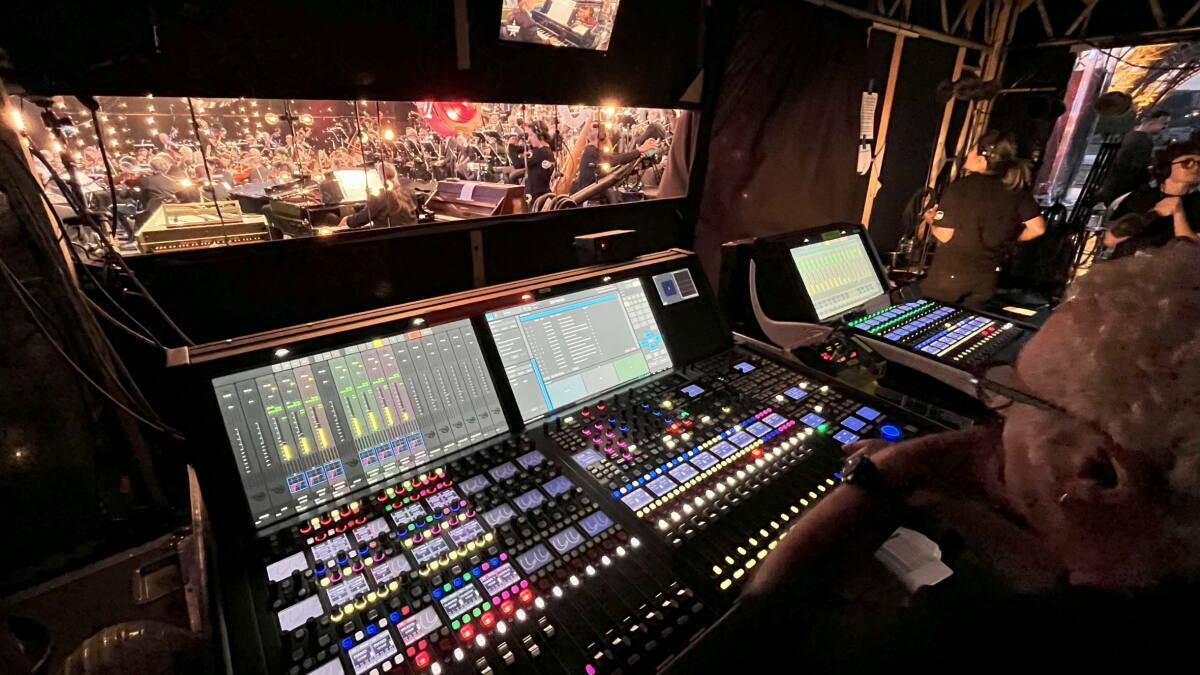
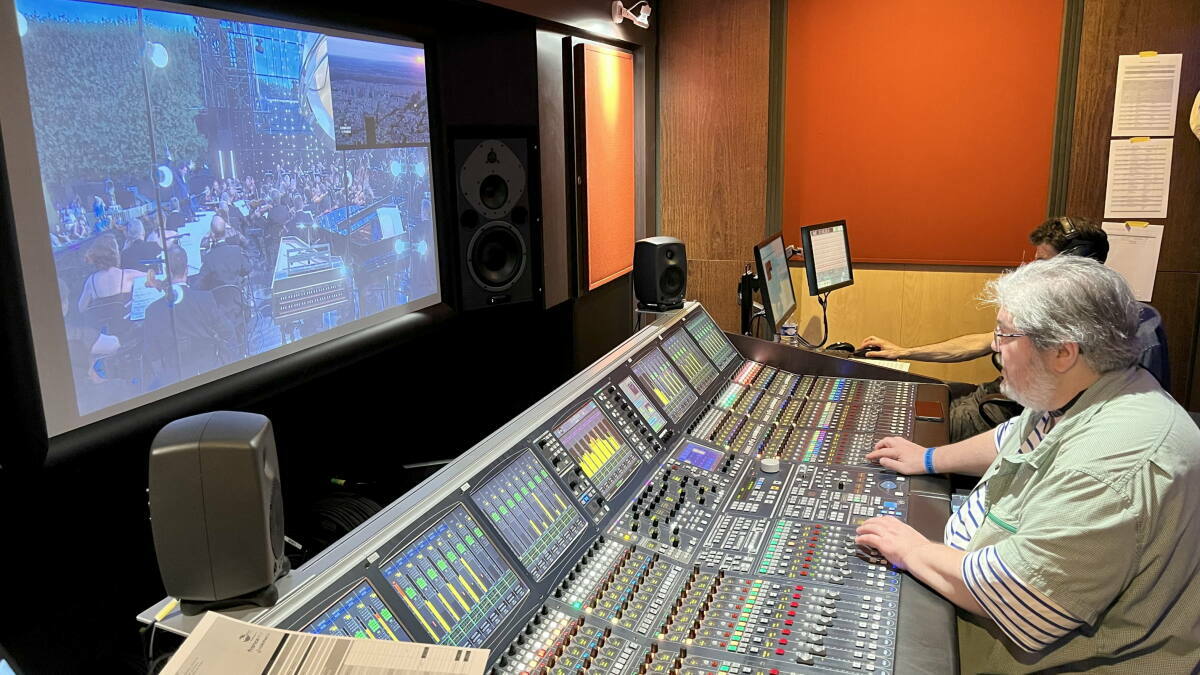
The evening was broadcast live in over 10 countries, making it one of the world’s largest classical music events.

For the public address system, Lawo’s advanced audio infrastructure was expertly operated by a team from Radio France, led by Christophe Lukaszewski. At front-of-house position (FOH), Nadège Antonini handled the orchestral mix and FOH output using a 48-fader mc²56 console, while Stéphane Thouvenin managed the soloists and choirs on a 32-fader desk.

Stage monitoring was skillfully managed by Tahar Boukhlifa and Charles Bouticourt. They operated a 32-fader mc²56 with a 16-fader extender in a two-operator configuration with two separate control surfaces, ensuring precise monitoring throughout the performance.

The setup included a redundant pair of A__UHD Core audio engines shared among the three consoles, with a redundant RAVENNA network integrating FOH and stage. A central HOME management cluster connected, managed, and secured all aspects of this live production environment.

Radio France also deployed an OB truck equipped with an mc²66 MkII console to produce the audio clean feed for French radio and television, as well as for the Eurovision network. Laurent Fracchia was responsible for the broadcast mix in the OB truck (Régie 5).

The evening was broadcast live on France 2 and france.tv, and simulcast by EBU-Eurovision in over 10 countries, making it one of the world’s largest classical music events.

A large audience gathered on the Champ de Mars to attend the performances by the Orchestre National de France, the Chœur and Maîtrise de Radio France, conducted by Cristian Măcelaru, alongside internationally renowned opera singers and soloists including Aida Garifullina (soprano), Julie Fuchs (soprano), Bruno de Sá (sopranist), Rihab Chaieb (mezzo-soprano), Benjamin Bernheim (tenor), Florian Sempey (baritone), Gautier Capuçon (cello), Dom La Nena (cello), Bomsori Kim (violin), Bohdan Luts (violin), and Saehyun Kim (piano).

As tradition dictates, the night reached its grand finale with a breathtaking fireworks display lighting up the Eiffel Tower and the Trocadéro gardens, a dazzling spectacle that echoed the spirit of France’s National Day. 

With 2.9 million viewers tuning in on France 2, countless more listening via France Inter radio, and audiences across the globe watching live through the Euroradio and Eurovision networks, the Concert de Paris once again proved itself not just a national treasure, but a global celebration of music, unity, and French pride.