Subscribe
Live

Lakefest 2025: Groove Armada and NEXO turn family festival up to 11

Families who rave together, stay together – at least that was certainly the case throughout the recent Lakefest music festival. Set in the heart of an Area of Outstanding Natural Beauty, the festival takes place in a stunning valley beneath the Malvern Hills, within the impressive grounds of Eastnor Castle. Billed as the fastest-growing family festival in the UK, this year the sold-out event attracted revellers young and old with acts as eclectic as Faithless, Busted, Groove Armada, Echo & The Bunnymen… and Dick & Dom. With over 400 performers across 12 stages, and only the first act of each day getting a sound check, the FOH engineers had every reason to feel the pressure. They explain how the festival’s NEXO main stage rig meant that the only thing they had to worry about was making the sound suitable for those aged one to 100.

Headliner arrives at Lakefest bright and early on a glorious, swelteringly hot day, greeted by the unmistakable smell of bacon sandwiches wafting through the air, and passing by bleary-eyed campers emerging from tents, while teenagers brush their teeth over the nearest bush.

Once inside, it quickly becomes clear that Lakefest isn’t just going to be about wall-to-wall bangers, it’s a weekend designed to keep kids of all ages entertained: throughout the day Headliner witnesses everything from Panto-style live wrestling, BMX shows, crafting, space-themed fancy dress, a silent disco, a man who becomes festival-famous for his chicken costume, and noisy carnival-style rides you could lose your lunch just looking at.

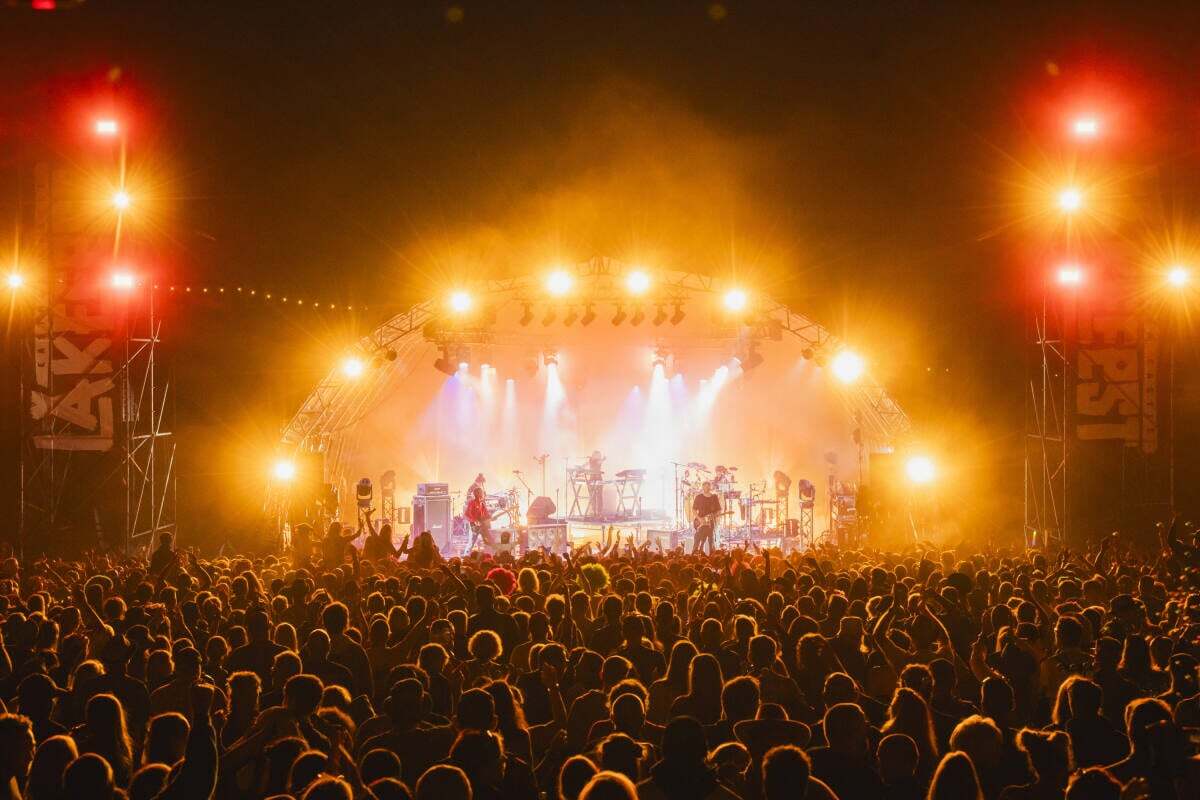
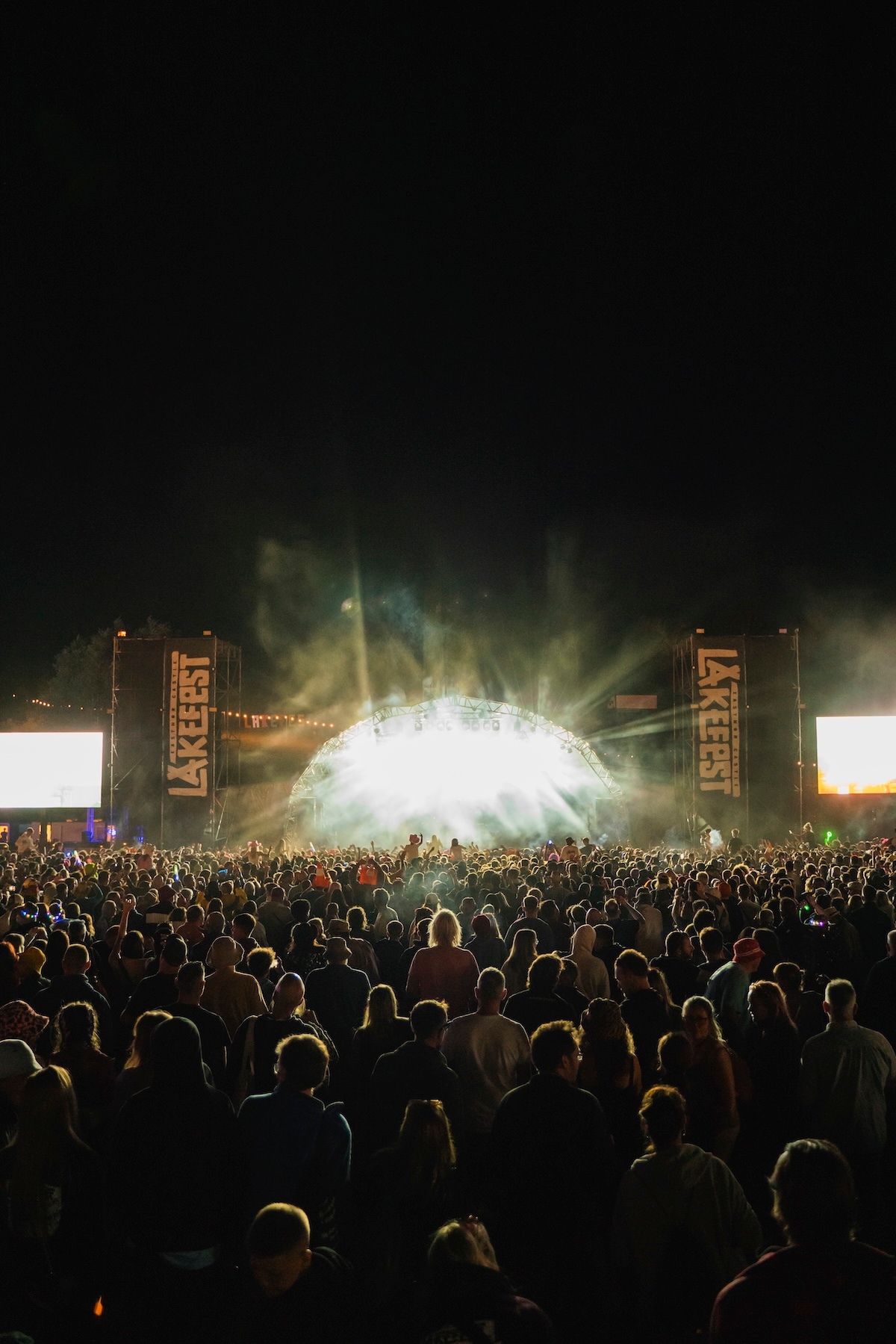
As morning gives way to afternoon, camping chairs multiply – Fantasia mops-style – as people settle in for the best view of the main stage. It’s easy to see why it’s the fastest-growing family festival in the UK, as year on year the community packs their festival essentials for a weekend of music, laughter, and that unbeatable energy that comes from 18,000 people coming together to celebrate music with friends and family.

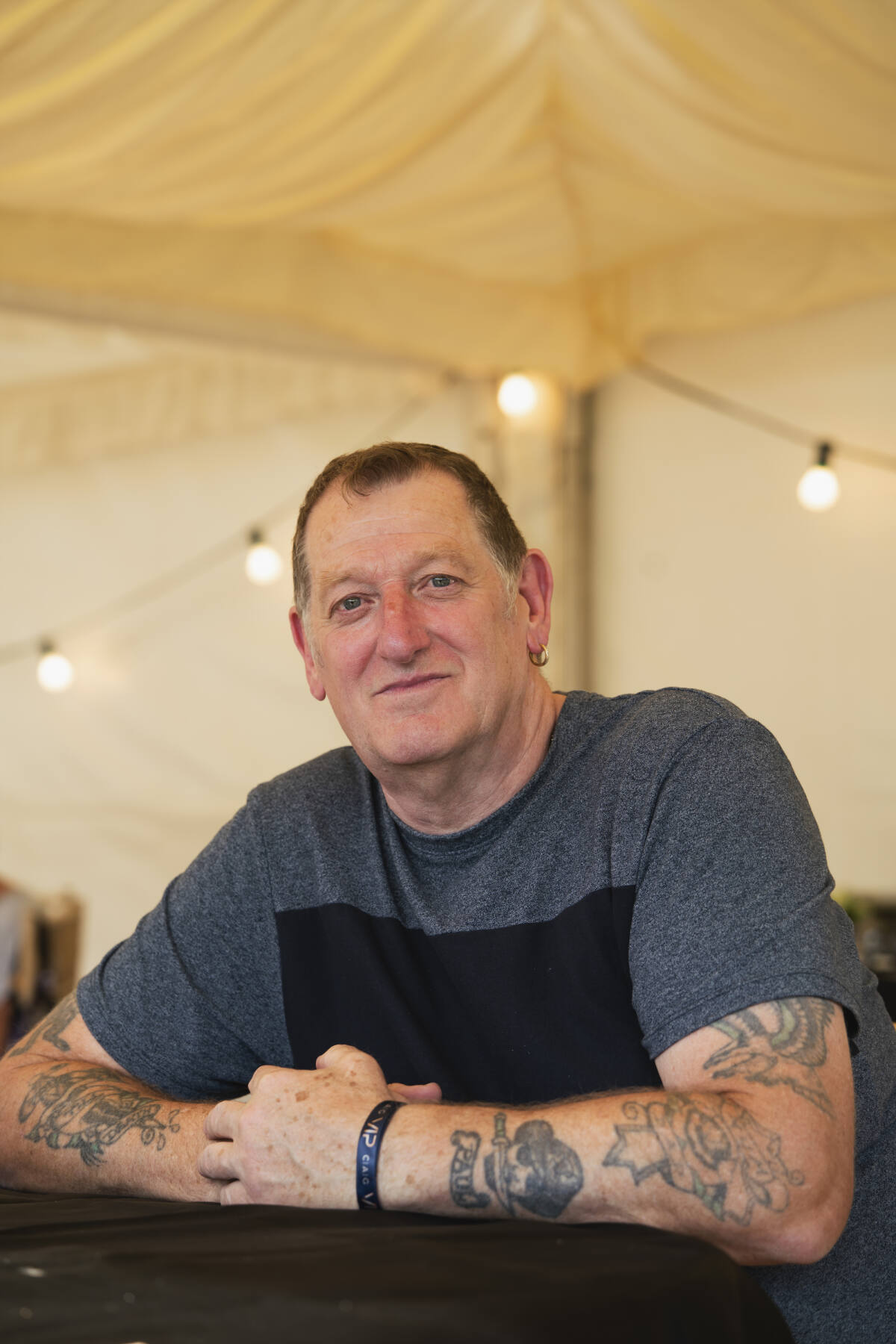
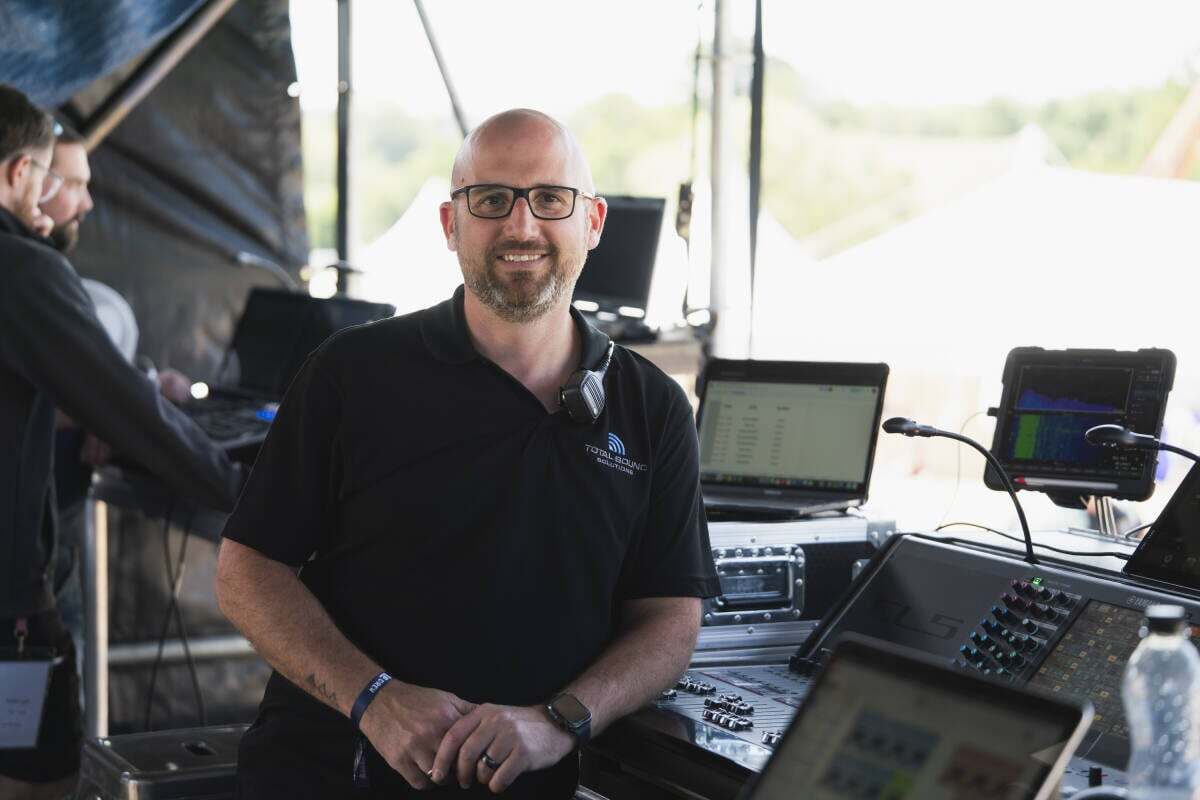
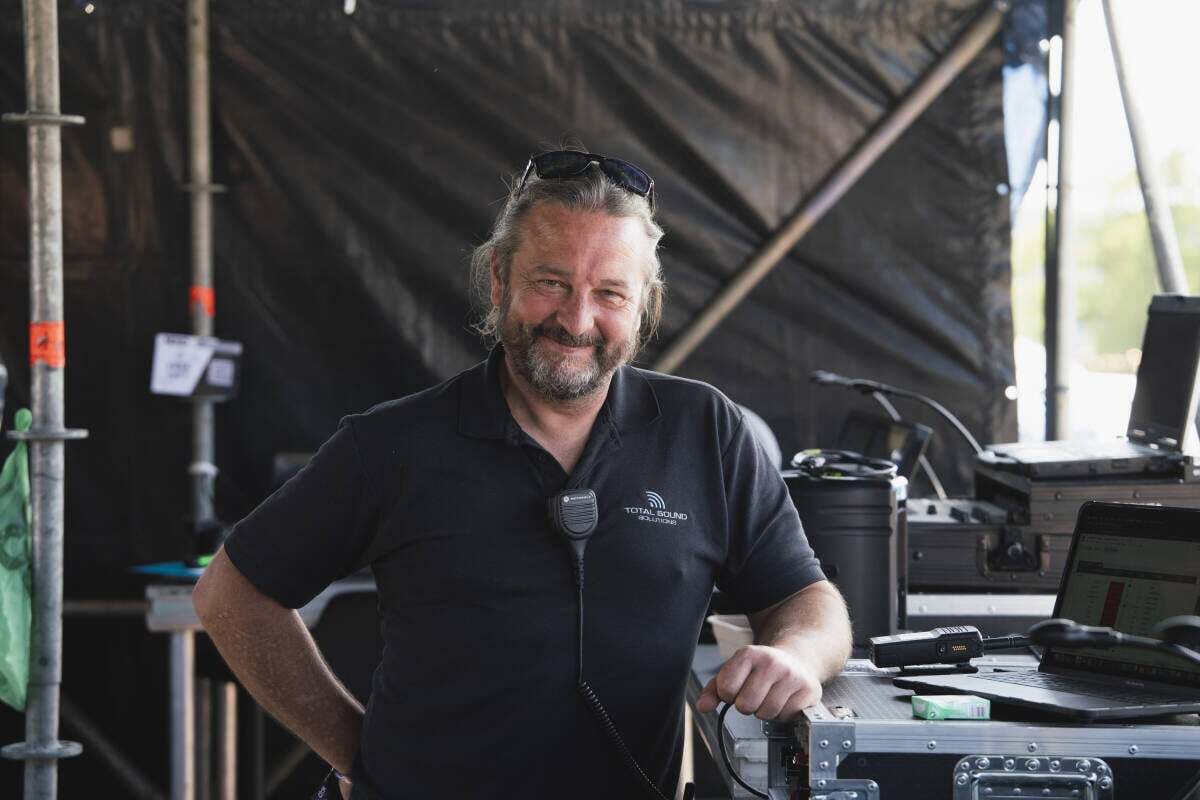
The main stage is the centre of the action. With a packed schedule of back-to-back acts, Headliner catches FOH engineers Ryan James and Rob Jones in between sets, who are handling RF coordination for the main stage and FOH audio for every act aside from Faithless and Busted.
We have to find the balance of making sure that it's nice for kids to listen to and not blowing their ears off, and for the punter who wants to stand up front, rocking out. Ryan James

“The biggest challenge is that the opening act is the only band we get to sound check for the day,” begins James, joining Headliner as soon as female-fronted rock band Kodachrome finish an impressive and energetic set, which happens to be their first on a stage of this size.

“We have 15 to 20 minute changeovers between bands, and we only get to line check a band. So the first time we hear them is when the audience hears them as well. We need to be able to deliver something audible as a starting point, and by the end of the first song, we want to make sure that we've got it tight and tuned in. So the first track is really difficult – it’s constant tweaks on the fly.”

Lakefest was in good hands, though, as it’s not James or Jones’ first rodeo – they both assumed FOH duties last year, too, with James also heading up and managing the patch and monitoring team on stage.

“The bands that are coming in have got a specific sound that they want, and normally, for us to try and deliver that consistently, we have to do a lot of research beforehand on the bands that we are mixing,” explains James. 

“We need to try to replicate that in an environment that doesn't always allow it to be replicated. It's tricky as a lot of these bands haven't played on a stage of their size. They are likely to be a bit nervous, so we'll be doing line checks with them, and the energy is not quite there, and all of a sudden they come on, and everything's very different to what we've just line checked.

Despite the acts’ tendency to throw something unexpected their way on the day, the FOH prep work begins around six months in advance, where James and Jones factor in everything from tech riders, anything included in the Total Sound Solutions inventory that deviates from that, and the all-important patch sheet.

This system sounds almost like a pair of studio monitors. I can't believe how upfront and present it is in an open-air environment. Rob Jones

“The communication between all of the crew has been fantastic,” concurs Jones, who Headliner catches up with immediately after Arctic Monkeys-esque Doncaster band, The Outcharms, finish their set. “We all know each other's roles clearly, and that makes the line check process pretty painless, but we’re always diving in on the fly as well. It's all about timing with festivals – you need to be on top of what you're dealing with.”

By creating a ready-to-go festival pack of around 60 channels, the team ensured they had every base covered, and band turnovers became a much faster process. “One of the big things that was drilled into us when we started with Lakefest last year was that it never runs on time,” says Jones, “but last year, it ran on time. 

"This year, we were told in the meeting, ‘We need to start at six o'clock. There is no negotiation.’ We went live at 5.20 pm, and that's a credit to the amount of communication between the team. I've been doing this job for 35 years, so we know there's a contingency and we are prepared for all eventualities.”

We've got a nice even coverage and a good SPL level that's very consistent across the board, all the way up to 60 metres.

Main Stage Energy

Lakefest boasted an all-NEXO system across each of the festival's 12 stages. The main stage was rigged by Swansea’s Total Sound Solutions, which gave the team every confidence that they could handle anything thrown at them. 

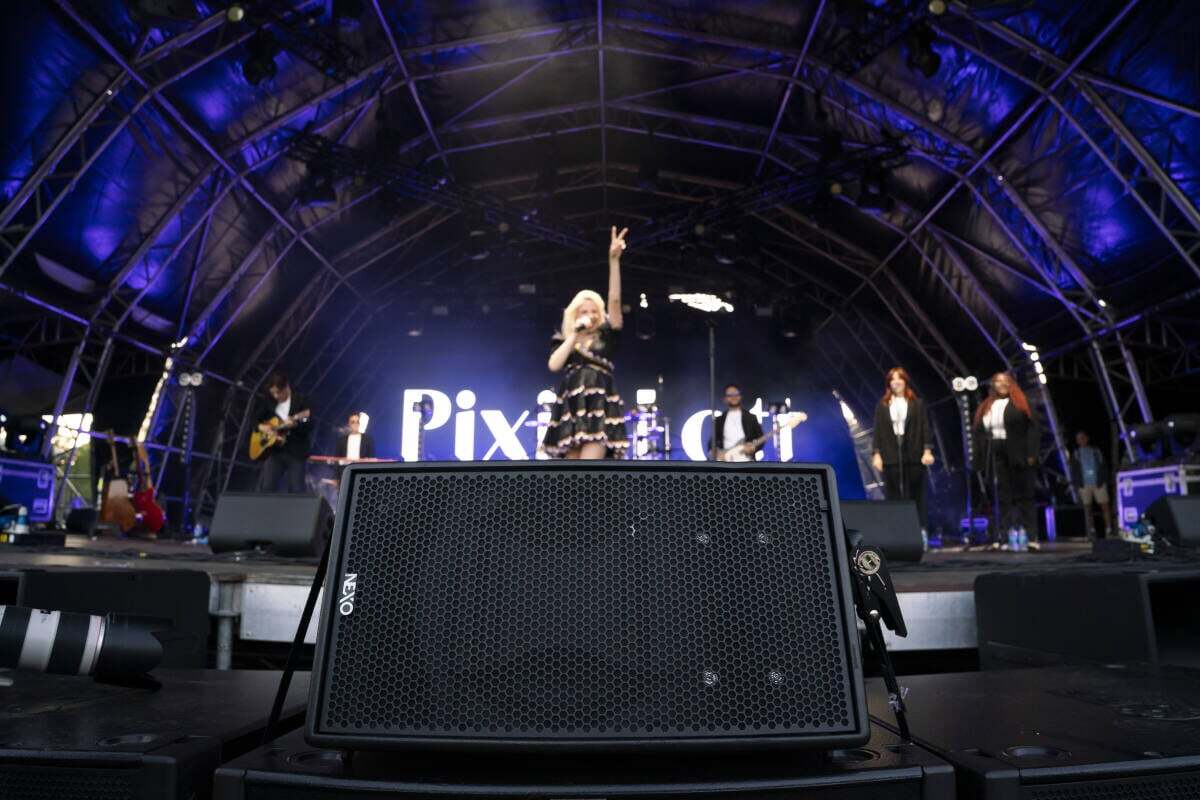
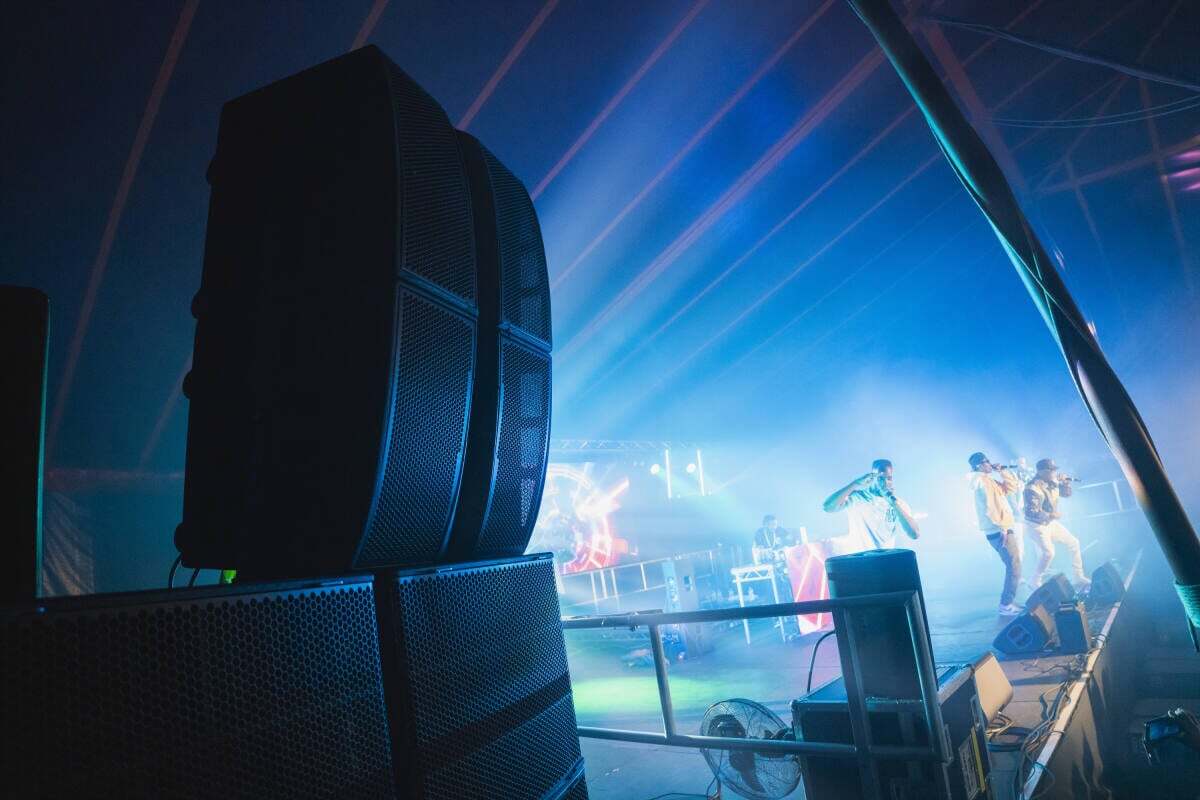
The main stage was flanked by left and right hangs of 12 NEXO GEO M12s and a flowing stack of eight MSUB18s, bolstered by two separate hangs of five GEO M12s for delays and further ground-stacked MSUB18s in a cardioid away pattern to cancel out the bass out on stage.

Meanwhile, NEXO P+ Series point source speakers were used for monitors and front fills, and original Alpha Es for side fills, and power and processing for all NEXO systems came from NEXO NXAMP Powered TD Controllers / NUAR racks.

“What makes it so easy for us is we've got a great PA, so we just turn it up,” shouts James, as right on queue, Jones begins the line check for the next act. The audio is sublime by the way – and loud. “If we were doing this interview on stage, you wouldn't hear any sub or any sound at all,” he insists, raising his voice again as the drum kit is line-checked. 

“But standing out here now, as you can hear, the system feels like it's really in your face! That's the nice thing with the M12s – we're getting a good 60 metres before having to put delays in at its maximum hang of 12 boxes.”

you can be anywhere on this field, and I promise you, you will feel it. We’re gonna be blowing people’s socks off.

Sound for All Ages

“Lakefest is tricky because it's a family festival,” admits James, referring to tuning and balancing the mix for people of all ages in an expansive open-air environment – amidst 11 other stages, “although we’ve got the biggest system,” he grins.

“The containment of the sound is really good within their line array, and we don't have a lot of bleed if we are all playing at the same time. If you're in that area, that's the system you will be listening to. At Lakefest, the sound needs to cater to a three-year-old child, as well as a hard rock fan who wants to hear everything at 120 decibels. 

"We have to find the balance of making sure that it's nice for kids to listen to and not blowing their ears off, and for the punter who wants to stand up front, rocking out. The NEXO rig has a good balance, so anywhere you stand, you'll hear it.”

He’s not wrong. During DJ Luck and MC Neat’s set, the garage mix booming out of the main rig rumbles through the VIP toilets behind the stage, and Dick & Dom (who easily draw the second biggest crowd of the day), free from the confines of ‘da bungalow’, turn the field into a buzzy afternoon rave for kids and adults alike.

Headliner ventures to the very back of the festival to check if James' statement is true, where people working in vendor vans, suddenly, with a lack of customers, lean out of their respective windows to see what all the commotion is about. 

If anyone was aiming to avoid Dick & Dom’s set, this was futile, as the NEXO rig effortlessly reached the furthest corners of the expansive field, with everything from House of Pain’s Jump Around and Vengaboys’ We Like to Party! – and occasional shoutouts of, “Yes, chicken man!” – sending the crowd into a frenzy, whatever their location.

“We've got a nice even coverage and a good SPL level that's very consistent across the board, all the way up to 60 metres, before we put the delay towers in to do the next 60 metres of the field,” nods James, gesturing to the area behind FOH – which by this point is a sea of camping chairs and picnic blankets. 

“This is where loads of families sit, so everyone can be comfortable, and still feel the music. The sub is travelling all the way up, but the high end and the vocals aren't as in your face. You have a spot where you can find your happy place for the day – if you want to really rock out, you can come forward, and that's where the PA is doing a lot of its hard work. But further back is really nice. You can still dance and feel the energy, but you're not necessarily having that energy hitting you.”

Balancing a vast, wide audience space with a repertoire that demands both crystal-clear detail and powerful dynamic range creates unique challenges for sound reinforcement, but James and Jones were more than confident in the NEXO rig’s ability to deliver for Lakefest.

“The dynamic of the GEO M12 is really nice,” enthuses James. “When they need high energy, we don't have to push the overall level of the system to allow space for certain vocals. In the frequency response of the box, we are able to leave space for every different instrument and every vocal. 

"It's a lot easier to do that using the GEO M12, as the box sounds very nice, dynamically, and the frequency response to the box allows space for all the different elements of the mix, so we never have to make it too loud for the band to sound good.”

He also likes that they don't have to push to a high SPL to achieve a nice-sounding box. “Like I said, it's a family festival, so the sound is really clear, but it's still loud enough that everybody's happy,” James reiterates. “The bands are happy, the audience is happy. The three-year-old child is not crying, and the 80-year-old man, who's half deaf, can still hear what's happening because of the clarity of the box, which is phenomenal,” he says, also pointing out how easy the system is to hang. 

“We're limited on time and on staff at festivals, but it only took us half a day to put everything up, and that makes a big difference when deciding which PA to use. That was a big reason why we chose NEXO. Two people can put this whole line array up with no issue whatsoever, really easily. And it sounds great!”

At Lakefest, the sound needs to cater to a three-year-old child, as well as a hard rock fan who wants to hear everything at 120 decibels.

“I’m very impressed with it too,” adds Jones, who by this point in the afternoon is now shouting over James’ next line check. “The system is incredible to work on. It stands up against a lot of the other big-format line arrays I've used, and the results have been great. To me, this system sounds almost like a pair of studio monitors. I can't believe how upfront and present it is in an open-air environment. It sounds a lot nearer to me than it actually is, which is very useful. 

"We don't seem to be losing a lot of headroom through the wind, and I'm finding this incredibly easy to mix on. In fact, what we're finding with this system is it's so present and clear, we're having to bus compress things to glue them together. 

"It's almost too good, which is never a bad place to be! We have really good control over everything we need. We're not fighting to get anything over, and we're running at really good levels. We try to go with that natural dynamic of people rolling out of a tent at 11 o'clock with a hangover, to the lively part in the evening, and the system has all the potential we need to achieve that.”

A Friday afternoon main stage highlight is jazz-blues four-piece Two Pounds Down, whose lead singer’s soulful voice lures Headliner out from the shade of the VIP tent to investigate. Despite having only a single track on Spotify, this young band still managed to deliver a set that was impressive, engaging, and delightfully unpredictable. 

At times funky, with flashes of early Red Hot Chili Peppers and bursts of jazzy piano chords, their performance drew in an appreciative crowd. The NEXO sound system rose to the occasion with a crisp, powerful presence. Lesser vocalists might have been swallowed whole as this system leaves no room to hide, but the lead vocals cut through confidently, every note punching through flawlessly.

Good Old Faithful

James and Jones used a Yamaha CL5 digital mixing console at FOH, featuring a three-section fader layout designed for efficient, hands-on control, making it a no-brainer for Lakefest due to its 72 mono input channels and eight stereo inputs, along with a flexible fader configuration.

“We call the CL5 the good old faithful,” smiles James. “It's an older console, but it's so rock and roll, and it's so good for festivals. Most engineers can walk up to a CL5 and know how to use it. Sometimes the guest engineers will see it’s a CL5, and that saves them from having to bring a console in. It was the industry standard once and was the most used festival console across the board, and it still sounds phenomenal. 

"It's bulletproof. It doesn't fall over, and it does everything we need it to do. There are a lot of newer consoles that have all the toys – we don't need the toys. We need consistency. We need reliability. And we get that in the Yamaha CL5.”

Their familiarity with the CL5 assists the engineers at Lakefest with the fact that they can only do a soundcheck for the first act of the day, followed by back-to-back performers with quick changeovers – not to mention unpredictable set lists. In particular, the Recall Safe option helps them out by preventing specific channel parameters from being changed when a new scene is recalled.

“Every band gets a scene which recalls custom layers so they're in front of us, and we've got house back lines and a house drum kit,” explains James. 

“We don't know what they're gonna play next. They change their mind a lot of the time. Besides, they'd never give us a set list – it doesn't exist, so we've got to react on the fly. If we mix bigger bands, there'll be a show file with snapshot scenes. 

"Being a festival engineer, we don't get that luxury. So the scenes are a good starting point. The EQ for the drum kit and the gain structure stays the same, and using Recall Safe means we don't have to redial that every time a band comes. By the end of the first song, it's got to be perfect.”

The FOH engineers’ familiarity with the console’s interface and NEXO’s system response was also crucial when it came to helping the team solve any issues in real time. “The marriage of NEXO and Yamaha using a Dante system ensures that everything works,” says Jones. 

“The Yamaha format makes our life easier, as most engineers who've been around the block are pretty familiar with it. So we set up the console using a custom layer system. We take our 60-channel patch, and then we'll dial in on our custom layers per band. If a guest engineer comes in, he just gets the custom layers for the channels relative to what he's using. We've got a lot of library stuff and we can instantly recall it.”

“Any tweak we need to make is pretty much instantaneous,” agrees James. “We are so tuned in with the CL5 and the GEO M12s and MSUB18s that we know straight away if something's gone wrong, for instance, if the phase alignment was weird. The M12s are really consistent, robust, and reliable – every day, they're going to deliver the same thing. 

"If it's not delivering that, it's you who has done something wrong. So we don't blame the system; we always look at what we've done as a user. But we're always ready for the unexpected, and that's what we do as FOH engineers,” he shrugs good-naturedly. “We never know what's going to happen, but our experience allows us to react in the right way.”

Groove Armada

As powerful as the system is in the day, James and Jones are itching to turn it up to 11 for Friday’s headline set, which sees English electronic music duo Groove Armada take to the stage for a high-energy DJ set.

“We build the levels incrementally during the day, so at Groove Armada tonight it'll be kicking way more than this afternoon,” smiles Jones. “We’ve just got to make it really clear and really loud, and the system will just do that for us. So that's an easy one.”

“We'll get to properly open up the system,” enthuses James. “We know what Groove Armada wants to sound like from the way that the music is produced, so we want to make sure that what you hear in your car gets replicated in the field, but just way bigger. We want to open up the sides so that it's really hitting you. We want people to walk away and say, ‘Wow! Unbelievable!’ 

"The sub needs to hit you for 150 meters, and it will tonight. So stick around for that one, because you can be anywhere on this field, and I promise you, you will feel it. We’re gonna be blowing people’s socks off,” he grins.

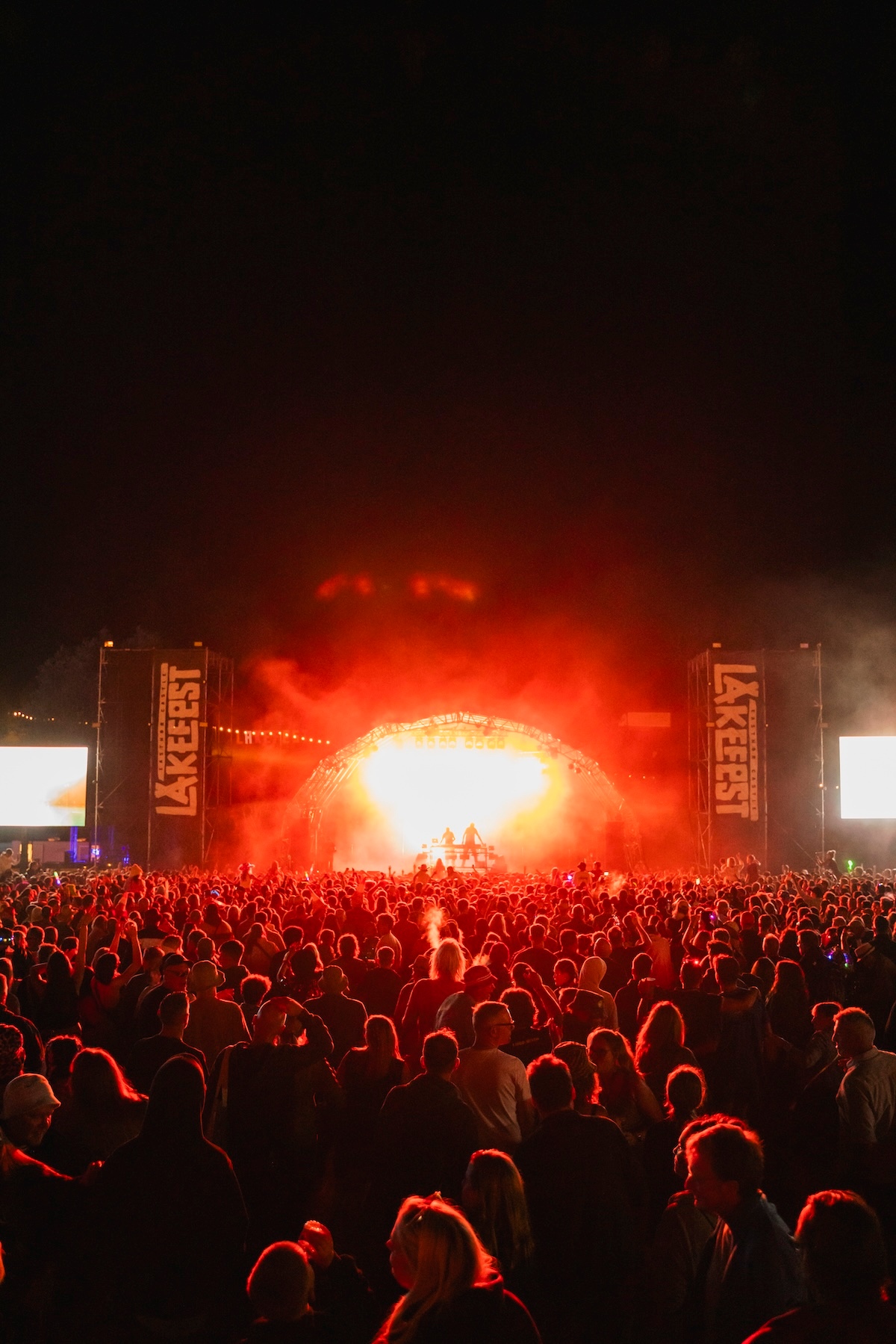
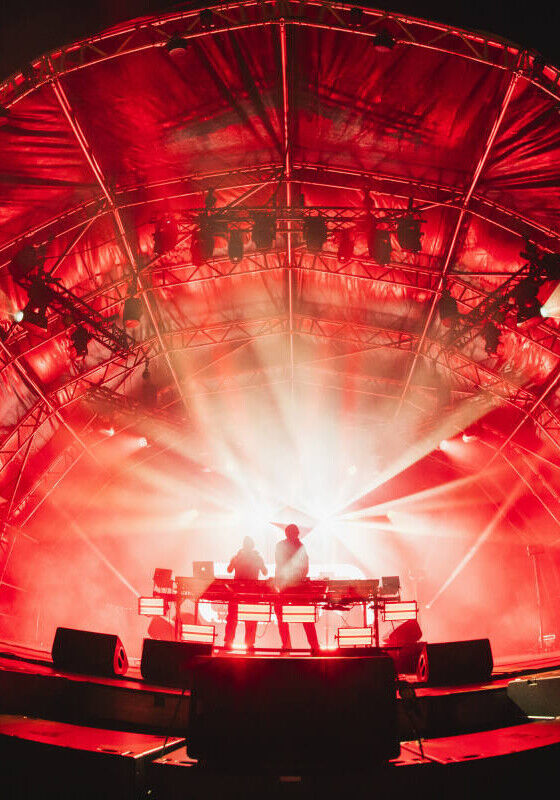
They certainly keep their promise. Groove Armada’s Andy Cato and Tom Findlay start promptly at 10pm under the glow of an (almost) Sturgeon Moon, and demonstrate that this is indeed the house that funk built, Groove Armada style – which, to the delight of the now quite merry audience, is teased multiple times throughout their hyper-powered set, before the inevitable payoff of I See You Baby in full, which has the crowd erupting into a frenzy.

The set was a joy to behold: a pulsating, laser-lit masterclass in dancefloor energy. Red and white beams cut through the night as the duo unleashed a pulsating, relentless mix of their own hits and dance classics like You've Got The Love and Strike‘s U Sure Do – each drop perfectly synced with the lighting. 

And despite the late hour, glowstick-armed kids are hoisted on shoulders in every direction. But it was Superstylin’ – teased throughout the set before finally unleashed in its full glory – that sent hands skyward and strobe lights into overdrive.

As a DJ, playing on a system like that is a really liberating experience. Andy Cato, Groove Armada

Groove Armada are no strangers to the importance of delivering pristine sound at outdoor music festivals, having come up through playing clubs and later founding Lovebox, which became one of the UK’s most-loved festivals. Having played through almost every PA system and line array going, Cato was full of praise for the NEXO rig at Lakefest:

“It was brilliant; one of the pieces in the DJ chess game is weighing up what is and isn’t possible with the system you’re on,” Cato tells Headliner after their set. “Over the years, we’ve evolved into this four-deck, effects-driven DJ thing that lets us really get a party going – but in a way that uses a lot of unexpected, more underground tunes. 

"Quite often, you have to rule out certain tunes because they just won’t cut it. It’s lovely when you end up in a situation where you’ve got loads of headroom, everything’s really clean, but it still has that weight that makes the bottom of your jeans flap and hits you deep in the stomach! As a DJ, playing on a system like that is a really liberating experience.

“It’s about understanding how we can make it special for the greatest number of people in the field,” he continues. “The balance we’re constantly trying to strike is using snippets of familiar tunes, not just ours but other people’s as well, as a way to move into deeper sections while keeping a sense of anticipation. 

"This is where DJing gets really interesting, and where the 30-year alchemy between the two of us comes in, which is really fun. We both have the same instinct about what we’re trying to create, and we use all the tools we’ve picked up over the years to make it happen.”

Cato outlines what he looks for in a festival sound system to bring Groove Armada’s catalogue to life: “It’s that range of frequency response, because if you’re doing what we’re trying to do, which is combine tunes from different decades, production has changed massively, even just between the ‘90s and now,” he points out.

“So you need to be able to correct and adapt to fuse all those things, since different generations of tunes punch in different places. All of that needs to come through, which is what we had at Lakefest. That means we can do this Balearic sweep of music across the ages, which, if the sound system isn’t up to it, just doesn’t work. 

"Particularly at outdoor festivals, you’ve got to keep it directional and focused. There’s nothing more frustrating, as a DJ or a punter, than watching your top end disappear in the wind. So keeping it tight and focused is key.”

You’ve got loads of headroom, everything’s really clean, but it still has that weight that makes the bottom of your jeans flap and hits you deep in the stomach. Andy Cato, Groove Armada

Headliner experiences the full force of the NEXO rig at the FOH area, and Groove Armada’s set certainly saw the sound system stretch its legs. Bass-heavy tracks hit square in the chest, rumbling through the ground with such force it felt like it could shake the dentures out of someone’s head, yet every detail remained crystal clear. 

The park’s remote location paid off, and without a noise curfew in sight, there was no holding back – the system was thunderously loud. When a powerful female vocal cuts through the mix, it slices the air like a sonic javelin, pristine and commanding. Over at FOH, the engineers were all smiles – James presses a hand to his chest as the bass reverberates through his core, and grins as he gives a thumbs up to Jones.

The sea of, by now, exhausted revellers didn't want it to end, and as the final note rang out and the lasers dimmed, Lakefest 2025 closed on a high, which saw Groove Armada at full throttle, powered by a NEXO system that proved as bold and commanding as the headliner’s electrifying performance.

Alpha +’s UK debut

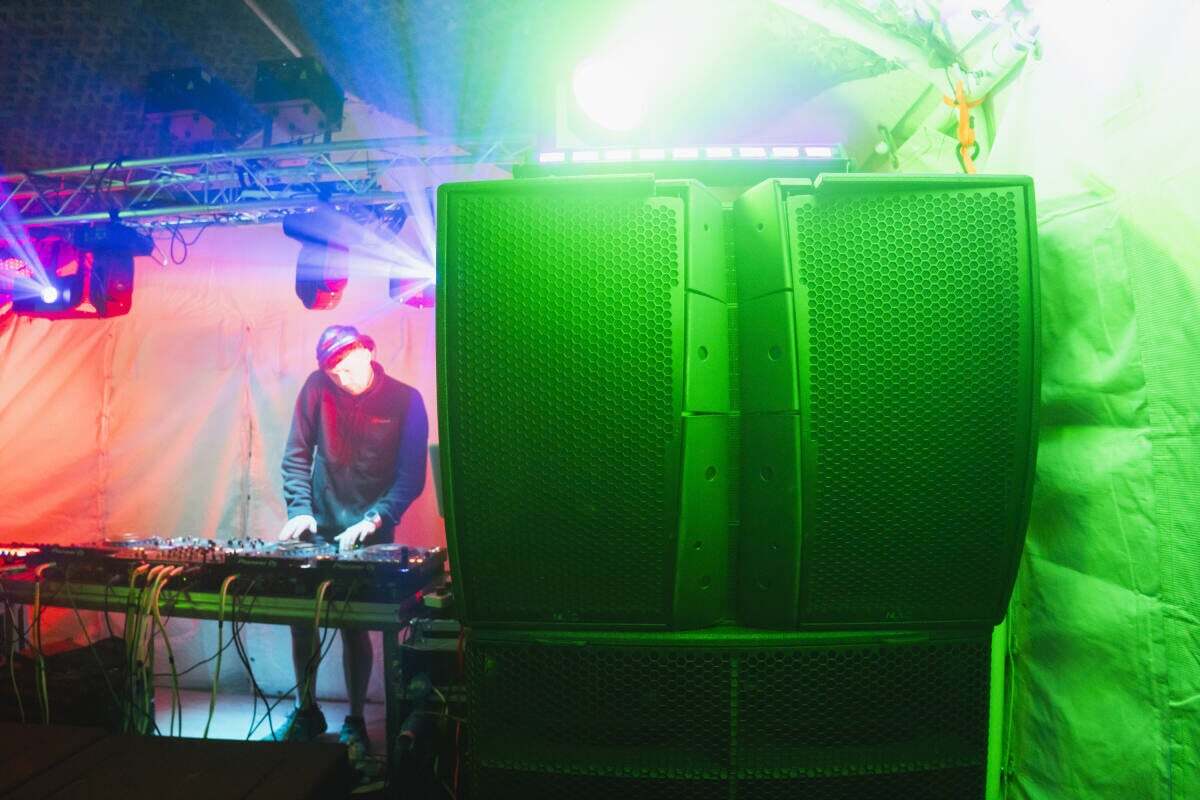
Away from the main stage, NEXO was making a big impact elsewhere, as Lakefest was the UK debut for the brand’s new NEXO Alpha+ system, which was used on the Funkytown stage, 7 Hills tent and the Secret Rave, while the original Alpha system (much loved and the inspiration for Alpha+) was used in the Retrospective of House tent.

The 7 Hills lineup was stacked with serious talent. Curated by Noah and the Whale’s Matt Owens, this was the place to discover future headliners and hidden gems, while Funkytown was like a festival in itself, boasting acts including Buzzcocks, Dub Pistols, So Solid Crew & The Brand New Heavies.

Assuming FOH duties across three stages at Lakefest, including 7 Hills, was seasoned Glastonbury engineer, Paul Wiltshire, owner of PW Group in Bristol, who had nothing but glowing praise for the new system:

“The system is phenomenal,” he tells Headliner from a sun-soaked VIP area overlooking a huge LOVE LAKE FEST sign, pointing out that there was no learning curve. “It’s super. Everything's just there, and you don't have to drive it to get stupid amounts out of it. It does everything it says on the tin. It's quite simple. 

"It's got the bottom end, it's got the main, it's got the drive, it's got the top end. I think it's got too much top end, personally! The tops are so good that you don't need anything else, really. It's a crazy rig – well, a stack of sides,” he clarifies.

I can’t fault the Alpha+. It's mind-blowing. Paul Wiltshire

Alpha+ is an ultra-powerful, long-throw, FOH system that combines the benefits of line source coupling with the easy deployment typical of point source speakers. Alpha+ is a three-box system comprising M210 Main, B218 Bass and L20 Sub-bass modules. Drawing on the spirit of its forerunner, Alpha+ applies new technologies to optimise performance and flexibility in a range of settings from live music and clubs to theatres and venues, and as it turns out, Circus-style festival tents.

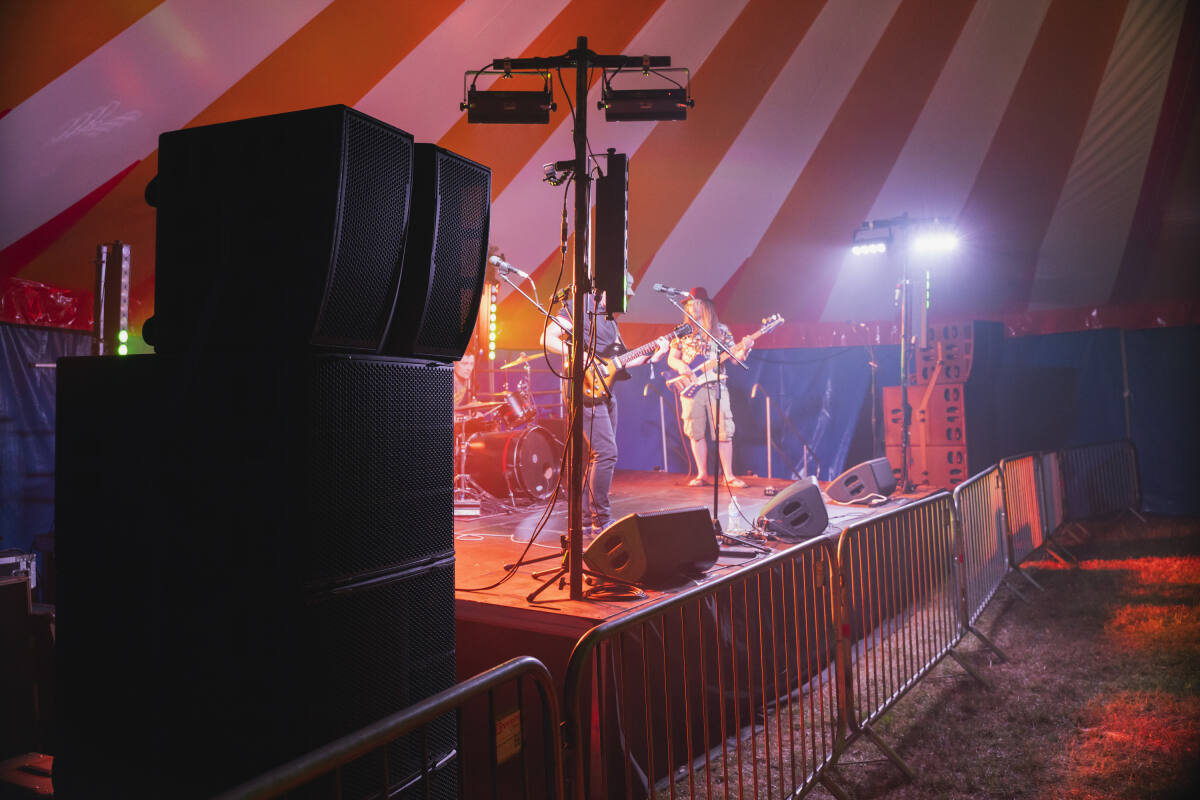
“And all tents are horrible, because it's a plastic sheet,” stresses Wiltshire. “So when you fire sound at a plastic sheet, it resonates and sends it back, so you don't always get the best sound in a big tent, but I can’t fault the Alpha+. It's mind-blowing. And I love the NEXO RS18s, but I think the L20s are even better.”

Helping control the acoustics in the 7 Hills tent for acts of all genres was Alpha+’s continuously varying horizontal directivity: 60° at the top of the M210 main module to 120° at the bottom, which can be modified to 90°/120° or 60°/60° using flanges, while the waveguide block can be ‘unlocked’ and its articulation changed from Narrow vertical coverage (0°/-20°) to wide/standard (+20°/-20°).

“We had a chap playing yesterday who was a solo guitarist, and he had one of those rough voices. He was phenomenal, and the rig reproduced it effortlessly. It's got so much headroom, and it covers the whole spectrum of what you want it to do without having to work too hard. It's a proper system, and if you’ve heard what it can do, you know what it's capable of doing,” Wiltshire concludes.

I was blown away by the sound quality of the Nexo system. Andrew Levy, The Brand New Heavies

The Brand New Heavies

The quality of the Alpha+ system didn’t go unnoticed by The Brand New Heavies either, who played to a lively crowd in the Funkytown tent. 

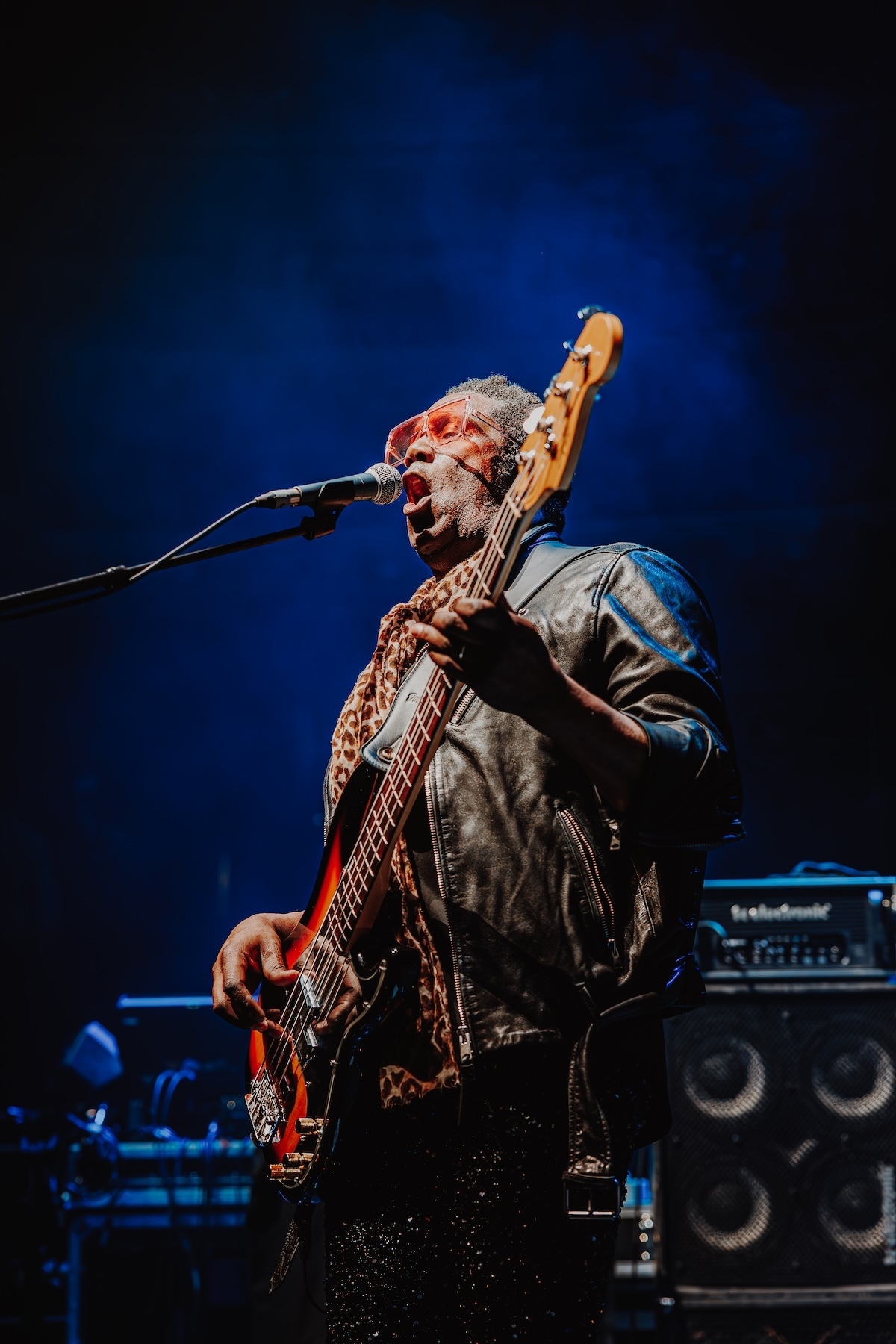
“We weren’t headlining, so there’s always that fear that people might not turn up to see the non-headlining band,” admits Andrew Levy, who’s been The Brand New Heavies’ bassist since the group formed in the late ‘80s. However, Levy is relieved to report that the tent was packed. “They were ready to dance and boogie. They were all in a really good mood and were singing along to the songs,” he smiles.

Levy stresses the importance of having a good sound system for a festival set: “The quality of the sound at a show is 90% of it for us. We’re not an in-ears band, and we’ve had to fight back against it and really reject using it, because, for us, it takes away from the groove and the physical act of playing an instrument. 

"We like to feel the drums through our bodies and hear what everyone else is hearing as a group. Maybe we’re just old fuddy-duddies or something, but I think there’s something missing when you start having separate experiences of the sound on stage!

“A lot of people putting on festivals don’t always focus on having good sound quality on stage,” he furthers. “There are many times where, because we’re such a big band – 32 inputs and nine people on stage – there can be a lot of distortion if the amps for the stage monitors aren’t up to it and there’s no headroom. Then they start having to use limiting on the monitors, which we hate, because there’s no expression. It feels like the louder you play, the quieter it comes out."

The quality of the sound at a show is 90% of it for us. Andrew Levy, The Brand New Heavies

“Having decent equipment with good headroom – not necessarily loud, but able to handle the transients from the kick drum and bass – is crucial,” he stresses. 

“You need good amps to deliver that properly. So it’s a big deal for us, and we’re always fighting to make sure the onstage sound – which the crowd don’t really notice – is the best it can be. I must say, those NEXO speakers were fantastic. 

"I was blown away by the sound quality of the NEXO system. Everything had plenty of headroom, with nothing being distorted and no need for limiting. I like to have a lot of drums in my monitors, and bass too – and that does mean the wedges take a pounding when I’ve got those going through, but everything held up and sounded great. I’m glad we had the chance to use the new NEXO gear. We'll definitely use it again,” he concludes.

Lakefest photos: Adam Gasson

Andrew Levy photo credit: Luke Dyson