Subscribe
Live

Jean-Michel Jarre crosses Bridge From the Future with CODA

Jean-Michel Jarre has been a household name for almost half a century now. Since his home-recorded album Oxygene became a global phenomenon in 1976, he has continued to push the boundaries of studio production and live performance.

Jarre’s shows have redefined what is possible. The French electronic music icon has performed at the Eiffel Tower, in front of over one million people in Houston, and has even played in the Sahara Desert.

What is perhaps more astonishing is the fact that even now, his shows continue to be a showcase for new technology, or a sign of what is heading toward us over the “Bridge From the Future”.

Jarre’s latest behemoth of a concert saw him play to over 100,000 people at the opening of STARMUS festival, a science and music festival founded by Brian May and astrophysicist Dr. Garik Israelian. The festival took over Bratislava, in the heart of Europe, and Jarre’s ambitious opening set the tone for the week ahead, at a festival that “unites science, art, and music to explore critical questions about our planet's future.”

Jarre had specified collaborators CODA Audio to provide the sound system, and Christophe Dupin and his team set about creating a streamlined system to transform a bridge in Slovakia into a world-class venue, for one night only.
With no support act (who needs one when you’ve got Brian May joining half way through your set?) I had arrived at the show shortly before Jarre got started. With the exception of a gentle, looped piece of music before the show, I had heard nothing of the system, and considering the ambition and location of the show, it would’ve been easy for me to assume that the sound was a case of “making do” in challenging situations. I would have been wrong.

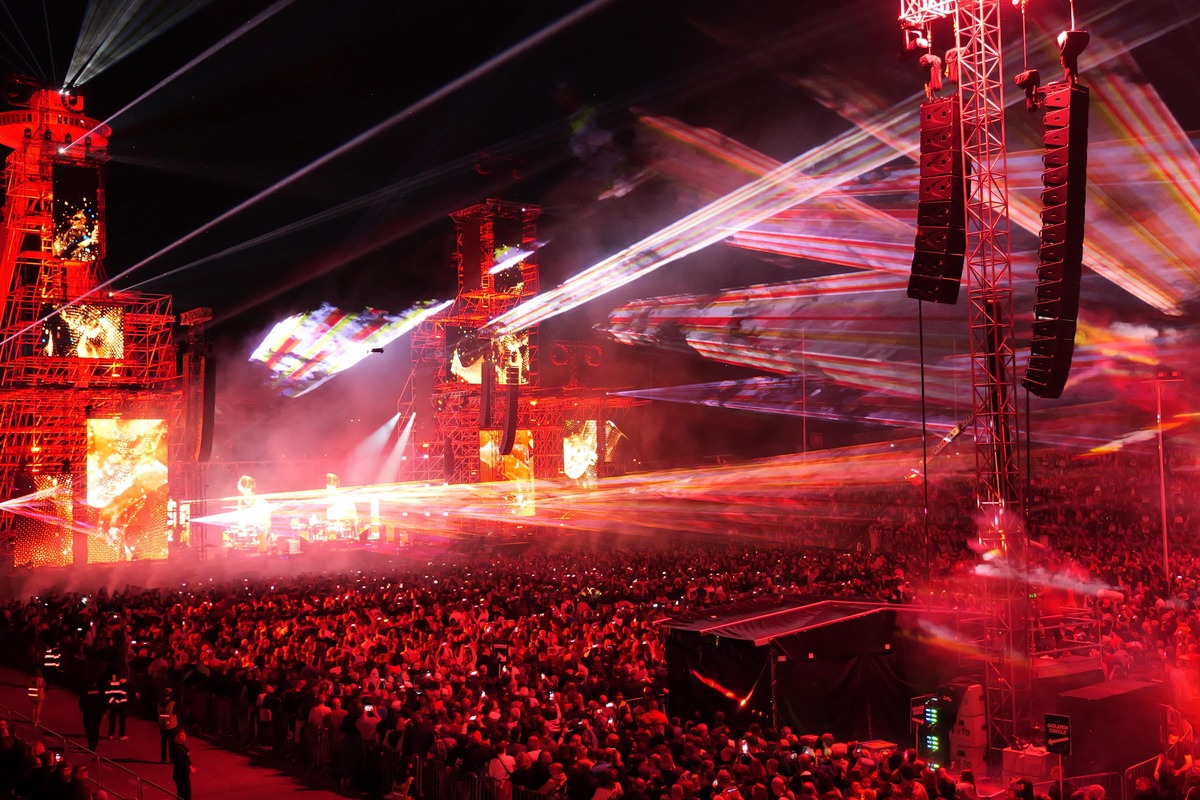
CODA Audio’s system, made up of 288 speakers including AiRAY, CiRAY, N-RAY, SC2-F, and SCP models, blew me away from the first bar of the set. Which raised the question… where is the rest of it?

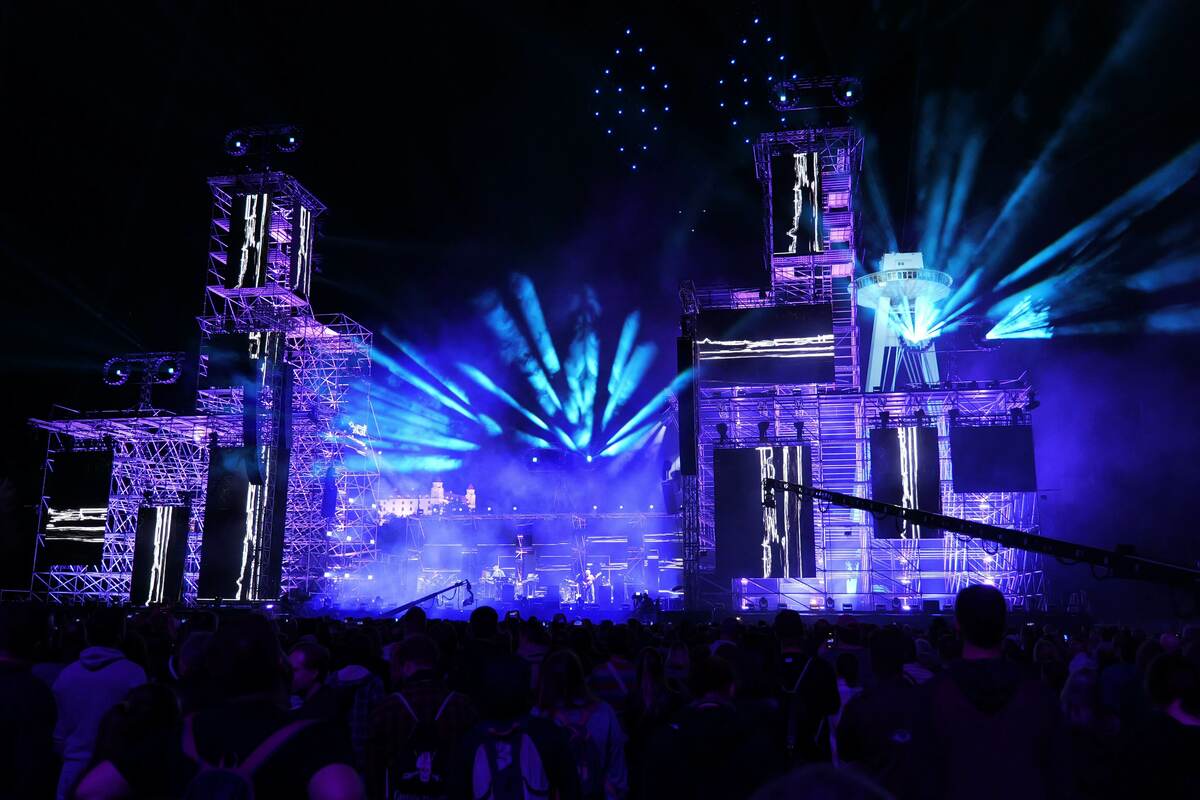
With such a visual spectacle, something we’ve come to expect from a Jean-Michel Jarre show, it is crucial that the audience’s view isn’t impeded, and the CODA system is impossibly compact, even with the ability to fill the Bratislava night with audio for tens of thousands of people.

Audio engineer Christophe Dupin explained more about the system: “All people say; ‘wow…it's amazing.’ The small boxes are very punchy – we never heard this kind of power with the small boxes like that.”

The loudspeaker setup was made up of the main PA on stage, as well as two low-profile delays accommodating for the vast area of the gig.

To hear that the small speakers are not being used at anything close to their capacity was even more stunning.

Dupin explained, “with the AiRAY, only 12 boxes per side cover around 100 meters, and we use this system at only 40% because we want a lot of headroom. The music of Jean-Michel is very punchy.”

To hear that the small speakers are not being used at anything close to their capacity was even more stunning. Their tiny profile made sure the audience could enjoy fireworks, drone shows, and AI-generated visuals as part of myriad visual spectacles.

At the first delay tower, only two extra AiRAYs (14 in total) and three CiRAYs are needed in order to cover a stunning distance. With textbook use of System Optimizer, CODA’s fittingly state-of-the-art prediction software, the system was able to provide not just even coverage and impressive throw, but tonal balance throughout.

“When we set up some microphones,” Christophe explained, “we see that the tonal balance is always the same. We increased the distance, but didn’t lose tonal balance because of the SC2-F. We also used some ViRAY for side fill to provide precise balance.”

Much of this balance seems to come from the crossover in CODA’s signature technologies, across their range. The full-range loudspeakers in the range, including CiRAY, ViRAY, and AiRAY, are built to be used together and interchangeably. CODA Audio describes these systems as a “family” and there is no denying the flexibility they allow whilst providing loads of arrayable options.

"You've got five different boxes, but you know you have the tonal balance,” Dupin continued. CODA Audio manufactures speakers to be phase aligned in the mechanical domain, which helps to provide this consistency and stunning tone across the board.

The SC2-F and SCP subwoofers support this balance further, and they are virtually hidden out of sight for the audience. Unique sensor-control provides a fast transient response and, in layman’s terms, gets rid of a lot of the unwanted “mud” that some systems suffer from. The term engineer Dupin used a few times when I spoke to him was “punchy” which is definitely reflected in the subs, which helped to ensure that everything had space in the live mix, and that that frustrating low-end mess was avoided completely.

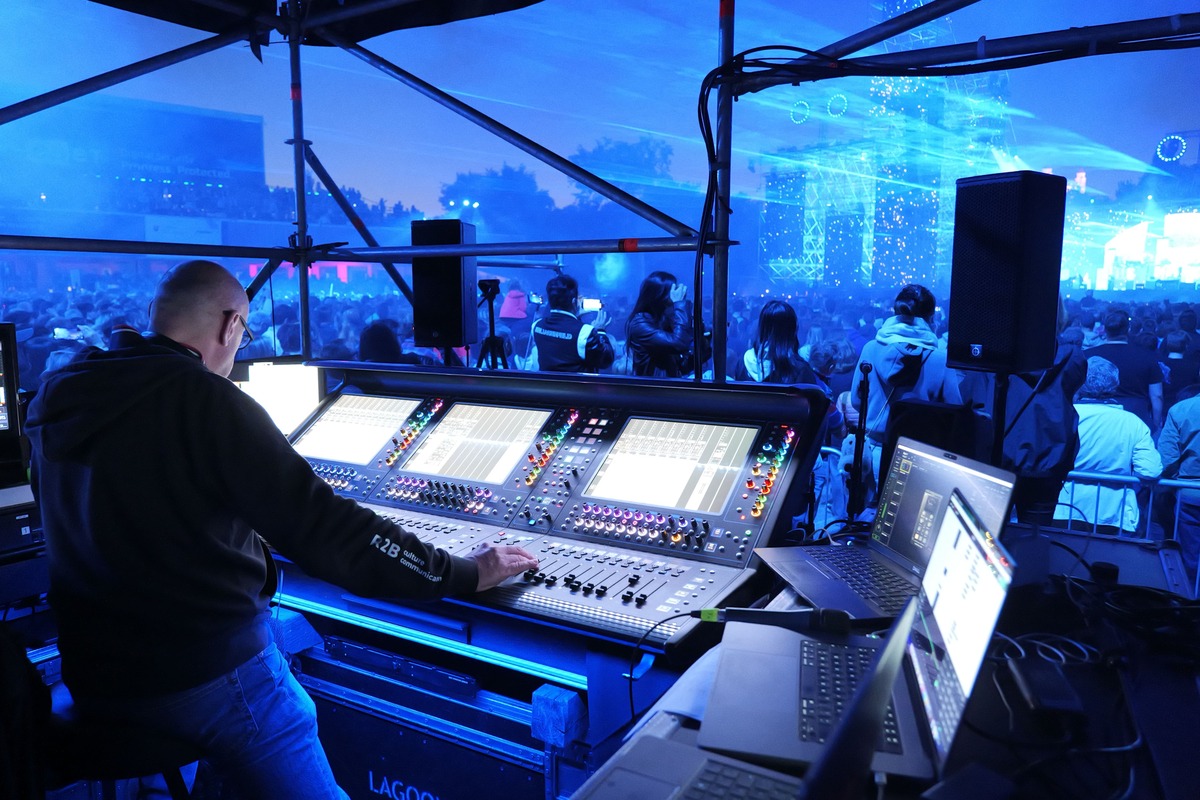
The engineers also discussed the convenience and neatness of the speakers and their setup, initially considering using AiRAY, but then settling on six CiRAY speakers for the first 25 meters, using just two channels of amplifier space. Eight T-RACK amplifiers were used in total to drive the systems, and CODA’s HOPS8 speakers were also used for monitors, providing the same sound profile and ensuring continuity throughout.

Ensuring blanket dispersion and the same stunning experience for everybody in this huge outdoor space is no mean feat. The setup stood out for many reasons, not least of all the way it freed up the space for the intended visuals, including the drone show and fireworks.

Jarre’s set is unfathomably varied. Add to that the Slovak Philharmonic Orchestra and a 19-piece chorus from the Slovak Philharmonic Choir, plus the iconic sound of Brian May’s guitar, and you’ll see the sonic challenge facing engineers (and the system). Even when Jarre took the chance to address the audience on the mic, the throw and diction meant that even those right at the back were able to hear with stunning clarity.

Like other CODA-assisted shows I’ve been lucky enough to see, Bridge From the Future was not just the largest stage ever constructed in Slovakia, it was an audio tour-de-force, and an example of everything we have to be excited about in the AV industry.

PHOTOS: James Cumpsty