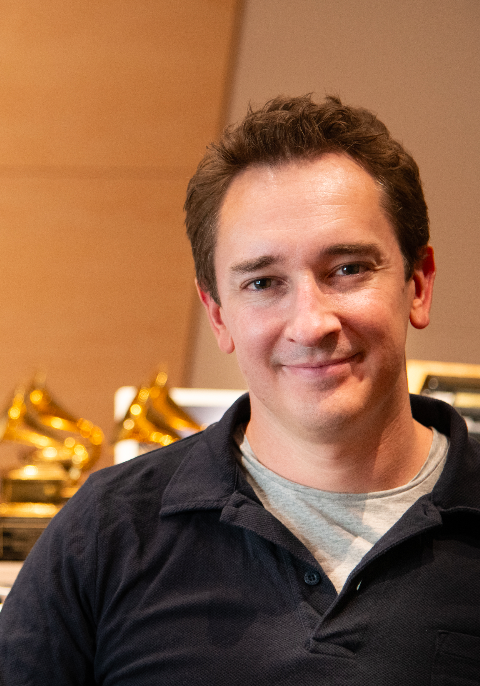



Mix engineer Robert Orton recently invested in a full CEDAR Studio suite of processes in order to remove the buzz and hum from a project he was working on without “mangling” the bass.
Orton works primarily on pop music and mixes "records that hopefully will end up on the radio". In truth, he does rather more than that, with four Grammys to his name and a client list that includes the likes of Lady Gaga, Lana Del Rey, Sting and Keith Urban. Orton won two Grammys in 2010 for his work mixing Lady Gaga's debut studio album, The Fame.
"I've been really fortunate because I'm lucky enough to have a studio at my home that I can work in so it's been business as usual,'' he says on how work has been affected during the pandemic.
“If anything, I've probably been busier than normal. I feel really bad for all the people who can't go on the road because that's how they make their living, but for artists the alternative is to go into the studio and make records which has been great for me.
"I call it a home studio, but it's a beautiful room, and I don't know what I would have done without it. It was built by John Flynn who designed the rooms at SARM, so it sounds phenomenal. I'm so lucky. I can walk down to the end of the garden and I'm in my own little world."
He started his career working for Trevor Horn for about eight years, after which he went freelance, but I carried on working at Horn’s studio for a time, as well as at Metropolis and a few other places.
“I quite enjoyed working in different rooms, but lugging all the gear around got a bit tiresome,” he recalls.
“I then moved to Los Angeles and, together with my manager, rented a studio for about three years. My family and I moved back to the UK when my son reached school age. L.A is the hub of the music industry, but it doesn't matter where you are so much nowadays if you've got a fast internet connection.
"With some of today's technology it's like you're 'in the room' wherever you are. So for the past eight years or so I've worked pretty much exclusively in my room, apart from the occasional trip where I'll go out and record somebody in another studio."
It’s important to Orton to have a base camp where he can concentrate on the music:
“I think that everyone who works in music can relate to how obsessive we can be about what we do. I try to describe this to people outside the business but it's really hard to explain how you can start tinkering with something, knowing that you can make it sound better, and get lost in this little world of sculpting things, trying out ideas, doing whatever it takes to turn the song you're working on into a hit. If it doesn't quite work, it gives you another idea, and you just end up down the rabbit hole. I'll just try one more tweak!"
