
Subscribe
Installations

Harman Pro president: Trends, acquisitions, and the future

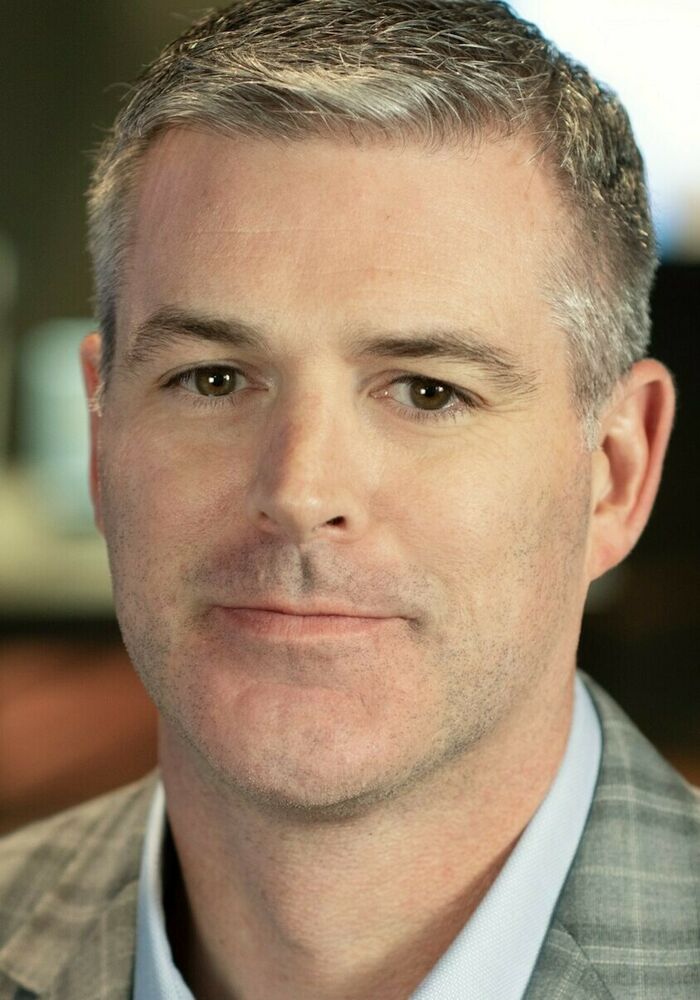
In a UK exclusive interview, Harman Professional Solutions president Brian Divine sits down with Headliner to look back on the past 12 month for the organisation as a whole, and offers a glimpse at what lies in store for 2024…

It’s a rare occurrence for Harman Pro president Brian Divine to open up his office – virtually at least – for an in-depth sit-down chat about the state of play for the business. Indeed, it’s not uncommon in interviews with such senior executives to be met with a degree of caginess or a reluctance to stray from a thinly veiled party line, in which plenty is spoken but little actually said. Pleasingly, this is not the case during our time with Divine.

Joining us virtually from Harman’s LA office, he speaks affably and openly about everything from the biggest challenges the company has overcome during a profoundly turbulent period for the industry, to the acquisitions that have captured the market’s attention in recent months. Particularly that of immersive audio specialist FLUX Software Engineering, which we will come to later.

He begins, however, by hailing the market’s overall return to normality this year – or at least something resembling its pre-pandemic form.

“In the past 12 months we’ve seen the market return to what we consider normal,” he affirms. “We started the year still dealing with some of the supply chain issues we’d been dealing with since 2021 but at this point, I’d say we are verging on pre-pandemic normal.

“Our revenue has certainly returned to pre-pandemic levels. In 2022 we were heavily supply chain constrained. We were scratching and clawing and going on the open market to buy whatever parts we could get our hands on just to keep production flowing, but that has eased considerably. All things considered we are in a much more normal place than we were even eight months ago.”

Our revenue has returned to pre-pandemic levels. Brian Divine, president, Harman Pro

The supply chain issues of which he speaks have blighted virtually every corner of the pro audio/pro AV industry ever since the onset of the pandemic in Spring 2020. The damage inflicted has been double-edged and razor sharp, as waiting times and costs skyrocketed in tandem. For an organization the size and scale of Harman, the impact was unlike anything experienced before.

“Our procurement teams leveraged the larger Harman and Samsung corporation to see how we could influence these chip manufacturers,” Divine recalls. “That was one avenue we pursued. It helped to a degree, but a lot of these chip manufacturers took a hard turn towards consumer during the pandemic. We tend to use more specialised chips and we struggled to catch up, so we tried to develop direct relationships with these manufacturers and voice our needs directly.

“The flipside is that there was a lot of stuff on the open market where it’s a free-for-all bidding war. That drove extraordinary cost pressure, but we felt it was important just to keep things moving. We weren’t unique in this regard. On the market we would see a chip that you might usually pay $1 for being quoted for $70. It was unbelievable.”

For much of the industry, these supply chain challenges have subsided significantly. And as Divine explains, this has enabled him to ascertain a clearer picture of where business is headed entering 2024.

“From a pure operations perspective, we are able to forecast far more accurately now,” he says. “We have a lot more confidence six and 12 months out now than we had a year ago. That said, the uncertainty now comes from the economy and markets as a whole. Right now, it seems stable but there are also some areas where things may slow down from an overall economic perspective. That is more of a concern than the supply chain.”

There was a lot of stuff on the open market where it’s a free-for-all bidding war. Brian Divine, president, Harman Pro

At this point in the conversation, we pivot from addressing the difficulties Harman Pro has overcome of late to discuss some of the key areas of growth achieved this year.

“In general, we’ve been pretty fortunate,” he says. “Our lighting business with Martin remains strong and that’s predominantly in the entertainment sector. Our retail business is doing really well and JBL in total is doing really well. And now that the supply chain is easing, we are seeing Crown bounce back very well, too. That audio business overall has bounced back incredibly strong this year.

“One of the big reasons for that was the decision to persist with R&D throughout the pandemic,” he continues. “We knew during the pandemic that the pro audio market would largely be closed down. Projecting big drops in revenue, Samsung was very clear from the start not to cut R&D, so we didn’t cut R&D. At all. From that perspective we have a really strong NPI pipeline. Being owned by such a big company who had the ability to keep us going has helped us across the board.”

Amongst a stable of hugely successful Harman brands, JBL has unquestionably been one of its strongest performers. Right across the board, from its small studio monitors to its stadium-sized line arrays, its star has shone bright in 2023.

“Starting with the VTX line array series, that’s done really well,” notes Divine. “The A6 does everything from small installs to corporate rentals, and the A12 line has done really well. We’ve seen that bounce back and do fantastically well with a lot of big installs. To complement that line, at ISE we’ll have some new launches to enhance the software offering around it and complete the system.

“FLUX has also been a big acquisition for us. We realise that immersive is a big trend; it is a different experience in a live format and in install areas. Looking around, we noticed pretty quickly what FLUX was doing and the more we work with them the more impressed we are with the capabilities they have long-term.”

Samsung was very clear from the start not to cut R&D. Brian Divine, president, Harman Pro

Founded in France back in 2006, FLUX is a renowned specialist in immersive audio production, audio processing, plugin design, and audio analysis. And in an audio landscape becoming ever-more populated by immersive technologies and advancements, Harman saw fit to partner with a brand that could significantly accelerate its efforts in that field.

“It all came about very organically,” Divine says, explaining the origins of the acquisition. “We were being asked about some immersive projects and we knew we would have to work with a partner to achieve them. So, our team here found FLUX and reached out to them and said we like what they’re doing and the way they are doing it. In doing that it gives us a lot of options.

“One of the things you’re going to see across the board over the next six months or so is that we are taking a different approach to what we may have done historically. All the new stuff coming out is designed to play much better with third parties. We don’t intend to make any big changes to FLUX as a business, we are keeping it intact as its own sub-group within our team, so it’s not being pulled apart and blended with our R&D team. We recognise what makes them special and unique and we don’t want to lose that.”

As for where the world of immersive events is headed, Divine is of the opinion that we are standing on the precipice of a new era of innovation and experimentation. In recent years, everything from live concerts to art exhibitions and theatre productions have been incorporating increasingly sophisticated immersive elements, while venues such as Sphere in Las Vegas have been almost purpose built for immersive applications. All of this, he believes, represents a mere hint at what’s to come over the months and years ahead.

You're going to see us taking a different approach across the board. Brian Divine, president, Harman Pro

“[A new era of innovation] is exactly what we see,” he nods. “And the more we produce tools to facilitate that, the more people will use them. In the near-medium term, permanent installs and theatre shows are more likely to go down that path because there is a longer horizon for the return. Live shows, where there are rigging points and all that stuff, are really expensive when it comes to putting on an immersive show. A few artists have done it but generally venues where it’s already installed is where there will be opportunities to experiment more with it. From our side, we’ll do what we can to help facilitate that as much as we can.”

Another major focus for Harman Pro in 2023 has been its sustainability drive. In recent years, the company has ramped up its efforts on this front substantially, decreasing operation emissions from 2019-2021 by 13%. Today, it is implementing all manner of sustainable measures, from packaging to manufacturing processes and more.

“We are looking holistically at everything from the packaging to transportation and the manufacturing process,” Divine elaborates. “We want to achieve neutrality by 2040. With packaging, all new products coming out are as sustainable as they can be. A good example is that we have just opened a new facility in Hungary that is our first carbon neutral plant. That means energy from solar, heating and cooling from geothermal. It’s our first green plant.

“Our warehousing partner in Europe is also moving to a carbon neutral facility over the next year or so. We have a large portfolio, so doing all of them simultaneously is impossible but with regard to packaging and manufacturing we are improving things across the board.”

As we shift our gaze forwards to 2024, Divine outlines what he considers to be the biggest challenges and opportunities facing both Harman and the pro audio/pro AV industries as a whole.

“Technology as a whole keeps advancing at a faster and faster pace,” he says thoughtfully, with a busy schedule ahead bringing our time together neatly to a close. “So, we as a manufacturer have to do a better job of being adaptable. Not only do we have to deliver on the promise that our products will work together, but also working with third parties.

“Essentially, we look at the business through three different lenses. We have our traditional retail business and of course we’ll stay very active there. Our portable PA category since 2020 is all re-invented across the board, so we’ll be shifting focus to look at refreshing some of our mics and mixers. Plus, we’ll continue with a high level of investment there, so that’s from loudspeakers to software and everywhere else in between.

“Then the biggest part of the portfolio is the install piece. That encompasses everything from coffee shops to stadiums. Over the next three to five years that will probably be the biggest area of investment for us - that’s software, electronics, and loudspeakers. We are fortunate that we never had to slow down on R&D. We have a lot of things in the pipeline, and all of them are moving.”