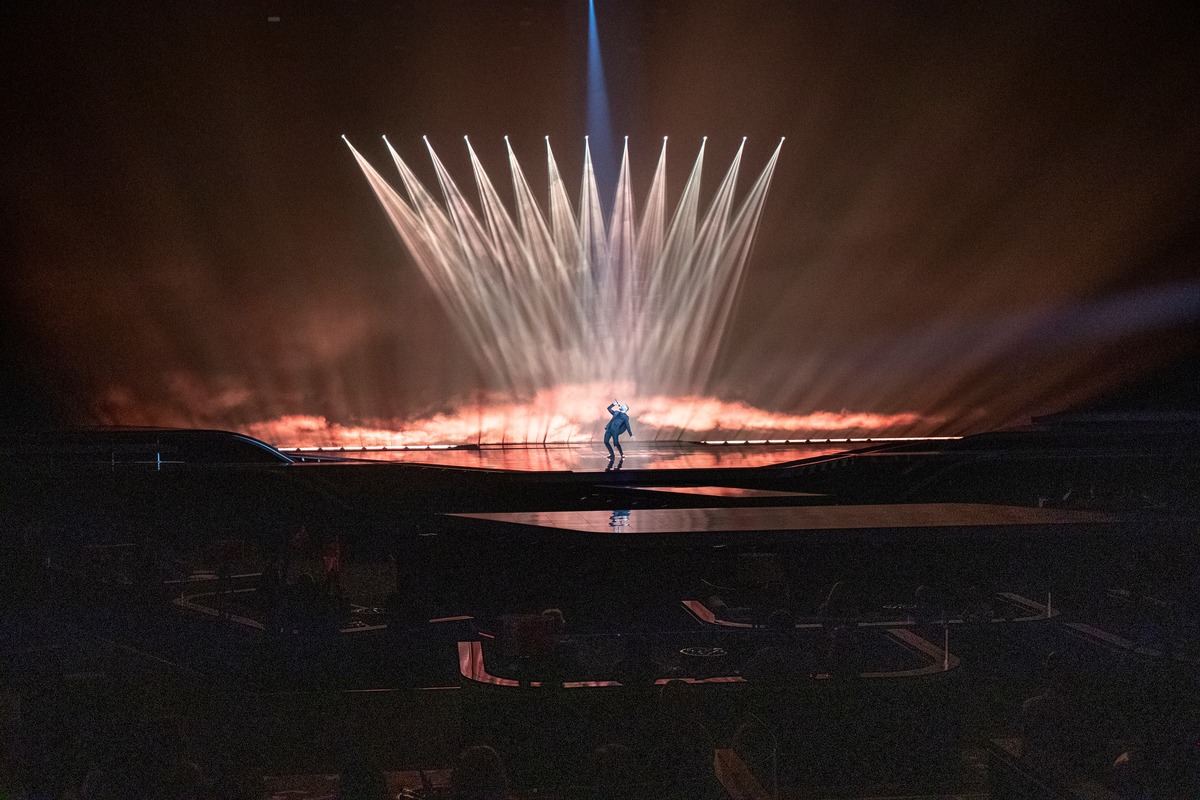



UK music industry leaders have hailed the “vital importance” of Eurovision and the vast international platform it offers UK talent ahead of Saturday night’s (May 22) contest, which takes place in Rotterdam at the Ahoy arena.
Flying the flag for the United Kingdom this year is James Newman with Embers, an upbeat electro pop banger replete with a bold, brass-embellished chorus, backed up by giant white trumpets and show-stopping pyrotechnics as part of the stage production. It’s as impressive an entry as the UK has entered in recent years, yet it’d be a brave person to bet on it landing anywhere close to the upper reaches of the rankings come Saturday night.
Not that that necessarily matters. For decades, the voting at Eurovision has had about as much to do with music as the recently tanked European Super League project had to do with football. For Newman and the UK music industry, Eurovision is about reach and exposure.
The 2019 Eurovision contest (2020 was cancelled due to the pandemic) was watched on TV by 182 million viewers across 40 markets worldwide, according to the EBU. And of particular interest to the music industry is the growing number of young people engaging with the contest. In 2019, 15–24-year-olds accounted for 45% of the grand final viewing share.
Meanwhile, the week of Eurovision 2019 saw 40 million unique viewers watch the event on YouTube from 225 territories – 72% of this audience were under-35s.
“The platform is incredibly important, as it showcases UK music and our creativity to a huge audience, not just in Europe but across the world,” Tom Kiehl, deputy CEO at UK Music told Headliner. “It’s consumed globally and has a life outside of the contest. It doesn’t tally that if you do badly in the contest that that’s the end for that song.”