Subscribe
Music News

Earthworks Audio CEO Dan Blackmer on carrying forward the Blackmer legacy

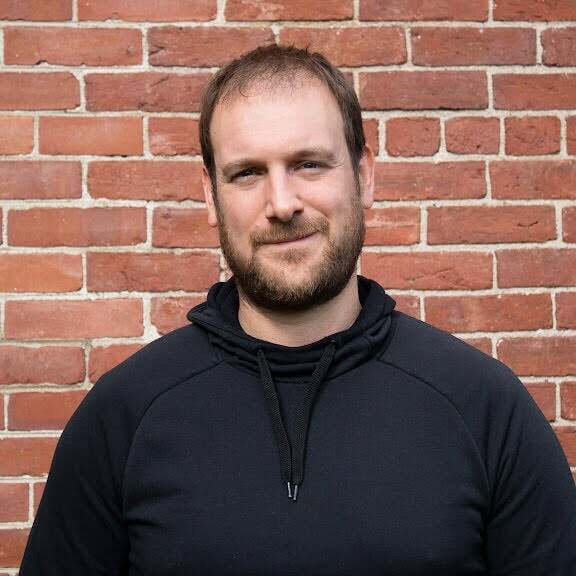
Before Earthworks Audio was founded in ‘95, there was dbx, the company that put David Blackmer’s name in the pro audio hall of fame. Now his son, Dan Blackmer, is carrying the torch. From discussing all things impulse responses at the family dinner table to watching his father experiment with homemade speakers, Dan has spent a lifetime immersed in audio innovation. Today, he’s stepping into the spotlight as CEO, guiding Earthworks into its next chapter while honouring the pioneering vision of his father.

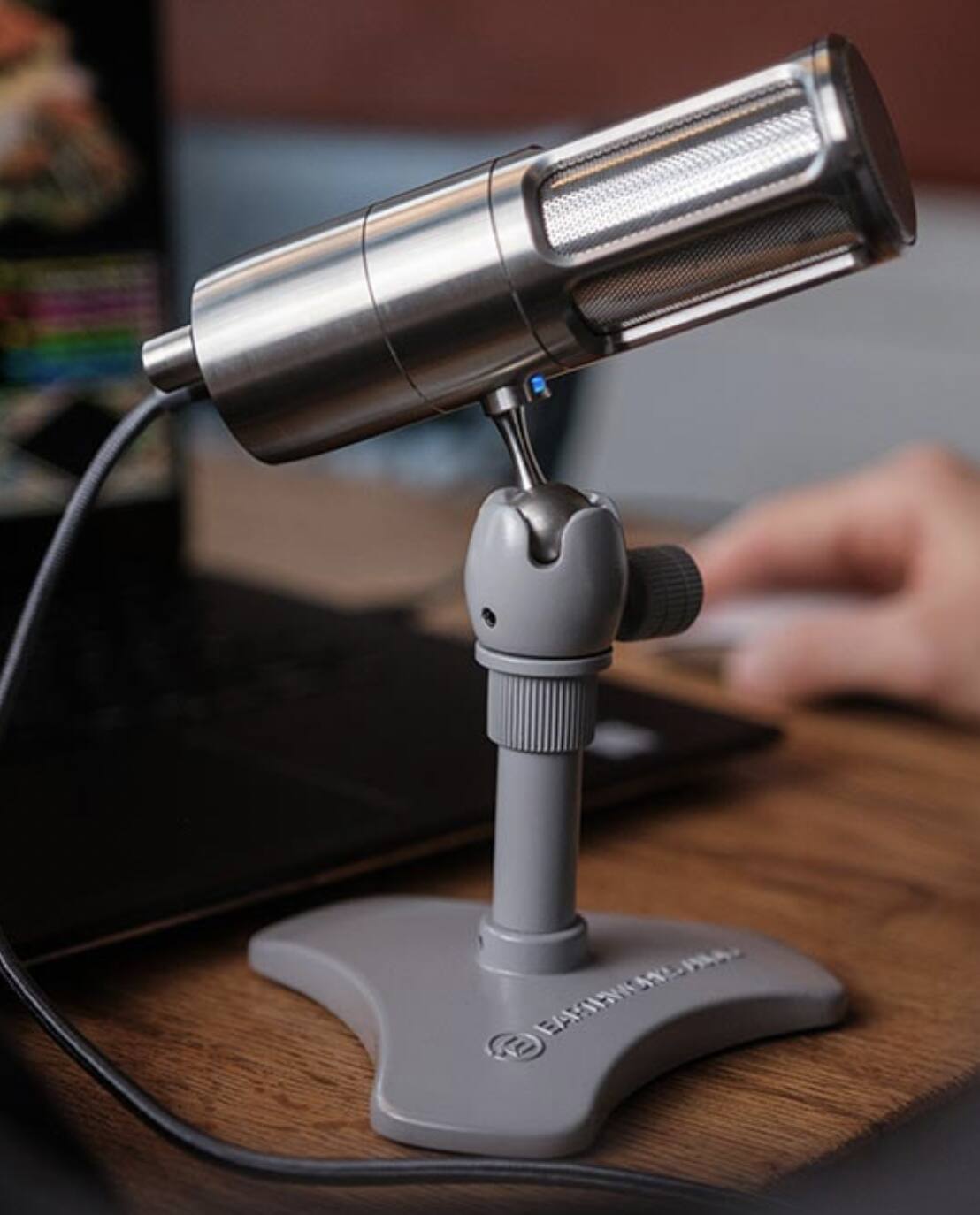
Based in Milford, New Hampshire, every Earthworks microphone is designed, machined, and assembled in-house. Small-batch production, a skilled team of over 30 families, and a relentless commitment to transparency mean that every mic – whether a podium mic or a high-end measurement tool – lets the artist’s voice shine first. 

Dan’s mission is simple: preserve the legacy, empower creators, and push the boundaries of what microphones can do, all while keeping production in the U.S. and staying true to a family ethos of integrity, curiosity, and precision.

In this interview, Dan reflects on growing up surrounded by audio ingenuity, carrying the Blackmer mantle, and steering a company where every product is as much a tool as it is a testament to a family’s lifelong pursuit of sonic excellence.

Interestingly enough, I didn’t really understand what my father did.

Your father, David Blackmer, changed the audio world once with dbx, and then again with Earthworks. What was it like growing up around that innovation and pursuit of audio excellence?

Interestingly enough, I didn’t really understand what my father did. From the time I was a young boy, I’d hear all about impulse response, phase response, frequency response, transients and time coherency and all these terms. He’d talk about it over dinner. 

But of course, I had no idea what he was talking about. He was so passionate about his work, and about what he was really trying to do for the world – creating this new experience of sound – that he kind of lived it and tinkered all the time.

I remember waking up one Saturday morning to the entire house vibrating. I walked outside, and he’d set up this massive speaker he’d built himself – this cabinet, maybe four feet tall and eight feet long – with an array of six-inch drivers in it. He was basically shaking the house, because that was just the sort of random thing he’d do [laughs]. So I’ve been surrounded by it my entire life.

When you think about continuing the Blackmer legacy, what does that mean to you personally, as both an engineer and as a son?

That absolute drive and passion he had for his work has been a huge part of shaping who I am today. When I found out he had cancer, I was 17, still in high school. When I graduated, I decided to take my first year off instead of going straight to college. I was going to study business, but I decided to work with him instead, which I think, in retrospect, is one of the best decisions I’ve ever made in my life.

I got to go to the office with him every day, tinkered, and basically tried to watch and learn his process – to see the passion he had for everything he did. Unfortunately, he passed away in March of that year – that was 2002 – but because of that experience with him, I decided to go and study engineering. I went on to get degrees in electrical and computer engineering. I truly treasure every minute I had with him during that year.

I remember waking up one Saturday morning to the entire house vibrating.

Was there a defining moment when you realised, “This is my time to take the mantle and lead Earthworks into its next chapter”?

I began to struggle with the idea of even trying to find someone else to run the organisation. I kind of said, “You know what? It’s just time for us to recentre ourselves; to correct course and reaffirm who we are as a company”. We’re a team that’s driven by integrity, curiosity, and a genuine desire to help artists elevate their art. That’s what we’re truly about as a company. When I felt internally that we were starting to drift from that mission, I thought it was really important to help right the ship and get us back on the path that actually matters to us.

dbx became synonymous with precision and quality; how did that ethos carry forward into Earthworks, and how have you built upon it?

Overall, I think about my father and the way he thought about things almost constantly. He was one of those people who was always tinkering, playing, and innovating around the edges in ways most people don’t even think about.

I’ll give you a perfect example of this, which is something that, to this day, most people don’t understand about Earthworks. One of the things Earthworks has done historically is make microphones that go out to crazy frequencies: 30, 40, even 50 kilohertz. I’ve had people come up to me at trade shows and say, “Well, I know I can’t hear a 30-kilohertz tone.” And I’d say, “Yes, of course you can’t. Anyone could tell you that.”

But what my father was after was something much more interesting: the decomposition of impulse response into magnitude and phase, and how the roll-off of frequency response in magnitude relates to phase response.

What he was trying to achieve was that, in a first-order system, they’re one decade apart. So, if your magnitude rolls off at, say, 20 kilohertz, your phase is rolling off at two kilohertz. So when my father made a microphone that went out to 30, 40, or 50 kilohertz – and he actually wanted to make one that reached 100 kilohertz – what he was really after was maintaining time coherence in the phase response around four, five, six kilohertz. 

Most people don’t get that. They just assume we make “snake oil” microphones that reach these wild frequencies. In reality, what he was doing was all about phase and trying to preserve it, which is a pretty unusual approach.

His philosophy plays into the day-to-day decision-making at Earthworks. A lot of it comes down to looking for the hidden layer underneath something that others might overlook, but which actually has a huge impact. That was really the focus of much of his life’s work: to tinker until something meaningful came out of it.

When I felt internally that we were starting to drift from our mission, it was important to help right the ship.

Is there anything people would be surprised to learn about his work at dbx?

Many people may not know that the core thing dbx did – the design my father came up with – was a circuit that could detect the RMS value of an arbitrary waveform. For a sine wave, that’s 1/sqrt(2) – simple enough – but for an arbitrary waveform, it’s actually quite complicated. It requires integration, a fair bit of clever maths, and time to capture enough of the signal.

I remember explaining this to a mix signal engineer we hired. I said, “Oh yeah, the circuit my father came up with in the ’70s takes an arbitrary waveform at one end and outputs a signal proportional to its RMS value.” And the guy said, “That’s not possible. You can’t do that.” And this was in the 2010s – my father had designed the circuit in the ’70s.

That kind of innovation – tinkering beyond the limits of what most engineers consider possible – was really the core ethos he brought to the table, and it’s something we still embody today.

Earthworks still makes things in an age where so much of manufacturing has gone overseas. Why is it so important to you to keep production in Milford, New Hampshire? What drives your decision to invest in domestic craftsmanship rather than outsourcing?

In many cases, we’re making a very small-batch product. That allows us to make exactly the product we want, in the mix we want, without being beholden to overseas manufacturing. 

It’s also just really nice to be able to go into the office and talk to Chuck down on the production floor while he’s tuning microphones, and to know there’s a craftsman behind the product who’s genuinely passionate and cares. Chuck’s been with the company since, I think, ’95, so nearly 30 years now. There are quite a few people like that.

We’ve got a core team who’ve been with us a long time, and they’re all deeply passionate about what they do. You can tell they care; they care more about the work and the product than I think we’d ever get if we outsourced manufacturing. 

That sense of ownership, and the pride they take in what they make, really matters to me. When I talk about the company’s ethos – about maintaining integrity, curiosity, and all that – a lot of it comes down to having a cohesive team that’s passionate about what they do. That’s what I really like to foster.

Most people just assume we make “snake oil” microphones that reach these wild frequencies.

You’ve led the team behind some of Earthworks’ most iconic releases (the ICON, ETHOS, SR314 and SR117), which are used all over the world on the biggest stages. What have you learned about building products that resonate across genres and generations?

I have to give the former CEO, who left last year, a lot of credit. Gareth Krausser was responsible for all those microphones – those were all his babies. He did a phenomenal job designing and refining those products, really crafting them with care and precision. 

He was constantly innovating, but also iterating again and again with different tip designs, 3D printing them, testing them, and putting in an incredible amount of work to make those products happen. He achieved stellar performance while also making them manufacturable at the price point we wanted to hit. I have to give him full credit for that.

Of course, we’ve got a great engineering team who supported him throughout that process, and they’re still here, continuing to innovate and drive new product development. We’re launching our new measurement microphones next month – Gen Twos of our existing measurement mics – and it’s that same core team working to solve the underlying problems people face in audio.

Could you provide an example?

The new measurement mics have lower current consumption, so they can run longer on battery-powered transmitters. That kind of innovation, looking carefully at what customers are asking for and solving those specific problems, while still maintaining our overall level of quality and precision, that’s really what it’s all about.

Getting unexpectedly thrust into this role was definitely not what I originally anticipated, but I’ve spent a lot of time reflecting on it.

Now that you’re leading Earthworks into its next generation, how do you balance innovation with honouring the legacy your father built?

The major thing for me is that we maintain that core integrity of the brand. Why are we doing this? At the end of the day, what matters to me is that the reason we’re all here is to honour what my father was trying to do.

To jump back a bit to his story, my father was a lifelong lover of classical music. Throughout his life, there was a constant stream of new technologies that people claimed would finally make a recording sound identical to a live concert. 

For him, if he was sitting in the audience listening to Mozart, he wanted to be able to go home, play a recording, close his eyes, and have the same experience. That’s what drove him: the desire to create that level of realism.

Initially, he was focused on designing a loudspeaker that could recreate that experience. While trying to build this loudspeaker, he bought every measurement mic he could get his hands on, and none of them were time-coherent enough. 

He was using a spark generator as his primary reference source, sparking, for example, a B&K 4007. It had a relatively flat frequency response, but its impulse response wasn’t tight. It had this kind of muddied, long tail on it.

So he found himself unable to measure the loudspeaker accurately enough to achieve the time coherence he wanted. That’s when he decided to build his own measurement microphones. We still have them in our little museum. The tips are made of modelling clay; they’re these wand-like things with a capsule on the end and a body behind it. To be perfectly honest, they’re pretty ugly [laughs], but they worked really well.

A lot of what Earthworks became comes from that moment. He didn’t have a tool that could do the job he needed, so he built the tool himself. At the time, Earthworks wasn’t really a “company” in the traditional sense; it was more of a self-funded research lab my father ran. 

People would come in because they wanted to work with David Blackmer. They knew of dbx, and they’d tinker together. He’d pay them a bit, they’d do their thing, he’d do his, and every so often there’d be a bit of kismet, and a new product would come out of it.

There are probably some decisions I’ve made that he’d raise an eyebrow at, but overall, I think he’d be surprised and pleased that the company is still alive.

Could you provide an example?

One example was a jazz pianist who kept visiting. He told my father, “If you make these microphones into a real product, we can sell them.” He kept badgering him about it, saying these odd-looking, clay-tipped microphones needed to become an actual product. Eventually, my father did just that, and they became the original OM1s.

That was the beginning of Earthworks. It was almost an accidental product that emerged from something else he was working on. And now, as of this year, we’ve been selling microphones for 30 years.

So, when you ask about leading the company into the next generation, that’s the ethos I think we need to hold onto: that at any given moment, if something’s a really good idea, we should just run with it. 

If someone’s solving one problem and something unexpected comes out of it, that’s often where true innovation happens. And that’s exactly the kind of spirit I want to keep alive at Earthworks.

You’ve talked about empowering creators, giving them tools that make their art more immediate and more alive. How do you see Earthworks’ role in shaping the next era of creative expression?

So, just as part of our mission statement, you probably know our slogan, “Sounds like life.” We use that tagline as a sort of riff on something from our actual mission statement, which is basically: to create tools so transparent that the artist – not the technology – defines the sound. 

That’s at the heart of what we do. We’re trying to create the most transparent sound possible. If you’re sitting at your drums and you love the way you sound, we want to make sure our microphones aren’t getting in the way of that.

Of course, you can talk about pattern control and all those other technical aspects, but for us, it’s about how all those elements – the smooth frequency response, the polar patterns, everything working together – combine to create the most transparent result possible, where the artist themselves is truly the focus of the entire experience.

The ethos works really well, and, yes, I realise we have a product called the ETHOS, but the ethos of the company itself really applies across all fronts. We make podium microphones, measurement microphones, instrument microphones, vocal mics – a whole range of products – and that same guiding principle carries through all of them.

Even in the context of a podium microphone or a measurement microphone, which is obviously a very specialised category, the goal is the same. Take podium mics, for example: the objective is to make it so that the person standing at the podium doesn’t have to think about the microphone.

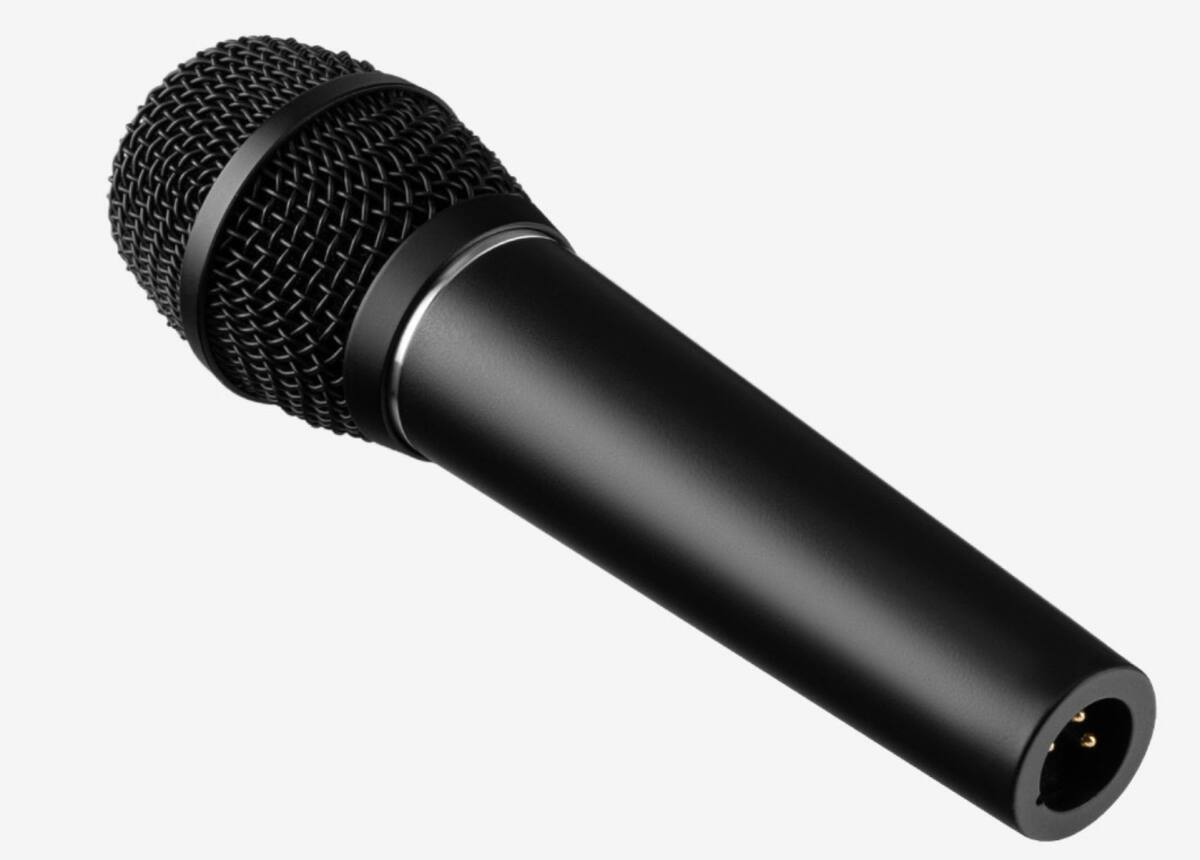
We often say our microphones don’t require good mic etiquette. If you’re using a 58, you basically have to hold it right up to your mouth and keep it at a very specific distance to be picked up properly. Our podium microphones, on the other hand, are designed to make things easier for the speaker. 

So even when it’s not an artist using the mic, that same ethos still applies. It fits across the entire range of products, regardless of their application.
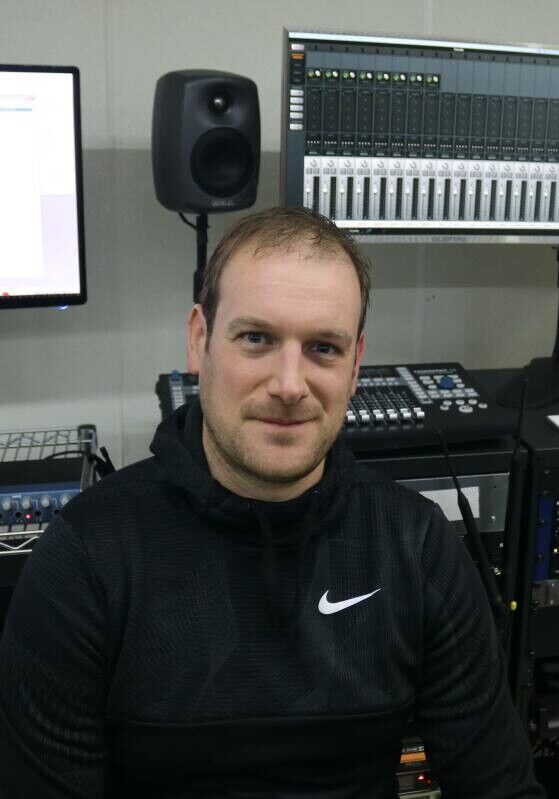

I immersed myself in his notebooks, so I was able to read the way he was talking to his future self.

Looking ahead, what excites you most about what Earthworks can do next?

I’ve been thinking about this quite a bit lately. Getting unexpectedly thrust into this role was definitely not what I originally anticipated, but I’ve spent a lot of time reflecting on it. Right now, a lot of what we’re trying to do is iterate on where we’ve been. We’re very artist-centric as an organisation, and when I say “artist,” I really mean anyone who needs to capture or reinforce sound. Our goal is to make sure we’re solving their core problems.

For example, when people come to us and say, “Hey, your new generation of measurement microphones have lower self-noise, but they can only handle 136 dB SPL,” we look at that and say, “Alright, what if we change the capsule, adjust the sensitivity, make a few other modifications – now we can reach 140 dB SPL.” That’s more in line with what the market actually needs. So it’s that kind of solutions-first approach: identifying what isn’t working and figuring out how we can address it directly.

When we look at the broader market, what we don’t want to do is just make a “me too” product. Over the years, people have come to me suggesting we make headsets, lavaliers, and all sorts of other products. And while I’m not opposed to expanding, I want to make sure that when we do, it’s because we’re bringing genuine innovation to that space, not just copying what’s already out there.

We need to have a real competitive advantage, ensure we can manufacture it properly, and, importantly, not resort to just buying something overseas, slapping our name on it, and reselling it. That’s never been who we are, and I have no intention of starting now.

At the moment, we’re focused on solving real problems as they come up. As for specific products, I’ve only been in this role for about two weeks, so right now my focus is on getting my footing, resolving some internal issues that built up over time, and steadying the ship. Once that’s done, we can move into next year with a clearer direction and really start answering those bigger questions head-on.

When I graduated from college, I started working for the company. But obviously, I wasn’t going to start coming up with innovative ideas on day one. My father’s career spanned 50 years, and the culmination of that work was these incredible circuits and designs. What I did do was immerse myself in his notebooks. He had a very conversational style of writing, which made it really cool to read.

By that point, he’d been gone for six years, so I was able to sit down and read the way he was talking to his future self. It was like being the recipient of the thoughts he had already had; I could hear his internal monologue because he’d written it down. Seeing that process, understanding how he worked, and trying to stick with that same core concept is definitely something we’re trying to carry forward as we move ahead.

tinkering beyond the limits of what most engineers consider possible was the core ethos he brought to the table, and it’s something we still embody today.

If your father were sitting across from you today, what do you think he’d say about where you’re steering the company?

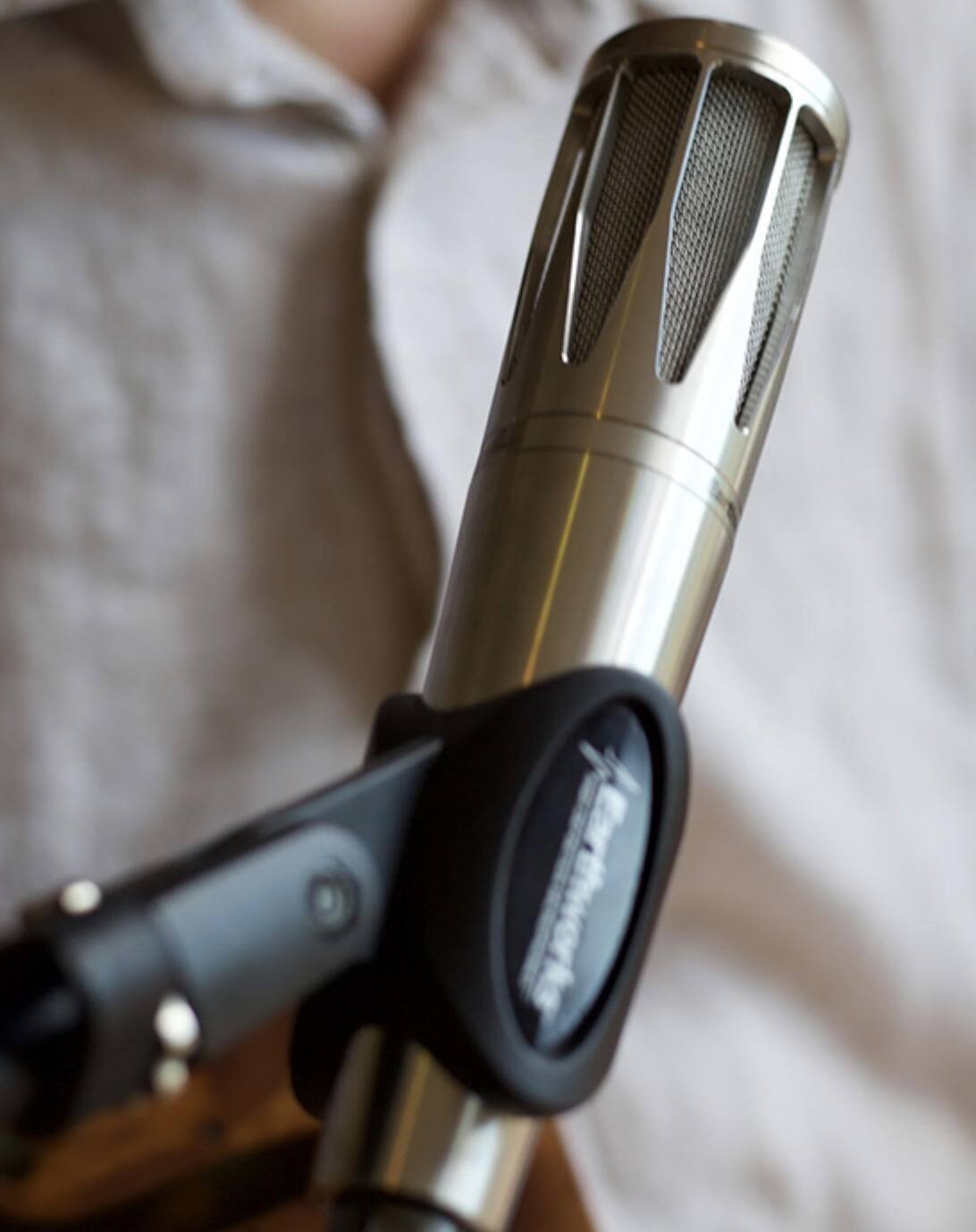
What’s kind of funny to me is that there have been some trade-offs we’ve made over time, and when I say trade-offs, I don’t mean things you’d normally think of as compromises. For example, when my father was around, if you look at the product mix, we didn’t use a single metal mesh windscreen of any kind, even on our SR microphones. Everything was foam. That came from his purist approach.

I think he would be very proud of where the company is today. There are probably some decisions I’ve made that he’d raise an eyebrow at, but overall, I think he’d be surprised and pleased that the company is still alive and that people genuinely respect the technology he created and the concepts he was developing.

Take, for example, the 30, 40, 50 kilohertz microphones I mentioned earlier. On the surface, the specs can seem abstract, and the market might ask, “Why do I care?” 

But there’s a real technical story behind why those microphones exist. I think he’d be proud of the fact that we’ve been able to navigate presenting those technologies in a way that highlights their benefits without just throwing specs at people.

Over time, we’ve moved away from the pure “engineer’s approach”, saying, “Hey, look, we make a 40-kilohertz microphone,” and expecting people to understand why that matters. Instead, we’ve reframed it in terms of transparency and accuracy, finding the right language and adjectives to describe the experience. 

It’s not about specs anymore; it’s about what the technology actually does for the artist or user, and I think that’s a place where we’ve done really well.