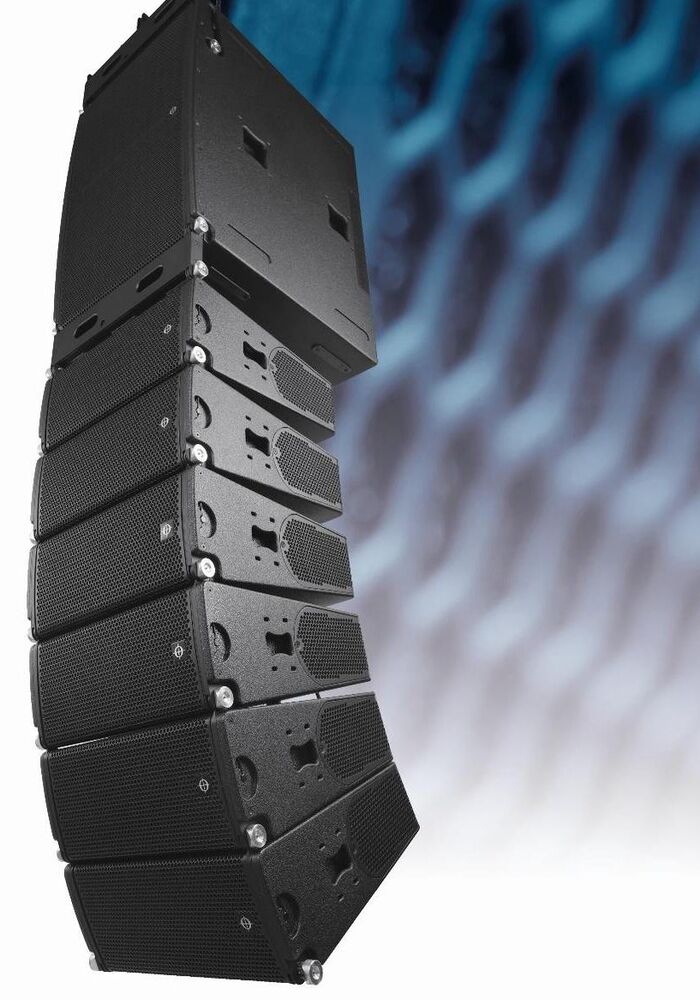

CODA Audio launched Wideband Cardioid and ViFORCE at ISE 2026, bringing new developments to cardioid array performance.
Wideband Cardioid technology was created through an intense period of research and development at CODA Audio. It comes to market first in ViFORCE, alongside its slimline partner subwoofer, the SUB FORCE 35.
ViFORCE is a four-way, bi-amplified line array element, featuring two 8” LF drivers, two side-mounted 6.5” drivers, and CODA’s DDP Mid and High frequency driver. It includes all CODA Audio’s patented technologies, including Dynamic Airflow Cooling (DAC) technology to eliminate power compression, InstaFit couplers for easy alteration between 90°, 120° or 105° asymmetric horizontal dispersion, and CODA’s easy rigging.
SUB FORCE 35 also uses these technologies. The slimline 3 x 15” cardioid subwoofer has a level and frequency response equivalent to a standard 2 x 18”. The use of wideband cardioid technology in the subwoofer allows it to be placed directly against a wall with no need to mute the rear driver. It contributes to the output of the whole system through side-mounted ports, maintaining its full output capacity.
-(1).jpg)
-(1).jpg)