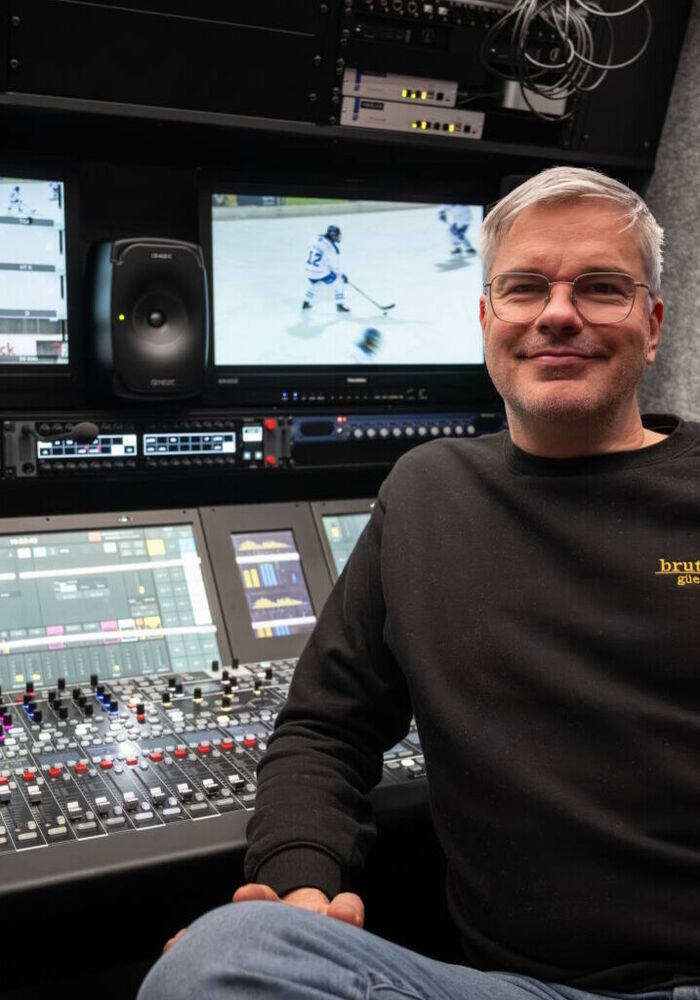



The alpine peaks of Gstaad set a dramatic stage for the high-profile debut of S12, the sophisticated new mobile production unit from Swiss broadcast innovator brutal güet. During the Women’s Winter Classics produced for RED+, this state-of-the-art OB truck successfully navigated its first live broadcast, powered by a comprehensive IP-based Lawo audio infrastructure. Headliner pulls on a warm winter jacket to find out more.
Senior broadcast audio engineer Christian Maier noted the technological progression: “Overall, it initially felt quite unspectacular because I was already familiar with the system. At the same time, working with AES and RAVENNA streams introduces new capabilities and advantages that still require a certain degree of adaptation.”
Swiss productions require trilingual operation. Maier designed the setup to deliver three versions simultaneously: “Productions in Switzerland are inherently more complex. We always have to be able to deliver three language versions. That’s why I structured the setup so that all three languages are prepared — not only for this production, but for all future ones as well.”
The mc² generation’s DSP capabilities streamline these workflows. Maier explained: “Being able to store and recall EQs, compressors, and presets, as well as using dynamic EQ processing, makes multilingual productions much easier. I don’t have to build the same signal chains multiple times.” He explains that resources can be allocated selectively: “Not every output requires full processing. If a signal path is mainly used for information delivery, I can reduce processing there and allocate resources where they deliver the greatest sonic benefit.”
Efficiency and troubleshooting are also enhanced by the console’s customisation and visual clarity: “I can customise the console to suit my workflow in every detail, but I don’t have to. I can also pragmatically route a signal from A to B quickly and easily — and it still works. At the same time, I can create an interface that lets me work extremely efficiently. If a camera operator reports they can’t hear anything, I can immediately check a second or third meter to see whether the signal is leaving my system. That tells me right away where to look — or where not to look.”