Subscribe
Gear Reviews

Audeze MM100 Review: Studio-Quality Sound at an Affordable Price

California’s Audeze is a headphone brand that has become synonymous with incredible sound quality, craftsmanship, and proprietary driver tech. It delivers headphones for studio and home and, with their MM100 studio cans, the argument can be made for both use cases.

The MM100s are geared more towards users who have a home (or starter) studio set-up, given their relatively affordable $399 price tag. These headphones are excellent from a production or a listening perspective; they’re backed by Grammy Award-winning Manny Marroquin, so of course they are excellent! Let's dive in.

Initial Impressions

Given that the MM100s are Audeze’s most affordable set of headphones, they may come off as a little feature light for the studio professional (their MM500 sibling might be considered a more suitable candidate for such environs).

However, anyone who values honest sound representation—and who is looking for their first pair of “real studio cans”—would do well to explore Audeze’s entry point MM100s. Plus, they have some features that could actually make them preferable to their pricier MM500 counterpart.

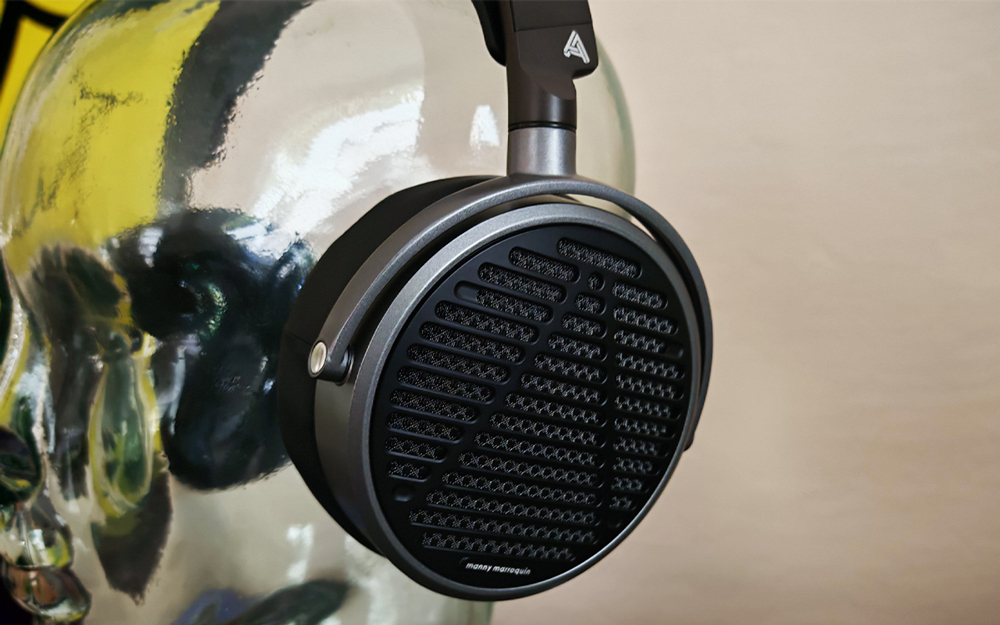
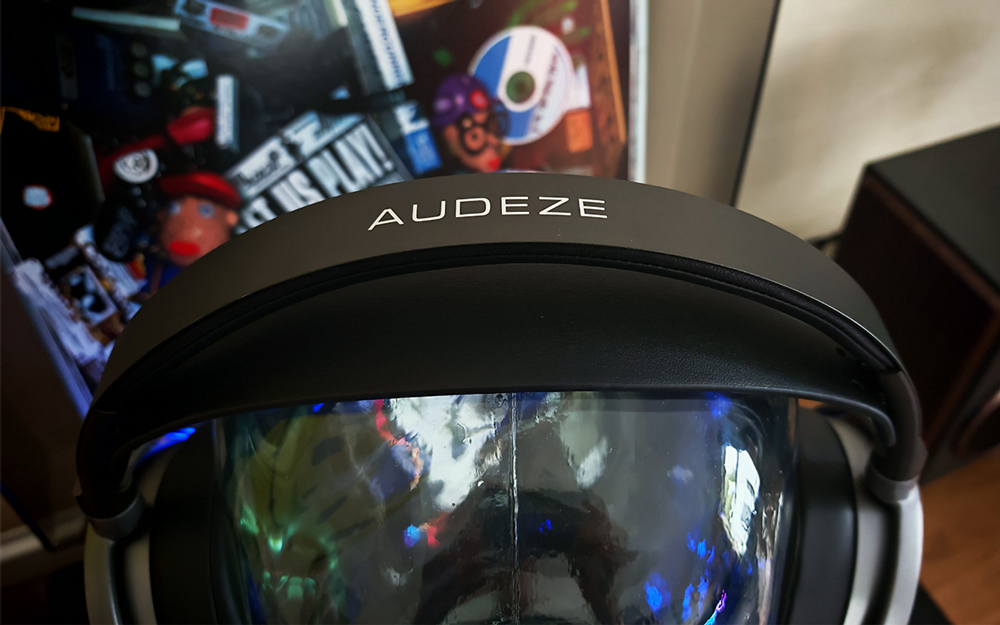
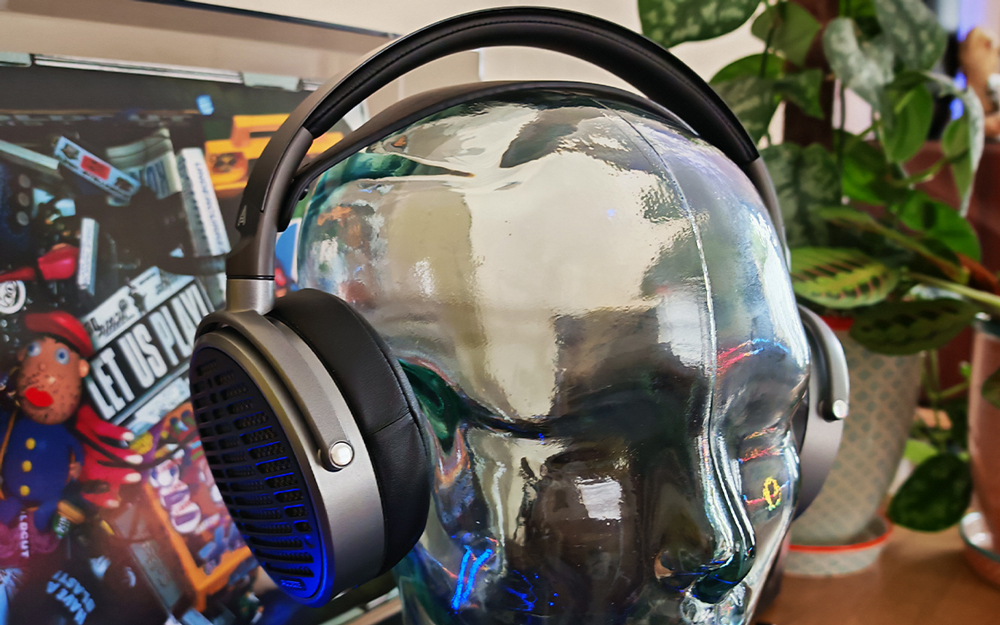
Straight out of the box, we can immediately see the MM100s haven’t strayed from Audeze’s flair for impeccable craftsmanship. A steel and magnesium frame supports the open-backed ear cups, which swivel around both axes for user comfort.

Note that they lack the vertical antenna-style adjustment rods that more expensive Audeze headphones feature. But that is hardly going to instill deep-seated internal conflict in the target user, so we can let that one go. The suspension strap affords some vertical adjustment anyway.

Thanks to the gel-filled, supple vegan leather ear pads, and the Audeze’s typical well-balanced weight (475 grams), the MM100s instantly feel very comfortable to wear.

In terms of initial sound impressions, the headphones deliver what I would consider to be a true reproduction of the recording when tested in a listening capacity. Precise tuning ensures that the headphones deliver accurate sound.

Specs wise, the impedance is incredibly low. Sitting at a mere 18 ohms, it won’t take much to drive these headphones in terms of your amp, soundcard, or DAC’s output rating. Frequency range is 20Hz - 25kHz, most of which you can’t even hear, but the range gives plenty of room for the frequencies you can hear to breathe.

Planar Precision

The MM100s—as with all of Audeze’s headphones—come packed with their in-house planar transducer technology. The innovative use of planar magnetic drivers ensure that detail retrieval is excellent; a very important factor when it comes to studio production.

Detail retrieval is obviously crucial in a studio environment because it lets you hear every nuance of your mix, from the faintest subtle distortion through to background noise that could ruin your final master. When headphones accurately reproduce micro-details in the way these planar transducers can, you can make precise EQ, compression, and balance decisions that translate properly to other playback systems. Without that level of clarity, you’re essentially mixing blind, and what sounds “right” in your headphones might fall apart everywhere else.

Detail retrieval matters for general listening too; it brings you closer to the music as it was intended to be heard. When your headphones can pick up fine details, you catch the texture of a vocal take, the character of a guitar amp, or the space around an instrument that gets lost on lesser gear. It makes your favourite tracks feel more alive and immersive, letting you appreciate the craftsmanship in the recording.

In the production process, planar magnetic studio headphones solve the problem of inconsistent or misleading monitoring. Their ultra-fast driver response and low distortion mean you can capture takes and build arrangements with a clear, honest picture of what’s actually being recorded. You’ll spot issues like noise, unwanted resonances, or tonal imbalances early on, before they make their way into the mix.

In the mixdown process, they address translation and fatigue issues. Their linear frequency response and high-resolution detail let you balance elements more precisely and make confident EQ and compression moves without second-guessing. Because the drivers stay clean and controlled even at higher volumes, you can work longer without ear strain, achieving mixes that hold up across speakers, cars, and earbuds alike.

With the level of accuracy and faithful sound repro you get from the MM100s’ planar magnetic transducers, you’ll be sitting at your mixing desk wondering why you’ve been putting up with those flabby dynamic drivers for all this time.

It stopped feeling like a recording and started feeling like a performance happening right in front of me. Ste Knight

Powerful in Practice

So what about in use, then? I am going to caveat this element of the review by saying I am not a producer of sound, moreso an appreciator of it. So I had to get a budding producer friend—Santo—on board who fits the bill when it comes to Audeze’s target audience with the MM100s. His living room is overcome by a selection of shiny synths; a home-studio-and-a-half, I would say.

As I say, I asked Santo to check the headphones out while he was laying out a melodic techno jam on his Elektron kit. His feedback was as follows (note his current headphones feature a dynamic driver):

“I’d just finished laying down a track idea on my Digitakt2 and Digitone2, and when I switched over to the MM100s to start mixing, the difference was night and day. Straight away, I picked up a low-end muddiness around 80 Hz where the kick and bass were fighting for space; something I’d completely missed on my old dynamic cans, a pair of HD280s from Sennheiser.” A good start, then.

He continues, “With that extra precision, I dropped an EQ cut on the bass and tightened up the sidechain, and suddenly the groove snapped into focus. As I tried to balance the synth layers, I also caught a faint high-end hiss coming from one of my reverb sends, which I’d never have noticed before. Cleaning that up gave the whole mix more air and punch, and when I checked it later on my monitors, it translated perfectly.”

From a listening perspective, the MM100s show their value here, too. I had Rachel’s Song from the Blade Runner soundtrack playing on Roon, via my FiiO R7 streaming amp. The moment I heard that first piano note, it stopped feeling like a recording and started feeling like a performance happening right in front of me.

The opening pads just seemed to blossom out of the silence, perfectly balanced between warmth and clarity. Mary Hopkin’s vocal floated in with this haunting softness I’d never truly appreciated with a dynamic driver (and believe me when I say I already appreciated it).

Every breath of Hopkin’s phrasing, every pad swell, every shimmer in the upper register had its own space, nothing smeared, and nothing was lost amidst the other elements of the track. It was like being pulled into the very fabric of the composition, hearing Rachel’s Song exactly as Vangelis must have intended it to sound.

A winner on both counts.

In terms of actually wearing the MM100s, both Santo and myself find them comfortable even for prolonged periods of time (and we all know how much of a time sponge music can be). They are well balanced in terms of weight distribution, so I don’t feel like I’m going to break my neck from the momentum generated by moving my head an inch and a half.

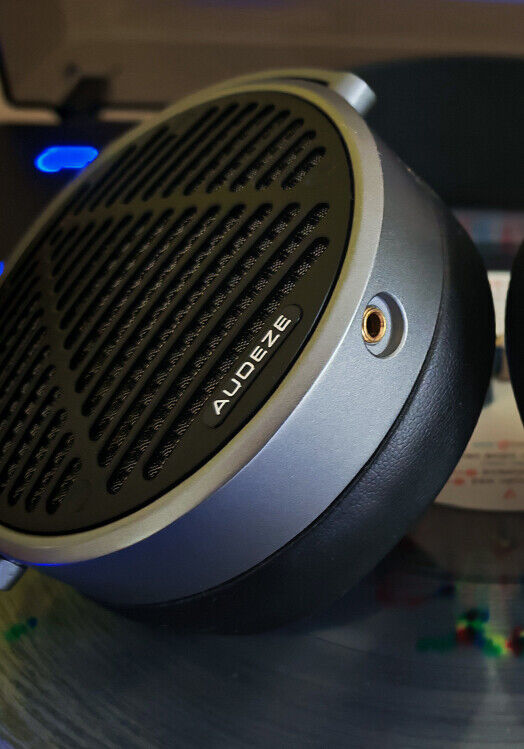
I particularly like the inclusion of two 3.5mm jacks on both ear cups. You only need one lead, though; you can use either jack depending on your preference. If your sound source is to the right, then using the right ear cup’s jack prevents you from having cabling strewn all over your face or crossing your throat, as it would be if you used the left jack in such an instance.
Final Thoughts

For Audeze’s MM100 target market—home and first studio producers—the MM100s represent an outstanding option for studio headphones. Their clarity, detail retrieval, and reference level sound, combined with nifty features like the double 3.5mm jack, make these cans a clear market leader, and especially so at this price point.

Highly recommended for anyone who is starting to get serious about music production, and a very worthy winner of the Headliner Award as a result. Another triumph for Audeze.

WINNER: Designed in collaboration with top mixer Manny Marroquin, the open‑back Audeze MM‑100 employs planar‑magnetic drivers tuned for accuracy and ultra‑low distortion. This combination delivers a detailed, spacious soundstage ideal for mixing and mastering. The headphones are also smaller and lighter than most planar designs, with comfortable gel‑filled earpads, making them easy to wear during long sessions. These traits set them apart as a reference‑grade tool that balances professional sound quality with practical comfort. - Headliner Awards